|
Holyrood hears evidence on abortion legislation |
Related newsHolyrood ADHD and autism inquiry launched Call for ‘urgent’ review of ADHD and autism services Holyrood committee backs abortion clinic buffer zones Support available for ‘winter blues’, says government Psychiatrists in ‘disbelief’ over cut funding Pharmacy’s road to stigma-free drug dependency care Questions remain as hospital delay bill rises to £28m Hospital safety inquiry chair revealed MSPs to quiz health secretary over hospital crises Multiple Sclerosis register a ‘powerful new resource’ New health & social care governance initiative EU staff qualifications & registrations confirmed 
|
|

Image Credit: © Scottish parliament
|
||
|
||
|
The Scottish parliament’s Health, Sport and Social Care Committee has heard from researchers, campaigners and people with experience of protestors about the importance of safeguarding access to abortion and reproductive healthcare without obstruction.
The lead committee this week began its scrutiny of Scotland’s abortion clinic buffer zones legislation, marking the start of the parliamentary process developing the Bill.
In an evidence session, Dr Emily Ottley, a Medical Law lecturer specialising in reproductive rights told the committee that one of the key challenges encountered after passing legislation on safe access zones is creating these spaces.
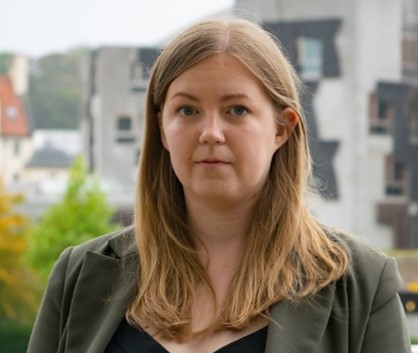
Gillian Mackay MSP, who introduced the Member’s Bill, said this is a “landmark moment” for this legislation and reproductive rights in Scotland:
“So many people have endured totally unacceptable harassment from protesters. I am keen that it’s their experience at the heart of the process and shapes our response, to ensure that nobody else has to go through what they have.
“These awful protests have become a regular sight outside our hospitals and medical centres. My Bill is about ensuring that everyone can access the healthcare they are entitled to without having to endure a gauntlet of intimidation.”
The Committee heard from people with experience of facing abortion protestors when seeking medical care across Scotland.
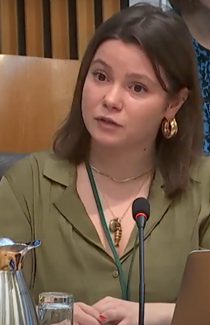
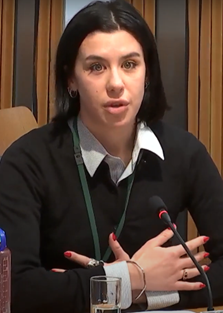
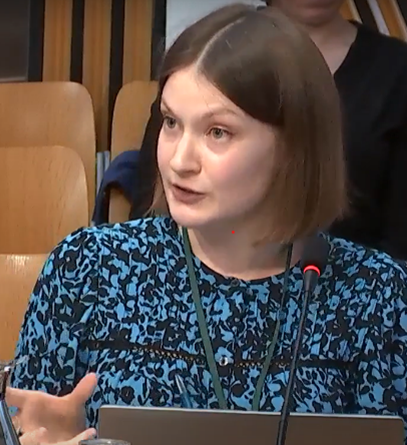
Lucy Grieve, Alice Murray and Lily Roberts joined MSPs to share their perspectives and work to advocate for women through campaigning group Back Off Scotland.
“These aren’t peaceful”
Lily Roberts attended Glasgow’s Queen Elizabeth Hospital in 2018 and was met by a group 15-20 people that were “completely unavoidable” and “very intimidating”.
She said healthcare professionals had already provided “very comprehensive” options and healthcare advice.
She told MSPs that her partner at the time was approached and handed misinformation by a protester:
“So, when they’re saying they are standing there, they're not doing anything invasive – it’s very far from the truth. Handing out leaflets containing misinformation about healthcare. It’s really important to understand these protests aren’t peaceful, they aren’t neutral.
“There’s something very dangerous and malicious – when you are gathering and distributing misinformation like that is frankly really scary.
“Buffer zones if they’d been in place would have made me feel safe and I think safety when you’re accessing healthcare isn’t much to ask for.”
She added that being in the hospital for many hours, she found herself spending the entire time thinking about how she would leave and “feeling very trapped” and overwhelmed by their presence.
Alice Murray spoke about her experience in Edinburgh in 2019, sharing that she felt almost “lucky” as the protesters she faced were on the other side of the street:
“Even at that, the long-term impacts of these protesters for me have been really significant. It's definitely impacted the way that I could process my experience and think about my experience.
“One thing I want to raise at this point is that everyone's experienced abortion is very different. For me, I had no emotional kind of attachment or regret or issues around my decision to get an abortion. It was a very easy decision for me.
“I really saw it as a healthcare procedure that I needed to get. But even at that the experience was traumatizing and that hand-on-heart was only to do with the protesters – the protestors made it a very politicised, stressful experience.
“We need people to access healthcare without the intimidation I faced.”
Lucy Grieve added that the legislation will not only protect abortion patients, but those who have been harassed and intimidated when accessing miscarriage management or for sexual assault support, as well as partners of those accessing care.
Silent prayer, protest, harassment
Committee member Sandesh Gulhane MSP enquired about the potential of a “slippery slope” in terms of extending the legislation to private dwellings and the impact of silent prayer.
Reflecting on the research she conducted for the committee, Dr Ottley said:
“So, I haven't seen the phrase slippery slope used in any of the reports that I've seen. It doesn’t seem to have been a major concern.
“Most jurisdictions have standalone or abortion legislation specifically. England and Wales, the safe access zones are in – quite controversial – protest legislation so I wonder if that might be an issue.
“Advocates for safe access zones reflect that these protests are more like harassment. There is research that looks into the impact of silent prayer on people accessing clinics and they talk about how doing it very close to a clinic can be the problem.”
Evidence from Australia concluded that safe access zones protected the privacy rights of patients and staff, facilitated safe access to services without fear, and also reduced misinformation and stigma.
Dr Ottley added that anecdotal evidence on the implementation of these zones have been “very positive”, with people on the whole feeling better – even when protest continue elsewhere.
Meanwhile, Alice Murray clarified that what she described would be considered “silent prayer” but noted that holding signs describing your access to healthcare as an act of murder is “really emotionally draining”.
Ms Grieve added: “The presence of somebody there, targeting you for going for a medical procedure is unacceptable.”
More evidence sessions are scheduled by the committee over the next four weeks which Ms Mackay said will be key to developing the Bill’s final form:
“The next four weeks of evidence will be crucial in ensuring that we have the most robust legislation possible. I am grateful to all the pro-choice campaigners and medical experts who will be giving up their time to help the process.”
Read more: Abortion clinic buffer zones - where are we now?; Deprivation remains key factor in young pregnancies; Action needed on women's brain health;GPs back abortion protest buffer zones bill; Has progress been made on women's health?
Sign up to our bulletin for key health & social care updates straight to your inbox and you can follow healthandcare.scot on Google News. |