|
Insight: Operating frustration at Westminster |
Related newsRemoval of mask wearing ‘dangerous’ Opinion: Unmasking the problem Care home visits promote wellbeing Auditor General: Difficult choices for Scotland’s NHS New discharge to care homes programme COVID findings must be ‘mandate for lasting change’ Health boards to soon accrue £380m in lifeline loans Go ahead for vulnerable teenagers’ inpatient unit Public health concerns voiced for Ayrshire’s children NHS buys private hospital for new treatment centre Cash-strapped board warning over new medicine costs Public health ‘binds services’ to cut inequality 
|
|
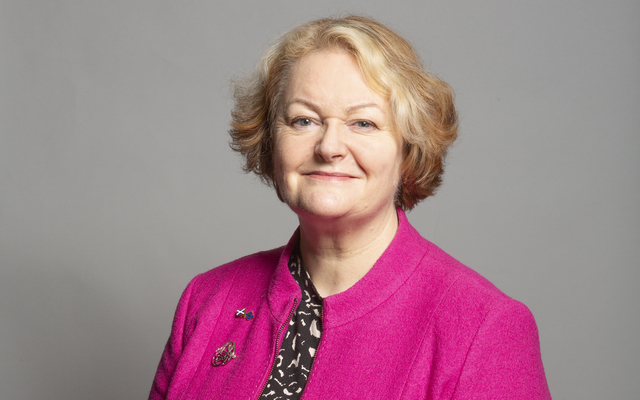
Image: UK Parliament. Reproduced under Creative Commons
Dr Philippa Whitford MP
|
||
|
||
|
MP Dr Philippa Whitford was until recently the SNP’s health spokesperson at Westminster, a Scottish MP tasked with scrutinising decisions about the English health service.
Speaking a few days after finishing a six-and-a-half-year stint in the role, the Central Ayrshire MP says it has not felt particularly productive. In fact, as she tells healthandcare.scot, she has been “wasting her breath”.
First elected in 2015, the former breast cancer surgeon was a natural choice to lead for the SNP on health – a slightly awkward position given that decisions about the NHS in Scotland are taken in Holyrood.
Dr Whitford was meant to take on the Europe brief following the December 2019 election, but stayed at health when the pandemic started to unfold in March 2020 and finally moved onto Europe this month.
“Frankly, I've been banging my head on the brick wall that was Matt Hancock and is now Sajid Javid and Boris Johnson,” she says.
“My interest in health and wellbeing is undiminished. But obviously where I end up spending my energy is on covid policies and policies around the NHS in England…[The government] don't accept any amendments, they don't accept any input. You think, for the for the sheer amount of hours and effort, what benefit is that to my constituents?”
Legislation currently going through the House of Lords will unpick some of the more controversial aspects of the Lansley reforms to the English health service, which built on previous internal market reforms that forced NHS bodies to tender for contracts.
The 2012 changes created competition “not just between NHS and private bodies, but between NHS trusts competing for contracts,” Dr Whitford argues. “You have this loss of cooperation, competition instead of collaboration, and you see patient pathways get broken up. And that's the big difference to Scotland: We still have a unified, public NHS."
England’s new Health and Care Bill will also create integrated care bodies bringing together the health service and councils.
Unions and campaigners have voiced concerns about independent providers having a place on the new boards, arguing this could lead to privatisation, though the former CEO of NHS England, Sir Simon Stevens, has said this argument is “hard to sustain”.
Dr Whitford argues “one of the big fears” is that the “influence of private companies has moved up the ladder”.
“It's hard to see how that simply isn't a conflict of interest,” she adds.
In Scotland the government used private hospitals to bring down waiting times before the pandemic and faces pressure to do so again to tackle an elective care backlog. Even setting aside variations in scale, Ms Whitford argues the relationship between NHS Scotland and private health remains fundamentally different:
“What we've never done is outsource NHS facilities to be run by private companies…It's a difference of principle, buying extra capacity at a time like this, or literally splitting up and making different parts of your system compete financially, which is the approach in England – a healthcare market.
“Unfortunately, after this bill, it's still a healthcare market. They've missed the opportunity to completely go back to a unified public NHS in England, even if it's administered through integrated care boards, similar to our health boards.”
While England presses ahead with integrated care systems, Scotland is set to create a National Care Service – though questions remain about its eventual relationship with the NHS. The Nuffield Trust thinktank has said Scotland acted as “pathfinder” in its approach to integration, though it found all four UK nations faced similar challenges whatever methods they used.
Initiatives like free personal care for over-65s, for example, were introduced in Scotland in 2002. More broadly, social care spending has been protected to a greater extent since 2010, while falling in England.
Dr Whitford says there’s a sense at Westminster that there’s “nothing to be learned” from Scotland, Wales and Northern Ireland. “But actually, if you look at public health measures, the smoking ban was first introduced in Scotland, and minimum unit pricing; the charging for plastic bags to protect the environment started in Wales.
“It's actually the devolved governments that tend to be more nimble, more innovative and more radical in their approach.
"And actually, it's Westminster that tends to take several years to follow along.”
Read more: NHS to be "priority" for new social care tax revenues; Budget: “Challenging” outlook for NHS & social care; Yousaf: NCS blueprint not ‘fait accompli’
Sign up to our bulletin for key health & social care updates straight to your inbox. |
