|
Nurses still denied ‘safe space’ to speak out |
Related newsAgency health & care staff left out of £500 bonus “Significant questions” over winter social care plan Community care ‘overlooked’ in pre-pandemic planning “Critical” strain on care nursing workforce Chief Medical Officer: ‘Critical connections’ priority Psychiatrists in ‘disbelief’ over cut funding 
|
|
|
||
|
||
|
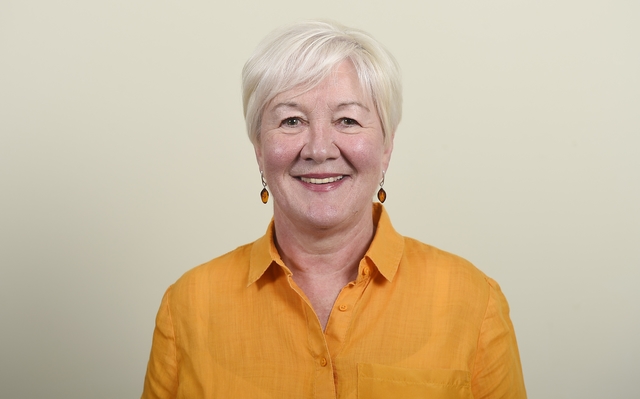
After 13 years at the helm of Scotland’s union for nurses, Theresa Fyffe is standing down early next year.
Ahead of her retirement, the former deputy chief nurse speaks out about the priorities for nursing in Scotland after the pandemic – and tells healthandcare.scot how many of the challenges facing the profession have got worse.
The Royal College of Nursing Scotland head says she was “gutted” to read a survey from this year revealing 38% of nurses in Scotland were considering leaving the profession – up from 27% the year before.
“They’ve gone into covid, done their all and they’ve come back out to face the same concerns,” says Theresa Fyffe.
And, although some nurses liked the “hero attention” that came out every Thursday evening, “something more tangible” is needed.
Ms Fyffe says pay structures are a “significant” problem, with bandings developed “many years ago” failing to keep pace with nurses taking on additional roles and responsibilities.
“You can start as a newly qualified staff nurse and yes you do extend your pay, but you come to a ceiling and you can be there for ten to 15 years in that band, still extending your scope but never changing your pay.”
The result, she says, is that nurses, effectively stuck in band 5, “feel very left behind… It doesn’t matter what else they do”.
One area of concern before the virus hit was shortages of nurses across the NHS and in care homes.
There are around 4,000 unfilled nursing and midwifery positions in NHS Scotland, according to figures from last year, representing the highest rate since September 2007.
However, Ms Fyffe warns there is another, hidden, problem
“Many of [RCN’s] members tell us they can’t [speak up about staffing concerns]; they say there isn’t a safe space for them to do that.
“When people talk about well-being of staff… [it means] you can say ‘look today I do not have enough staff, it does not feel safe in this work environment’.
“You should be empowered to do it, not pushed to say they’re okay when they’re not.”
When it comes to the care sector, she adds: “Covid has brought home to us that the employers have a voice in the table, those who inspect and regulate have a voice at the table.
The experience of BAME workers in Scotland’s health service has also been a concern.
Evidence in England suggested medical staff from Black and Asian ethnic minorities faced a much higher risk from covid but authorities in Scotland struggled to produce the same research quickly enough.
“For Scotland we did it, we got there, but, in a way, it was a wake-up call,” Ms Fyffe says.
“We didn’t understand enough about BAME staff in Scotland… We knew there were nurses and doctors and others who needed to be given a different form of risk assessment and support because the risk to them was greater from covid.”
Her words echo the findings of an expert group that said “immediate action” was needed to fix a longstanding lack of data about the health of ethnic minority groups – including NHS and care staff.
Ms Fyffe consistently highlights the role played by nurses working in care homes up and down the country, as well as the NHS.
She found it “immensely frustrating” that safe staffing legislation drawn up before covid focused on the NHS but left out care homes, where nurses are routinely in short supply.
“We had a lot of barriers put up, despite the workforce crisis in the care home sector.
“There is an opportunity to rethink that… I hope now that we can get it back on the table and say ‘why wouldn’t you think safe staffing for the care home sector was absolutely critical?’”
More broadly, four years after the promise of health and social care integration, there’s still a feeling, she says, of an “artificial divide”.
“We talk about social care yet the residents and people within a care home have actually got clinical needs too.
“What we now know is that people who don’t need to be in an acute hospital in today’s world do still require clinical care within a care home or in their own home.
“We haven’t made the transition to that thinking.
“If anything, the whole divide between clinical care and care homes [during the pandemic] was an example of that.”
Trying to integrate health and social care was undoubtedly the right thing to do, Ms Fyffe says, but covid-19 has exposed the project’s shortcomings.
She points out the public do not see a divide between the district nurse and the care worker who come into their homes – but services continue to be run separately.
“That’s what empowerment of people is. Stop dividing the two and stop arguing over whether it’s a social care model when it’s not.
“It’s both clinical and care coming together, health and care coming together.”
The RCN is engaging with the ongoing review of adult social care, which is set to report in January 2021.
Former NHS Scotland CEO Derek Feeley has been asked to consider setting up a national care service as part of its work.
Although she does not back any particular model for a future care system, Ms Fyffe believes all parties have “drifted” into a status quo that needs to change.
“There are many, many, good care homes,” she says, “but we’ve gone for fairly big, 80 bed, 90 bed care homes, which is bigger than what community hospitals were.
“We took people out of community hospitals saying we didn’t want that, but they might have 40 or 50 beds.
“Suddenly we’ve gone into an 80 bed [care home] which is several floors and then it’s argued that is a homely environment?”
And what about retirement plans?
“My only thinking is, it won’t be in this area…I’ve always felt that people should move over, let that new person get in and do the job.
“So probably it will about pursuing other interests which, in this job, I’ve never for years been able to do.
“You’ve probably picked up, I have strong interest in older people and social care and that world, and in poverty.
“I’m still passionate about nursing. That’s why I love this job, it’s been the best job to do for the end of my career.”
Bulletin – Sign up for all the latest news and events.
Supporters – If you can help support our reporting for Scotland's health and social care community, please head to our donations page.
|
