|
Freeman: We cannot “flick a switch” to restart NHS |
Related newsNHS spending millions on private beds in covid deal Expanded ICU capacity to stay as NHS preps for winter Millions spent sending NHS Scotland patients private Insight: We need a plan for cancelled surgery backlog Children’s doctor new Chief Scientific Adviser Chief Medical Officer: ‘Critical connections’ priority 
|
|
|
||
|
||
|
It could take nearly a year to catch up with a backlog of cases that has built up during the pandemic, MSPs have been told.
Speaking yesterday to the health committee, Health Secretary Jeane Freeman warned it was not possible to “flick a switch and turn the NHS back on” because beds had to be set aside for covid patients in case of a second wave and staff are mentally and physically “exhausted”.
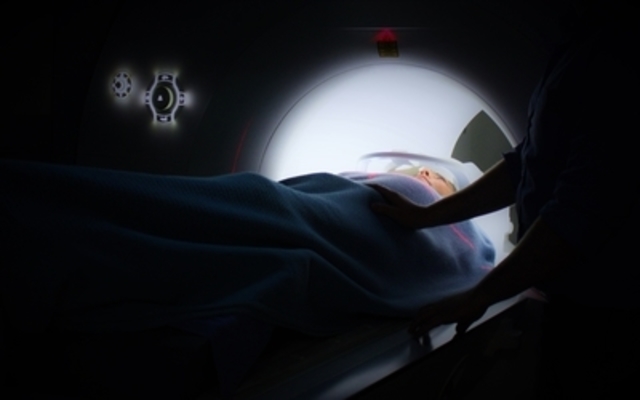
Plans to catch up with a “backlog” of thousands of delayed tests for conditions such as cancer could see mobile CT and MRI scanning units being deployed across Scotland to bring services to “people and patients”.
A framework for restarting NHS services that were paused because of coronavirus was unveiled earlier this month.
Due to the pandemic roughly 2,000 fewer people are being referred for urgent cancer checks and more than 100,000 are not getting screened for the disease each month.
Challenges extend beyond diagnostics, with cancelled operations for a variety of conditions building up since the NHS moved to an emergency footing in March.
Interim NHS Scotland CEO John Connaghan said the proposals were under “active consideration” and could begin before the end of July.
“One of the considerations that we currently have underway is whether or not we can source and then deploy very quickly some mobile units across Scotland to bring the service to the people and patients.
“That would cover things like CT scanning and MRI scanning, so that’s currently actively under consideration, and we may well start in the latter half of the first phase, which is between now and then end of July.
But Mr Connaghan, who took on the role after his predecessor Malcolm Wright retired in May for health reasons, said the period up to March 2021 would be “much more important”.
He told MSPs: “Looking ahead, Scotland is relatively fortunate in that it embarked a few years ago on a strategy to build and create additional elective units, and all of these have diagnostic capacity.
“The plan was that these would be gradually brought on stream out to 2035, but I think we probably need to re-examine how fast we scale this up and how fast we now deploy them.”
The Royal College of Pathologists, which represents laboratory professionals, has warned Scotland is only “partly” prepared to deal with a testing backlog that has accumulated during the pandemic.
In written evidence to the Scottish Parliament’s health committee, the college said it anticipates a ‘large volume of complex cases’ and warns more patients will be diagnosed at later stages of their illness.
‘To date, we are not aware of specific plans (other than numerical targets and some possible IT solutions) as to a strategic approach to this matter,’ it adds.
Sign up to our bulletin sent twice a week so you don’t miss out on the latest health and social care news. |
