|
Proposals underway to accelerate SIGN guidelines |
Related newsRespiratory care vision unveiled Drive to detect undiagnosed HepatitisC Gathering of CLANS to boost CVD research Pharmacy’s road to stigma-free drug dependency care Health and charity leaders join forces for NHS reform Government boosts health innovation funding 
|
|
|
||
|
||
|
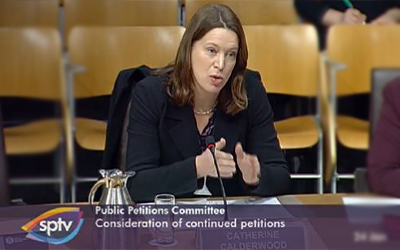
While giving evidence to the Public Petitions Committee, Cabinet Secretary for Health & Sport, Jeane Freeman, highlighted a change in approach from the Scottish Intercollegiate Guidelines Network (SIGN).
To keep pace with technological change, proposals are being developed for rapid technical assessments to be carried out to produce more focused and pertinent clinical guidance.
Jeane Freeman appeared before the Committee, alongside Chief Medical Officer, Dr Catherine Calderwood, and Elizabeth Sadler, deputy director for planning & quality for the Scottish Government.
During a discussion related to a petition on continuous glucose monitoring sensors for diabetes, MSPs raised concerns about relevant SIGN clinical guidelines being out of date, particularly in relation to FreeStyle Libre flash glucose monitors.
Formed in 1993, SIGN looks to improve the quality of healthcare for patients in Scotland by reducing variation in practice and outcome through the use of national clinical guidelines, based on current evidence. All medical specialities are covered, alongside nursing, pharmacy, dentistry and professsions allied to medicine, such as social services and health service managers.
Current guidelines are due to be withdrawn in 2020 and the Cabinet Secretary said proposals were “in the pipeline” to begin to update guidelines for type 2 diabetes this year. She stated that rapid technical assessments were being looked at for type 1 diabetes as a replacement for SIGN guidelines that, in some instances, were unable to keep up with the pace of technological change.
The role to be played by stakeholder groups, such as the Scottish diabetes group, was emphasised by Chief Medical Officer, Dr Catherine Calderwood. She explained they would be expected to submit proposals to SIGN and a Scottish health technologies assessment could then be requested, enabling SIGN to “quickly produce guidelines that are clinically relevant”.
Dr Calderwood stated: “The (SIGN) guidelines committee has therefore undertaken a complete change in the way that it will do the guidelines. The older guidelines will be retired and there has been a call for much more focused guidelines, rather than something that would take years to produce.”
“SIGN has said that it will take on [a number of] pieces of work per year, which will be produced much more rapidly and which, I would argue in agreement with SIGN, will be much more clinically relevant than something that takes three or four years to produce.”
“…in Scotland, the idea is that we do not rely on guidance that is years out of date and that we do not have a situation in which the new research that is behind the guidance is not looked at. In common with the way in which guidelines are produced across the rest of the UK, that is a much more rapid process.” |
