|
Scottish doctors’ deep concerns over workforce |
Related newsLess than full-time – behind the NHS trend Scotland to work with UK on Physician Associate reform Probe into future of NHS Scotland’s doctors underway NHS doctors unemployment crisis despite understaffing ‘Bleak picture’: health leaders react to NHS review Burnout fears as covid-19 takes toll on doctors Medical trainee abuse reports ‘shut down and silenced’ Politicians must take ‘bold’ action on child poverty Glasgow district nurses ready to strike NHS and Glasgow rethink routes into healthcare ‘Major’ update to One Health AMR register Glasgow LEZ success sparks call for expansion 
|
|

Image: © Monika Wisniewska /Adobe Stock
|
||
|
||
|
Scotland's doctors say most of them are working in understaffed teams where the safety of patients is often put at risk. A snapshot survey by trade union BMA Scotland is showing widespread concern that there won't be enough doctors in Scotland's NHS to meet patient demand this winter and in the longer term, with some raising concerns about the numbers emigrating.
In all, 610 doctors responded to the BMA Scotland survey during a week in December, with 4 out of 5 saying they believe staffing levels of both doctors and the wider multidisciplinary team are sometimes (49% of respondents) or regularly (31%) unsafe.
Over 7 in 10 said they believed medical staffing has worsened relative to patient demand over the last two years.
Around 62% expressed worries that there are not enough doctors in Scotland to meet the needs of the NHS this winter, while three quarters said they worry that things will not have improved in a year’s time.
One doctor wrote that staffing has been poor throughout the nearly 10 years since they qualified, and that half of the people who entered graduate jobs alongside them in 2014 have now emigrated to Australia and New Zealand.
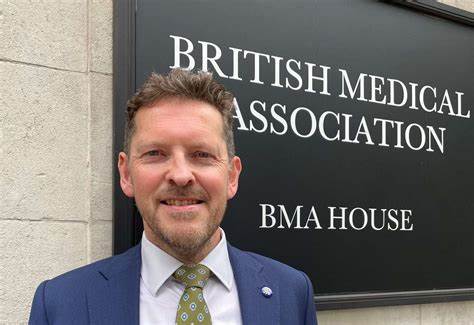
The chair of BMA Scotland, Dr Iain Kennedy, is now calling on the Scottish government to publish medical workforce projections – which he says have now been delayed for nearly a year – amidst “deep concern” about the wellbeing of both health and care workers this winter, and the impact on patients of short staffing:
“I am deeply concerned that 80% of our doctors who responded to this survey are warning that their experience within their teams is that medical and support staffing is regularly or sometimes unsafe.
“And it seems there is little prospect of things improving with three quarters of them already worried about there not being enough doctors and other healthcare professionals to cope with demand in the longer term and ahead of next winter. Indeed, one of our doctors said ‘every week is starting to feel like working in a war zone.
“This is only going to get worse as the winter progresses.
“Both medical and wider staffing in Scotland’s NHS are at dangerously low levels. Now is not the time for platitudes or to tell us that we are at a record high in terms of doctors because it simply will not wash with the profession who are stretching themselves to breaking point, risking harm to themselves, in a bid to provide the level of care the people of Scotland need and deserve.”
The BMA says Scotland is experiencing a medical workforce crisis with falling GP numbers and increasing unfilled vacancies for consultants:
"We need more doctors and other healthcare workers to keep up with the demands of an ageing, frailer and growing population," said Dr Kennedy. "The Scottish government must wake up to this reality and take immediate action."
Dr Kennedy has welcomed the Scottish government's promise of a national conversation on the future of Scotland's NHS, while psychiatrists are in ‘disbelief’ over cut funding to mental health in the government's new budget.
Meanwhile, Dr Kennedy says a national conversation must be accompanied by “a long-term proper medical workforce plan” – but not one that tries to solve the crisis “on the cheap or through shortcuts” where non-doctors undertake doctors’ roles:
“If I have one wish for 2024 it is this – and I direct this at the Scottish government in the main – listen to the doctors of Scotland, but don’t just listen.
“Act, and act urgently. Please. For the future survival of Scotland’s NHS and the patients who rely upon it. It is only by solving the medical workforce crisis that you can even think about making progress in other areas, like cutting waiting lists. It is non-negotiable.”
A Scottish government spokesperson said:
“We are committed to growing our medical training pipeline, and to do so we have increased the number of available medical school places at Scottish universities by 67% (569 places) since 2016 to a record high of 1,417 for 23/24.
“Record levels of investment will also see an additional 153 trainee doctor posts created next year in what will be the largest annual expansion on record, following on from the 152 extra posts created in 2023."
Voices from the frontline
BMA Scotland provided the doctors surveyed with the space to add their own comments in free text boxes. Here is a look at some of the anonymous comments made by respondents:
“I feel like I am firefighting the whole time and it is by the grace of God that we have not had serious incidents. We now no longer have a nursing team at all on the practice so those days I will now be the only clinician in the practice, not just the only doctor. I fear for the future.”
“Staffing has been poor since I started working as an FY1 [first foundation year] in 2014. In 2015 we regularly had night shifts not fully staffed and rota gaps have been a recurring issue across the board of specialities I have worked in from that time until present, I feel the gaps have become worse. Of my original 30 person FY1 cohort of 2014, over half of them emigrated permanently to Australia and New Zealand after FY2. This seems to be still the case to date for other intakes of doctors since.”
“Waiting lists for urgent and routine care (clinics and theatre) is at an all-time high with myself and colleagues just putting out fires rather than deliver the care we want to. Patients are operated on long after they should have been, due to a lack of capacity, making the surgery more complicated and with a bigger long-term effect on patients. Some deteriorate and require surgery as emergency (instead of planned elective) putting pressure on the emergency service and workload.”
“Multiple times per week there is a shortage of foundation doctors on the medical floor, in hours and out of hours. My own ward has a 2-doctor minimum safe level - I have had one shift with another foundation doctor in 4 months. Every other shift I was the only foundation doctor. Similar thing regarding junior and senior Registrars.”
“Working in medical front door, I feel extremely unsafe for the patients and staffs due to over workload.”
Read more: Concern over drop in nursing student numbers; Urgent workforce reforms needed for Scotland’s NHS; Winter plan offers "no hope" to social care or nurses; Surgeons’ deep concern as 45% planning to quit
Sign up to our bulletin for key health & social care updates straight to your inbox and you can follow healthandcare.scot on Google News. |