|
Opinion: Dementia strategy sows seeds of change |
Related newsDementia campaign success to inform government actions Call to expand Huntington’s specialist care Fair funding to see Scotland lead dementia research National shift needed for dementia care Scotland’s soccer aid spotlights Alzheimer’s risk ‘Rethink’ dementia support, says government 
|
|
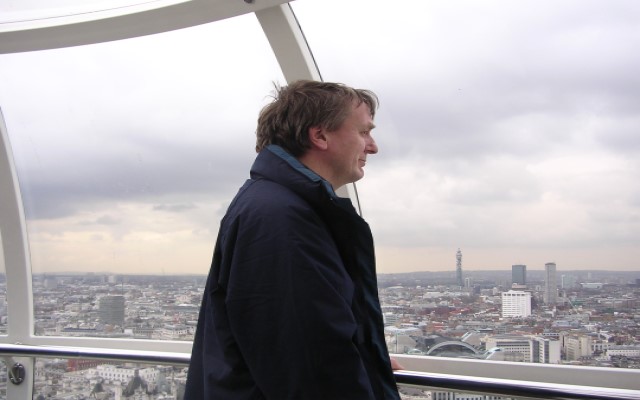
Image Credit: © Martin Robertson
|
||
|
||
|
Earlier this month, the Scottish government published its new dementia strategy, outlining its ambitions to better support people living with dementia and their carers.
Martin Robertson, a lived experience contributor to the 10-year strategy gives his personal perspective on the positive change it could make for generations to come.
I am an individual not associated with any dementia organisation and would like to give my thoughts on the new Dementia Strategy that may not have been captured by organisations sharing their perspectives widely. I would like first to address their concerns.
The first criticism laid at the strategy is that the government has not worked out why the previous three strategies have not worked. I don’t deny this, they have not; the one-year ‘guaranteed’ post-diagnostic support is the most obvious one. Scotland is yet to reach its targets for people with dementia being referred to and receiving that post-diagnostic support. Fewer than 50% of newly diagnosed dementia patients were referred for post-diagnostic support in 2019/20 and 2020/21.
There is, in my mind, only one reason: it is through no fault of health and social care partnerships, which just don’t have the resources. A lack of resources is the second complaint that charities often make, including some doing good work highlighting the inequalities in funding allocation. For instance, Grampian where I live, receives one of the lowest levels of spending per capita from Holyrood despite covering 7,000 square miles.
However, charities should be advertising the real state of social care, using stories saying, “This could be you or a loved one, who knows what tomorrow will bring?” then giving anonymised stories of the reality facing people. With this, they could then also show what is possible nationwide with proper resources.
Instead, they highlight their flagship projects so the public thinks everything is fine when, in reality, like the official care system, charities themselves can be a Postcode Lottery – usually in the Central Belt so they are more visible.
Politicians only spend what taxpayers allow, so again the politicians should be highlighting the state of the care system asking if they would like this for themselves or a loved one. The public read about it, but to hit home it has to be personalised.
I am an eternal optimist in that I really believe if the public fully understood the lack of resources and what this actually means to individuals, and possibly themselves in the future, they would be prepared to pay more.
The new strategy has many more positives than negatives.
Inclusion at every level
The first point is that money to support dementia services comes from various sources: Westminster through the Barnett Formula for devolved nations; Holyrood within Scotland's taxation powers; and local authorities from council tax. So, all these sources should work together – but rarely do.
Civil servants have involved people with lived experience in drawing up the strategy and have even accepted ideas from people such as myself who are not associated with any large influential organisation and so in theory have no power. Personally, I have found the opposite. They are always ready to listen as long as you have evidence to back up your argument. For instance, mental health has been highlighted and I provided evidence for that and the strategy mentions dementia wards.
I hope that others on the lived experience panel will feel enabled to look for data themselves for tracking the implementation of the strategy going forward relies on this. If we find it ourselves, rather than professionals with their subconscious bias, it will mean data is gathered more widely and fairly, without overlooking aspects – like mental health – that those of us with lived experience are able to highlight.
The stategy also highlights the importance of research. To be beneficial this research must include us as co-researchers to whatever limits we want to get engaged.
This ties into “My Story” in the document, where I say that I believe people with dementia should be integrated into society, rather than exclude themselves. This is so that society itself has a good knowledge of dementia so when folk they are with every day go into care, they will have a better sense of the reality of care. This will hopefully make them prepared to pay more to support these services.
Other disabled groups aren’t expected to create their own spaces: they rightly expect society to include them under the Equalities Act 2010. Who are we to demand special treatment? If it is stigma, I quote Roosevelt: “You have nothing to fear, but fear itself”.. I want to see dementia groups meeting within society, such as libraries, pubs and cafes. We are not special, we are ordinary members of society. To be fair, this does happen but not every time.
Language is also important: “Dementia Friendly” implies it’s just for those with dementia whilst “Dementia Inclusive” implies a wider societal inclusion.
Democracy and decision-making
The Scottish government haven’t set the priorities yet, as the lived experience panel along with the organisational panel will decide these this summer. Professionals may say this is causing delays, but I would say that truly involving people with lived experience may take longer but we are the experts, not the paid professional charity workers.
So often it feels national organisations are platformed for either the professional view or a member who agrees with their official line. While this may be a member’s own perspective too, it can mean lived experience perspectives are missed and undervalued. That is why I keep writing articles such as these so society can see we do have our own voices. Especially as I feel some large, influential organisations fail to represent the views of myself and others I know living with dementia.
This brings me to my last point: creating the lived experience panel has upset the status quo of the historic power balance in favour of real people. Democracy – which is what it is – is messy and time-consuming and having the discussions out in the open allows everyone involved to feel empowered and not just statistics for the professionals to quote.
Decisions behind closed doors might be quicker, but sunlight is always the best disinfectant. Research, as I discussed in an earlier article, has shown that our voices resonate much more than mere quotes in fancy, professional reports that come from professionals.
Being an optimist, but also a realist, I don’t expect much to change before I go into care within five years or so, but the seeds have been planted with this strategy for future generations.
Read more: Voices of experience key to dementia care; Music's potential to help with dementia; Briefing: Scotland's ‘new story' for dementia policy; Scotland commits to change the dementia story
Sign up to our bulletin for key health & social care updates straight to your inbox and you can follow healthandcare.scot on Google News. |