|
Time to end COVID’s Project Ignorance |
Related newsRemoval of mask wearing ‘dangerous’ Opinion: Unmasking the problem Opinion: Welcome to the new normal? Plea for renewed focus on Long COVID Infection risk petition set to fail Scotland’s third sector calls for health partnership Scientists to help cut NHS medical device waste Edinburgh IJB faces judicial review over cuts Scotland’s new Chief Nurse appointed Urgent plea to safeguard advocacy amid local cuts New gene study offers arthritis treatment insights New Edinburgh hub set to transform global healthcare 
|
|
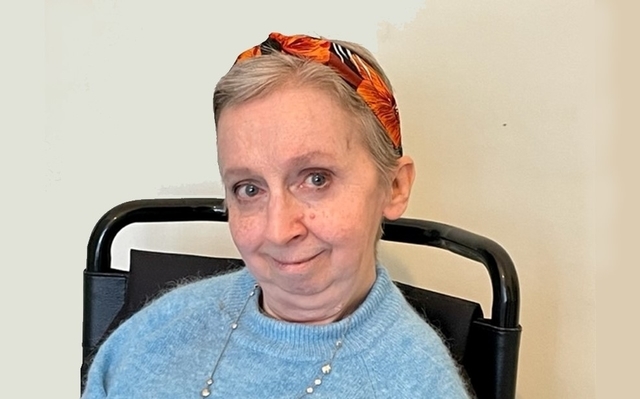
Image Credit: © Feena Mckinnell
|
||
|
||
|
As the NHS faces the consequences of continuing infection spread, ‘living with COVID’ like it has disappeared or no longer matters, is not working.
Dr Sally Witcher, freelance consultant with a career in equalities and inclusion spanning senior roles in third and public sectors, writes in a personal capacity as a disabled person with high clinical risk from COVID-19. Here, she argues that where we are is not inevitable and we all have roles to play if we want to reach a better, safer place. It’s high time, she says, for a major rethink.
According to Cabinet Secretary Humza Yousaf in his recent statement to parliament:
“this is the single most challenging winter that the NHS in Scotland has ever faced… Our entire health and social care system faces the continuing impacts of the pandemic…Covid remains a pressure on our health system…The problem has been exacerbated by increases in staff absences due to self-isolation requirements and sickness”.
This looks like unequivocal acknowledgement of a causal connection between unconstrained COVID and unsustainable pressure on the NHS. That link could hardly be more obvious if written in neon lights filling the sky while shouting it through a megaphone. You might therefore expect it would engender a laser-sharp focus on preventing infection spread – of all kinds. You’d be wrong.
Instead, as the Scottish government sought to magic increased NHS capacity out of thin air in preparation for the expected winter surge in infection-driven demand, it simultaneously removed protections that would have curbed that demand.
With another wave of the governmental magic wand, it caused a still evolving pandemic to vanish from public awareness, casting a necessarily massive invisibility cloak over the wealth of evidence not conforming to its chosen narrative: vaccination has turned COVID into something like the flu or cold, including almost all people with exceptionally high underlying clinical risk; the pandemic is basically over, or it isn’t but we just need to learn to live with it as an irritating fact of life.
And here we are. Was it inevitable?
Even where power is devolved, Scottish government can be very limited by the UK government. Whitehall spending cuts feed into the Scottish budget. Interactions between devolved and reserved powers can be complex and constraining. In an adversarial political system, it can be hard to change tack. Common sense can take courage! Yet, having worked at the coalface of devolved social security I have seen that much can be achieved with little.
People too are constrained, by requirements imposed by employers and schools and widespread failure to act on COVID-safety inequalities. Earn money to survive or stay home to protect others from infection; what would you choose? Can you afford to test? Almost no one wears a mask now and that creates social pressure. An act of solidarity instead prompts funny looks and sometimes abuse.
If we are to get out of this mess and move towards a safe, inclusive new normal, the public, government (all levels), employers, schools, unions, third sector, and people adversely impacted. need to be equipped to become partners in protection.
Having offloaded responsibility for protection onto the public, the government failed to give us the necessary information, tools and support to exercise protection, casting us adrift in a raging war of misinformation.
The days of “Stay home; Protect the NHS; Save lives” may seem long gone, but how people behave makes a critical difference. By removing mandatory requirements, personal choice assumes pivotal importance. But to make good choices requires good information. Not everyone will act on it, but it would empower those who value their own health, care about the impact of their behaviour on others and don’t want to see our precious NHS fall apart. It would give us a fighting chance, rather than compel us to be unwilling, unwitting agents of infection spread.
Power to the partners!
Bearing in mind that as we continue to learn, so ‘good information’ can change, what does some of the latest information tell us we are protecting ourselves and others from?
In addition to acute infection, there is a plethora of emerging research on the multifaceted long-term damage this ‘wee cold’ can do. It can damage the brain, cardiovascular system, lungs, kidneys; and cause diabetes, digestive problems, low sperm count, loose teeth, etc. It can damage, and dysregulate the immune system.
According to a recent paper:
“Long COVID is associated with all ages and acute phase disease severities, with the highest percentage of diagnoses between the ages of 36 and 50 years, and most long COVID cases are in non-hospitalized patients with a mild acute illness”
There is also good research showing that, contrary to ‘herd immunity’, risk of adverse long-term impacts increase with each bout of infection. Getting repeatedly sick in order not to get sick appears not to work!
Scotland’s health record was poor before COVID and COVID infection has worse outcomes for many people with pre-existing health conditions.
It also seems to generate many types of health condition including those that made people more susceptible in the first place. Therefore, ‘recovery from COVID’ cannot just mean reprioritising other conditions previously deprioritised to focus on COVID. That would be to miss the incoming tsunami of more of the same conditions.
What’s the latest on protection?
While Scottish government action on masks and clean air (addressing exposure risk) has been slow, minimal and poorly promoted (e.g. the Business Ventilation Fund), its focus has been narrowly on vaccination and clinical risk. Yet many people, including those with significant pre-existing health conditions, were ineligible for spring boosters and antivirals. The Scottish government dithered with the UK government over Evusheld.
John Swinney was unable to confirm to the COVID Recovery Committee if there would be another booster programme in 2023. That depended on JCVI advice (and presumably whether government would fund one). Happily, it’s looking more likely than not, following interim advice since announced.
We need to be enabled to keep up-to-date, be well-informed and make adjustments. Hands up who’s heard of the Winter Signage scheme or the new guidance on safer workplaces and public settings where it is to be found. Nasal sprays, elastomeric masks, wastewater testing, and more is coming down the tracks. Technology has opened up massive potential for remote or hybrid working and events. There’s so much we could be doing and doing better. It doesn’t have to be a choice between either ‘Project Fear’ or ‘Project Ignorance and Complacency’.
Rethinking Business as Usual
We seem to be in a situation where sustaining the economy and essential services requires that anyone who isn’t too ill, even if highly infectious, to show up for work or school, thereby spreading infection further. Business as usual is undermining business as usual. It is proving to be incompatible with inclusion, health and well-being. We need a major rethink.
This summer, with a final flourish of the wand, the COVID-19 Recovery Strategy will end, or as Mr Swinney prefers to frame it, will be ‘mainstreamed’ into existing frameworks and budgets. If that goes the same way as ‘mainstream equality’ it will be the policy equivalent of pouring a cup of water into a bath of water, never to be seen again. It’s never more important to maintain a sharp focus on something than when you’re mainstreaming or integrating it. Much useful learning has been spawned across the world by COVID which could have wider beneficial application, e.g. on infection control; action on clean air might usefully integrate (not subsume) action on pollution and infection spread, and so on.
Established concepts need rethinking too.
COVID-safety is a new form of equality issue, based on unequal risks, both clinical and exposure frequency, that overlay protected characteristics and create new inequality drivers and groups. This needs to be explicitly integrated by changing performance frameworks, impact assessments and policy on health and safety, environmental standards, reasonable adjustments, schools, building regulations, community safety, industrial injuries, and so on.
With new immunity-resistant variant XBB.1.5 coming our way; as crisis compounds crisis, it takes every ounce of energy to keep your head above water and leaky ships afloat. But if you can carve out the mental space to envision alternatives, possibilities flood in. Not all will be viable. In a constantly changing environment what looked sensible may transpire to be flawed. However, if we don’t try; if we don’t take a truly ‘whole systems’ approach involving all concerned as partners in protection, and use our combined creativity, how will we ever know?
Read more from Dr Sally Witcher: Welcome to the new normal?; Desperately seeking COVID sense; An inclusive new normal
Email:Witcher.Work@outlook.com Twitter: @SalWitcher #InclusiveNewNormal
Sign up to our bulletin for key health & social care updates straight to your inbox and you can follow healthandcare.scot on Google News. |
