|
Kerley: I assumed new doctors were paid more |
Related newsPharmacy’s road to stigma-free drug dependency care Doctors say GP funding boost “just the start” Less than full-time – behind the NHS trend Scotland’s new Chief Nurse appointed New taskforce to drive ADHD and autism improvements Health and charity leaders join forces for NHS reform 
|
|
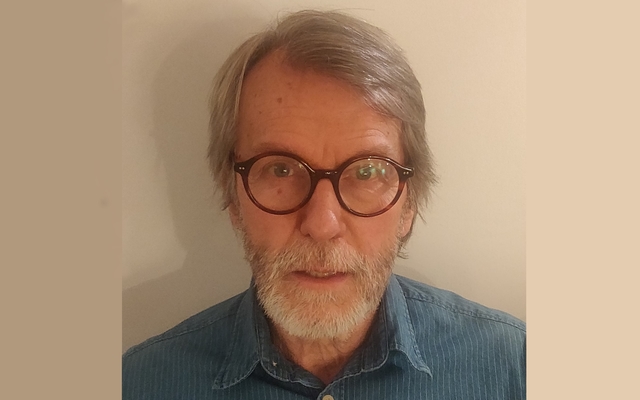
Professor Richard Kerley
|
||
|
||
|
One of Scotland's foremost experts in public service administration is calling on the Scottish government to undertake a radical review of how the NHS is run and how its staff are paid, in the hope of taking health and care out of their current state of continued crisis.
A year ago in an interview with healthandcare.scot, Professor Richard Kerley called for all Scotland's hospitals to be run directly from Edinburgh. A year on, he says the rationale for that is as strong as ever – but the current priority for Scotland has to be making tough decisions on pay and conditions for public sector employees.
Richard Kerley, Emeritus Professor of Management at Edinburgh’s Queen Margaret University, says it is perfectly reasonable for the biggest cost in running the NHS to be its people – but Scotland also owes it to NHS staff to invest in their working environment:
"In whatever setting that you look at, if there is the right energy and the right commitment then teams succeed.
"I'm not just talking about individual, but a combination of factors. We describe it using French words – esprit de corps, élan, morale. If you have the right combination of energy and people, you can make even the most awful structures work. But, if you have to work around problems with the system every day, then that becomes utterly frustrating and undermines everything."
Professor Kerley says Scotland has long underinvested in NHS equipment and buildings. It has missed the opportunity to retrofit working spaces and, rather than save money and time, repeatedly opted instead to build grand, brand new facilities that fail to be ready on time, on budget or with everything working on day one.
Poor investment in working environments, he says, simply adds to tensions that have been stoked by inflation:
"We need that investment in where people work but, right now, we need to sort salaries – and accept that differentials are extremely important to people.
"If we take the very different setting of Scottish schools, it seems very clear from the tone that's been adopted by the teaching unions in their pay dispute with government and with the local authorities that they are seeking a higher increase than everyone else who works in the public services. Their claim is that they deserve more, and that they merit being paid more. But, of course, if government accepts that, then they upset other people who have already settled for less."
When it comes to the NHS, Professor Kerley says ministers have to recognise that staff don't just look across the health service, but measure themselves against others working in the public sector:
“I was quite struck when I saw a comparison recently of entry level salaries for starting doctors and starting teachers. I had assumed that doctors would have been paid more, but they are not.”
The Scottish government’s pay offer to teachers last autumn set the starting salary for a fully qualified new teacher at £35,650 and a probationary teacher on £30.039. Currently, the BMA says the starting salary for a newly qualified doctor in their first Foundation Year is £29,380.
“So, say now you're an entry level medical graduate taking up your first medical appointment,” says Professor Kerley. “You can end up at two o'clock in the morning with somewhat more responsibility than somebody who's teaching Primary 2.
“I don't dismiss the people who are teaching Primary 2. It's just this sort of differential impacts on whether people feel valued for the work they are asked to do.”
Richard Kerley says the NHS Agenda for Change salary system for non-medical staff creates a “broadly settled” approach to setting a value on the roles and experience of people doing different jobs. However, it doesn’t include care staff or look across at other public sector pay scales.
In terms of the bigger picture, the Scottish government is committed to a review of the structure and organisation of Scotland's NHS before the next Scottish election. Richard Kerley accepts that ministers do not have a blank sheet of paper and, instead, have to start from where we are now. But, he says, that does not remove the obligation to make tough decisions about the provision of hospital and specialist care, where the status quo may not be the best answer:
"Take, for example, the 20 year discussion about whether paediatric neuro and cardio services should be concentrated in Edinburgh or Glasgow. As a consequence, we have them in both Edinburgh and Glasgow. There is a lot of regional collaboration, but we're still saying to some parents who live in Wick you need to take your child five hours and 250 miles to be operated on.”
He says the case remains for hospitals to be “openly and directly” managed from Edinburgh:
“I use the word openly quite deliberately because, at the moment, everyone I talk to in every health board tells me hospitals are effectively being directly managed by ministers. NHS boards get more than a steer - it's more like a shove, a poke in the ribs, emails, letters and phone calls indicating what they should and should not do.
“Half of Scotland’s NHS boards have only one major hospital in their territory. These boards are committing a lot of energy to acting as an intermediary for government and duplicating effort.
“So, I still think that's something which merits review. And that would be the opportunity to take a fresh look at where we locate specialist, really specialist, expertise.”
In a second article to be published in a few days' time, Professor Kerley will return to the issue of the proposed National Care Service and argue that the government's central justification for its creation – ending the postcode lottery of care – is fundamentally flawed.
Richard Kerley is Emeritus Professor of Management at Queen Margaret University. He is a trustee of the Scottish Charitable Incorporated Organisation The Centre for Scottish Public Policy 2021 CSPP21 – Centre for Scottish Public Policy. He was the lead author of a provocation paper by the Centre: Is there a National Health Service for Scotland – or do we have an empty umbrella?
Read more: Watchdog: NHS ‘unsustainable’ before covid; Kerley: Run major hospitals from Edinburgh; Scotland must not rush into National Care Service;
Sign up to our bulletin for key health & social care updates straight to your inbox and you can follow healthandcare.scot on Google News. |
