|
Fair health – who gets it? |
Related newsCare home visits promote wellbeing New discharge to care homes programme All public bodies must focus on health, urges charity Health and charity leaders join forces for NHS reform Holyrood passes Care Reform Bill Lived experience at centre of care advisory group 
|
|
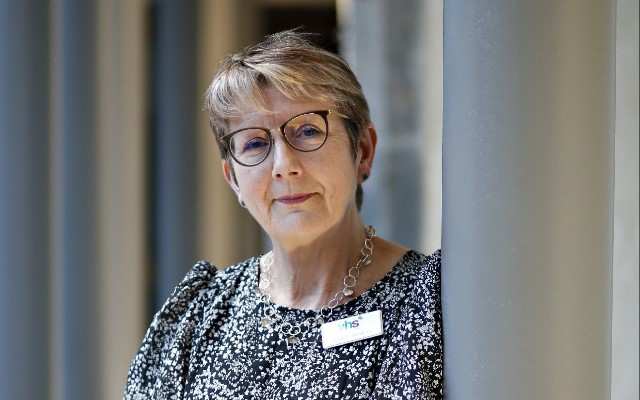
Claire Stevens, Chief Executive of Voluntary Health Scotland
|
||
|
||
|
The head of Voluntary Health Scotland (VHS), the organisation that represents Scotland's third sector health and wellbeing organisations, says people in Scotland are continuing to experience unequal outcomes in health depending on where they live, their backgrounds and what their illness or condition may be.
Ahead of the organisation’s annual conference focusing on fair health, Claire Stevens has been telling healthandcare.scot that voluntary sector providers need more resources, recognition and certainty about the future so they can meet the growing needs of the communities they serve.
“Health doesn't look very fair in Scotland. People in the most deprived areas spend half of their lives in poor health compared to those in the most affluent places, who enjoy 24 more years of good health. People with chronic pain are twice as likely to live in the most deprived areas.
Outcomes are unequal. Access to services is unequal.
Perhaps it’s the collective exhaustion of an overworked NHS, but people continue to experience discrimination and stigma – and also what can feel like a lack of compassion – when they seek to access services.
As part of the Scottish Parliament’s Health, Social Care and Sport Committee's inquiry into health inequalities earlier this year, VHS was asked to help gather the voices of people with lived experience of inequality in health.
With the help of a number of front-line charities, we arranged a series of four informal engagement events that brought MSPs together with people who had a wide range of life experiences. The committee members heard the perspective of unpaid carers, people with learning disabilities, migrants and asylum seekers, people living in poverty, and people with experience of homelessness or addiction to drugs or alcohol.
What was striking was how little knowledge many of these people had of their rights to services and the extent of their reliance on third sector organisations to help them navigate a complex landscape.
The pandemic exacerbated everything.
As a disease it impacted most greatly on certain populations. But, as people turned to the third and community sectors for support, it was the mitigation measures that had created the biggest challenges. Vulnerable people were told to shield, social distancing was enforced, and workers were put on furlough. Many public services were suspended for lengthy periods, and some are still only accessible digitally or by telephone. Social isolation and loneliness escalated, mental wellbeing slumped, self-management of long term conditions got harder, and the burden on unpaid carers grew.
Same pandemic sea, different boats
"What VHS and our sector learned was just how the pandemic exacerbated and highlighted pre-existing inequalities. We were all in the same pandemic sea, but most definitely not all in the same boat.
The third and community sectors stepped up to the plate, but two and a half years on we find we are still supporting people to ‘wait well’ for overdue treatment and services. Added to which, the cost of living crisis has come into the mix long before public services have recovered from covid, making it even tougher for people who didn’t get the early diagnosis, treatment, rehabilitation or support they needed.
Meantime, those facing marginalisation, stigma and discrimination are invited to share their ‘lived experience’ to help shape policy, but will meaningful action and change follow?
We want to use the conference to challenge our policy makers, public services and ourselves to make the right to health a reality and to make services fairer. This is why we are holding a workshop on racialised health, for example.
Then there is the proposed National Care Service. I think we understand the rationale for using a ‘framework’ Bill for the legislation to create it, but it's been challenging for our members to engage with this part of the process. Timing hasn’t been great and the Bill seems simultaneously vague and complex.
There is apprehension that this is just going to be another big reorganisation of public services when so much time, energy and resource have been devoted to health and social care integration.
These various worries mean we are pleased that members of the Scottish Parliament's community and participation and SPICe teams will be joining us at our conference to lead a workshop on the NCS.
Partners for health
"One area where VHS has been pushing strongly is the need for the NHS to work much more consistently with the third sector as a partner in public health, in order to embed equalities approaches. The roll-out of covid-19 vaccination last year demonstrated unequivocally the crucial role voluntary and grassroots organisations had to play in engaging particular communities to ensure they didn’t miss out.
Later this autumn we will publish our latest research into our sector’s involvement in making the implementation of the covid-19 vaccine more inclusive. Called ‘Broader Reach and Stronger Voice’ the report will have a clear message that voluntary organisations stand ready to be more involved in future public health interventions to reduce inequalities.
One area increasingly seen by policy makers and Deep End GPs as a crucial component of primary care’s approach to health inequalities is link working, a theme we will explore directly at our conference in our discussion of Realistic Medicine.
Last year VHS set up the Scottish Community Link Worker Network, as Scotland’s national community of practice and peer support network for the nearly 300 link workers working with primary care practices.
We know that many link workers are over-stretched and that the pandemic has seen a particular surge in referrals of patients with poor mental health. We also know that the third sector’s capacity to take on more and more referrals is increasingly very stretched.
Sustainable funding has not been on the horizon for most of us for a very long time, meaning voluntary organisations work with one hand tied behind their back. We too have been exhausted by a long pandemic. And yet, time and again, it is our sector that proves itself to be fleet of foot, innovative, and able to side-step barriers to address the needs of Scotland’s under-served people.
The step change that we really need will involve more equal partnership and resourcing between the third and public sectors. That’s an important part of the conversation we will be having in Glasgow later this month.”
The VHS Annual Conference 2022: Fair Health - Who Gets It? takes place at the Radisson Blu Hotel in Glasgow on October 26 from 9:00 am to 4:15 pm. For more information and to book a place, visit the VHS website.
healthandcare.scot is pleased to be a media partner for the VHS annual conference and will be reporting on the event.
Read more: Lack of structure holding back social prescribing; Insight: Links workers’ vital role; Report warns against silo approach to vaccination; Review: Has covid changed voluntary health forever?
Sign up to our bulletin for key health & social care updates straight to your inbox and you can follow healthandcare.scot on Google News. |
