|
How air pollution affects our health |
Related newsCOVID findings must be ‘mandate for lasting change’ From 14 to 5 – one lesson from Denmark Plea to rescue ambulance service’s stranded asset NHS Scotland chief named as battle lines emerge Sceptical response to government’s care proposals Donald Macaskill: Where is Scotland going? 
|
|
|
||
|
||
|
Over the decades Scotland has been modernised greatly with, for example, vehicles and factories. As a result, air pollution has continued to become a larger issue towards the earth and general health of the population, thehowever, Scottish cities have higher pollution and it is still an issue causing many deaths each year.
Scotland has some of the strongest targets in Europe for emissions and air quality, however there are concerns about the country’s ability to consistently meet these targets.
A report by the Committee on the Medical Effects of Air Pollution has found that taking action to reduce air pollution could prevent cases of dementia and slow down rates of cognitive decline.
Professor Andy Elder, President of the Royal College of Physicians of Edinburgh (RCPE), says the report should act as an “urgent wake-up call to the government to ensure that the air quality and emissions targets currently enshrined in legislation are actually enforced and met”.
“This has the potential to reduce the number of people developing dementia and to slow down the rate at which cognitive impairment worsens and must therefore be considered a priority,” he continues.
Friends of the Earth Scotland, Scotland’s leading environmental campaigns organisation, says that air pollution leads to more than 2,000 deaths annually in Scotland:
“Air pollution causes cancer and reduces our life expectancy.
“It can damage our lungs and blood, causes heart failure, exacerbates asthma, and has recently been linked with dementia, diabetes, and obesity.
“It’s especially harmful to children, the elderly, and people living in poverty or made vulnerable from other health conditions.’
Air pollution is particularly harmful to children as it can stunt the growth of their lungs, they also breathe more rapidly than adults causing them to inhale more pollution through their lungs.
Joseph Carter, Head of Asthma + Lung UK Scotland said:
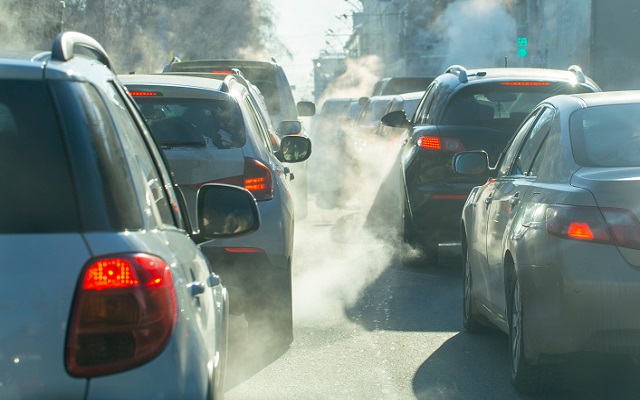
“Exhaust emissions from cars contain dangerous toxins such as carbon monoxide, nitrogen dioxide and particulate matter. It is vitally important that we protect the lungs and health of our children, no one should be forced to breathe in harmful pollutants. Most people agree, we can all do our bit by turning off our car engines especially when we are near a school. Many people mistakenly believe that stopping a car engine, only to restart it a minute or two later, causes more pollution than idling. It doesn’t.
Asthma + Lung UK has also now launched its new strategy Fighting for Breath with a mission to transform the nation’s lung health.
Nitrogen dioxide, NO2, is a poisonous gas and can often be seen above cities as an orange glow. It provokes the lining of the lung, causing decreased immunity to bronchitis which can cause lung infections.
Personal actions we can take to avoid this, according to Friends of the Earth, include buying houseplants that can filter harmful compounds out of the air, such as broadleaf lady palm and cornstalk dracaena. For joggers, who often inhale more pollution than someone walking the same distance, running within areas surrounded by trees before the early morning traffic is recommended.
Particle pollution is made up of bits of solids and liquids suspended in the air. Larger particles can be filtered by the nose and throat, generally causing no harm, but smaller particles may settle deep in the lungs and often create health issues, including premature death and the worsening of heart and lung disease.
The World Health Organisation says diesel cars pollute more than vehicles run by petrol and declared diesel exhaust to be carcinogenic to humans at the same level as tobacco.
The Scottish government has placed low emission zones across Scotland in Glasgow, Dundee, Edinburgh and Aberdeen to restrict access for the most polluting vehicles to improve the air quality.
A study by the Department for Transport found in 2015 Volkswagen was caught cheating emission tests using software programmes and in 2016 they confirmed 11 billion cars were designed to cheat the tests.
In June, an updated national transport strategy was published, with the intentions of establishing a Transport and Strategic Health Advisory Board to support a joint approach to tackling transport and health challenges, while also creating cleaner transport options by prioritising encouraging the use of cycling and walking to get around.
As well as enabling the transition to electric vehicles and continuing to support low-income communities who are more likely to experience transport poverty, with the intentions for everyone in Scotland to have equal benefits of an accessible transport system.
Overall, the Scottish government are making significant efforts towards correcting the air pollution issue. However, this is worldwide and not just an issue for the Scots, which means fixing the issue of air pollution will only be achieved if every country contributes to detoxifying the air.
Read more: The case for virus-killing uniforms; Plea: Be bold on prescribing to meet net zero; Promoting sustainable healthcare
Sign up to our bulletin for key health & social care updates straight to your inbox.
Tags: Scottish Government. |
