|
Opinion: Welcome to the new normal? |
Related newsHolyrood hears calls for more inclusive communication Scotland to work with UK on Physician Associate reform NHS waits pushing more patients private Primary care progress falls behind need, say doctors Call for ‘urgent’ review of ADHD and autism services NHS doctors unemployment crisis despite understaffing NHS staff say data vital to improving care Insight: The health benefits of being able to work Pre-eclampsia test approved for NHS Scotland Phage therapy approved for resistant infections Auditor General: Difficult choices for Scotland’s NHS 
|
|
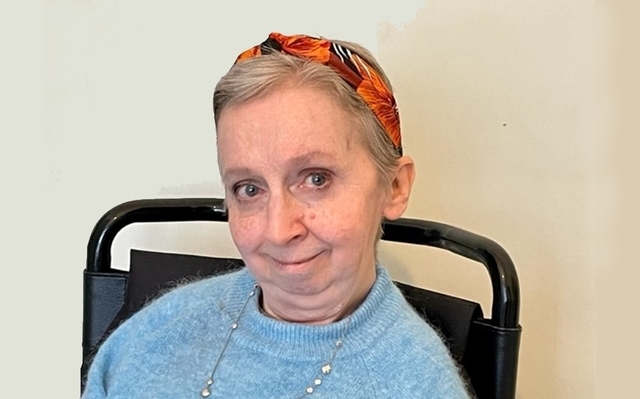
Image Credit: © Feena Mckinnell
Dr Sally Witcher OBE
|
||
|
||
|
Recently, the government announced that the discontinuance of the Highest Risk List, with Scotland’s Chief Medical Officer stating he will write to the 177,000 people currently on the High Risk List with support and sign-posting as it comes to an end.
As these letters start to arrive, Dr Sally Witcher makes the case for why more action is still needed to create a safe new normal that includes people with high underlying clinical risk.
Writing in a personal capacity as a disabled person still at high clinical risk, she says there is not enough long-term evidence available to reassure people that this risk is in fact minimal. She argues this change is premature and more is needed to be done to enable people who remain at high clinical risk to exercise their rights to equal citizenship during this stage of the pandemic in Scotland.
Over recent weeks, Scottish government has proclaimed that we are moving to a new stage of the pandemic. Death rates are significantly down. Remaining ‘restrictions’ have been thrown out the window. They claim vaccines and new antiviral treatments have neutralised high clinical risk for the vast majority.
Consequently, there is no longer a need to maintain the Highest Risk List (formally Shielding Group). The good news culminated on Sunday May Day with the announcement that people infected with COVID-19 are no longer required to isolate.
The message is clear. We’re back to normal. So why, for people on the Highest Risk List, for unpaid carers and their families, was Mayday more a matter of Mayday – the international signal for distress? And just what is this normal we’re all going back to?
While politicians may think it’s all over – and who wouldn’t love to believe it – surely everyone would be wise to keep their head out the sand when it concerns a pandemic that has reduced life-expectancy on a scale unseen since World War 2, hugely disrupted education, the economy, and the NHS, blighted many lives with long COVID and caused permanent physical damage.
With severe cases of COVID-19 that cause damage equivalent to 20 years of cognitive decline, surely, it has never been more important for policy to be evidence-based.
So what does the evidence say?
Hospitalisations and death rates have indeed been coming down. On 6th May 2022 (latest data at time of writing), there were 1226 new cases and 18 deaths following a recent positive test. Yet, one thing we know about this virus is that it comes in waves of new variants – they may be gentle ripples, they may be tsunamis.
Prof. Christina Pagel of Independent Sage says there is a reasonable chance of a new wave of infections in 4-6 weeks or so and we can expect more to come. We also know that being infected once won’t stop it happening again, as 14.1% of infections were re-infections.
We know vaccines for one variant often work less well against others. Immunity – whether from infection or vaccination – doesn’t last, and so-called herd immunity requires ongoing maintenance. We know that more infections generate more variants, more illness and thus more disruption to education, the economy and the NHS.
Nonetheless, as far as the Scottish government is concerned, government responsibility for public health can now be offloaded onto the public. But that itself is a policy choice for which the government is responsible.
Whether we’ve reached a new stage in the pandemic, or just a lull between waves, is highly debateable. What is clear, though, is that we’re seeing a new stage in the government’s (lack of) response.
For people on the highest risk list, the stakes are high. We could pay with our lives if there are disconnections between evidence and policy. So maybe if some are responding with alarm, it’s because we have spotted the many ways in which they fail to join up.
Discontinuing high clinical risk
Within a parliamentary answer on 27th April, a link was provided to a report presenting the evidence allegedly supporting the decision to discontinue the Highest Risk List from the end of May. You might reasonably assume this therefore means people on it are no longer at exceptionally high risk. Unfortunately, as far as I can see, that’s not what the evidence appears to show.
There is nothing here to demonstrate that underlying exceptionally high clinical risk from exposure to the COVID-19 virus has essentially changed. The case is based wholly on the mitigation of clinical risk furnished by “the availability and effectiveness of new treatments such as antivirals and monoclonal antibodies”. If so, it begs a lot of questions.
Aside from the fact that the evidence presented on vaccine protection is, as the report admits, incomplete, much of it out-of-date and methodologically flawed, there is nothing to be found to show vaccine protection lasts beyond a few months and nothing to explain why spring boosters have not been made available to all but a few specific groups on the Highest Risk List with suppressed immune systems.
There is also nothing to explain why access to antiviral treatments is also restricted. It seems entirely plausible that the people who generate the least antibodies following vaccination are those with suppressed immune systems. But if vaccine protection is what stops others on the list from getting seriously ill and dying, isn’t it rather important to sustain it? If you aren’t going to do that, shouldn’t they at least have access to antivirals?
The fate of people added to the list by GPs, the second biggest group, is particularly uncertain. The report admits little research has been done on this group, yet they are among those with the highest mortality rates – like people receiving renal dialysis, people referred by clinical judgement have 12 times higher mortality rate than non-highest-risk groups – and have second highest mortality numbers. People who were added to this list by GPs don’t automatically fit into the currently defined categories for boosters, including a limited list for people who are immunosuppressed, are then ineligible for spring boosters and antivirals.
Currently, there’s nothing they or their GPs can do about it – this review does not outline a system to provide additional support to people previously included under clinical judgement. Not even a pathway through which to refer for consideration those GPs judge still to be at exceptionally high risk.
Disbanding the Highest Risk Group and removing this categorisation from considering is not the same thing as clearly demonstrating that high risk has gone away.
At a time when the pandemic is clearly still here, a resurgence could occur with a vengeance any time, and data is clearly inadequate, they should surely be collecting more, not less data.
Ignoring its existence will do nothing to bring about the safer, inclusive new normal that is now possible. Thanks to new treatments and HEPA air filters removing the virus from the air, and scope to give legal backing to rights and duties on safety, this is now possible. With that comes a shift in responsibility for adverse outcomes, from an uncontrollable virus to those responsible for a response that fails to contain it.
Mental Health and Isolation
Yes, the report correctly identifies the detrimental impact of isolation on physical and mental health and wellbeing. But surely, that is a reason to limit the need to isolate by doing everything possible to make going out safe, not a reason to withdraw protections or not make them available.
Otherwise, people still at high clinical risk, or who have no way to know they are not – because we have never been presented evidence to say otherwise, seemingly because it does not exist – are effectively condemned to long-term lockdown. A seemingly large proportion of the Highest Risk List are not currently granted eligibility for additional boosters and antivirals. With vaccinations, antivirals and additional boosters being the pretext for disbanding this list, why has its removal not been accompanied by the inclusion of everyone on the highest risk list as eligible to receive these additional protections early?
Evidence over assertions is needed that people still at high risk can follow the same advice as everyone else, to enable them and GPs to gauge their risk accurately. Additionally, to have the confidence that government is doing the reasonable maximum it can, to enable GPs to act to keep people safe. Until that evidence exists and is clearly communicated, we have little choice but to err on the side of caution.
Building Back Better?
At the start of the pandemic, the Scottish Government promised to “Build Back Better”. If this is to be the new normal, it is one that places people with underlying high clinical risk in a perilous position.
We are canaries in the mine when it comes to waning or inadequate vaccine protection. Our rights to active citizenship, and scope for redress have both been removed (or were never implemented), having been replaced by reliance on others’ willingness to ‘protect the vulnerable’.
Maybe we do not share the First Minister’s confidence that most will continue to wear masks – and even if we do, it only takes one infected person crossing our path. Maybe we recognise that the choice confronting some highly infectious people will be either go out to work and endanger others or be plunged into poverty.
It is not just us who are affected, but our unpaid carers and families. In fact, everyone is affected if the level of daily death, illness, disruption, risk and uncertainty that living with COVID-19 seems currently to entail, is to be our new normal.
When did hospitalisation and death rates become the only benchmarks of an acceptable level of health and wellbeing? When did imminent risk of either become the only basis for prescribing treatment known to be beneficial?
To me, this is a somewhat worrying precedent to set. Whatever happened to preventative treatment? Is continually risking re/infection and serious illness – not to mention long COVID –how anyone wants to live their lives?
This is the opposite of the safer, inclusive new normal that is now possible. If this is to be the new normal, we might all reasonably ask who, exactly, it is better for.
Dr Sally Witcher, OBE is a freelance consultant to third and public sectors and academia. She has worked in diverse senior roles, as CEO of Inclusion Scotland and Child Poverty Action Group, and in Government.
Read more: Towards an inclusive New Normal; Future shielding unlikely, as risk list scrapped; Insight: Carers in need as fuel poverty hits
Sign up to our bulletin for key health & social care updates straight to your inbox. |
