|
Community care to social care – a retrospective |
Related newsCall for windfall tax on care agency profits Yousaf: No place for tax haven firms in NCS NCS Lived Experience Panel Launched NCS: Time for the powerful to be radical The case for a Highland weighting 
|
|
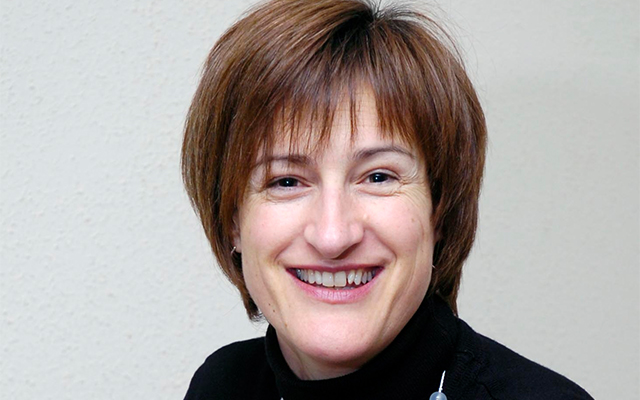
Annie Gunner Logan, chief executive of CCPS
|
||
|
||
|
After over 20 years working for the organisation, Annie Gunner Logan steps down this week as chief executive of CCPS – the Coalition of Care and Support Providers in Scotland.
healthandcare.scot interviewed Annie as her tenure came to an end. In the first of two articles this week, Annie looks back at the changing face of social care provision over that time, the role that the third sector and not for profit providers had expected to play, and how it turned out in reality.
“In the late 1990s two big things were happening in social care.
Of course, we didn't call it social care then: we called it community care.
The first, which had been happening by then for a decade, was the programme of closure of longstay hospitals. The voluntary sector was very much at the forefront of providing the alternative support in communities.
But, at the same time, there was the advent of the contract culture. The NHS and Community Care Act of 1990 – part of Margaret Thatcher’s legacy – was legislation that said to local authorities: ‘you don’t have to do everything yourself – you can contract with third parties to deliver public services’.
The voluntary sector had done a lot of heavy lifting in relation to the hospital closure programme, above all by being at the forefront of a social movement that saw it as completely inappropriate – even scandalous – that people should live in hospitals. This legislation created the opportunity to do something about it other than campaigning, which was to provide the alternative.
Quite a few of Scotland's voluntary organisations got involved and it dawned on them pretty quickly that they needed some kind of collective voice to represent their interests and their views. Everybody else was already organised. You had COSLA for the councils, the private sector was very well organised as was social work.
So the voluntary sector organisation SCVO worked with this group of organisations to create their own voice, and that's what became CCPS, then Community Care Providers Scotland.
In 1998, I joined from Children in Scotland as a policy person. I was their first hire.
In the years since, in some ways things have changed almost out of all recognition.
If you think back to the late ‘90s, there was no Care Commission. There was no Scottish Social Services Council. There was no Scottish Charity Regulator. There was, of course, no Scottish Parliament.
And there was no austerity, with all its enormous spending constraints, which would come much later on. Nobody had ever heard of self directed support. At the time the big thing was ‘Best Value’. We were still some way from the competitive tendering machine of today.
On the other hand, after two decades, there are some things that remain unresolved.
Then, we were talking about health and social care integration, albeit then we called it ‘Joint Futures’. We continue to struggle with that.
The tussle we saw then between central and local government about who called the shots in social care continues. And, even back then, in-house services provided directly by councils were funded comparatively more generously, and the staff were better paid. All that has happened since is that this got much worse over time.
What has not changed throughout my entire time is that the care and support provided by the third sector is of a higher quality than its counterparts in the public and private sector – as evidenced by Care Commission and then Care Inspectorate gradings.
Some voluntary sector providers have grown but, overall, what we might call the market share for the voluntary sector hasn't really grown at all. It's still somewhere between a quarter and a third of publicly funded care services. Instead, the private sector has become almost completely dominant, particularly in older people's care and support.
I think that's because our sector either couldn't or wouldn't compete on cost grounds – though I am disappointed the care regulator has never had a systematic look to see what the magic recipe is for consistent ‘very good’ and ‘excellent’ gradings.
One important factor is what we used to call ‘user involvement’, the extent to which people were able to control what happens, how their support is delivered, and the outcomes that they achieved.
Another is, I believe, the governance of voluntary organisations.
You have a group of people, trustees, who come together for no other reason than to help their organisation meet its mission. They’re not paid to do it. It's not a political appointment. There's nothing in statute that says they have to be there. It is an entirely disinterested endeavour.
Beyond that, they are mission-driven. They are not here to make a profit or to do what a minister tells them. They are here because they voluntarily want to be. For me, that's what voluntary organisation means: people are there voluntarily and for no other reason than to support people. And that means they are much more focused.
Where you have that focus and people using services are in control of their own choices and their own lives – and where that's what commissioners want – then the voluntary sector flourishes.
If commissioners are looking for something else, like savings or something cheaper – to spread the jam more thinly or whatever – then you will find that the voluntary sector is not flourishing in those places.
It’s worth pointing out as we revisit the history a bit, the voluntary sector has never had a big role in taking over services that had previously been provided by councils in-house. Instead, I think the kinds of things that the voluntary sector has been involved in historically have been the community alternatives to institutional care and the new, different, interesting and more personalised models. And then many of these have become mainstream.
What has changed above all has been the amount of time and resource and effort that has been spent in the voluntary sector responding to competitive tendering, which has distracted us from all of that good work that we should be doing but, instead, we've spent our time tendering for contracts.
The procurement reform programme in the mid-2000s introduced cyclical tendering and re-tendering of contracts. And that has been absolutely catastrophic from the start.
Some time ago, we tracked a year's worth of social care tenders and produced what I called at the time ‘a map of mayhem’ of all the different providers and all the different bits of business that had passed between them over a year across all the different tendering activities. It showed thousands of staff and service users being transferred, essentially between the same relatively small group of providers – all for about five pence an hour difference in the hourly rate. And the money saved in those exercises was the money that was essentially then removed from workforce pay, and terms and conditions and from management, supervision, training and development. And the commissioners clapped themselves on the back for having achieved that.
One of our absolute priorities at CCPS has been to put a stop to that. And one of the things that we were most keen to see was the National Care Service ending this practice.
The pandemic exposed all of the flaws in that system that we’d been trying to get people to listen to us about forever. But nobody else seemed interested. They watched it happen.
The roots of the National Care Service proposals were in Derek Feeley’s independent review, commissioned to find a way through all of those flaws exposed by covid.
When the review was published, we thought finally, finally, somebody gets it. All our core objectives have now become a national priority. We can just put our feet up and watch it all unfold.
As you know, it hasn't worked out like that.”
CCPS represents the interests of more than 80 Scottish third sector care and support providers who, between them, support over 200,000 people and their families and employ around 43,000 staff.
In the second article based on our interview with Annie, she looks ahead to the unprecedented change being proposed by government to how social care is organised, questions whether the recommendations of Derek Feeley’s independent review of adult social care will survive the creation of the new national care service, and suggests nobody will benefit if implementing the reforms simply becomes a turf war between vested interests with nobody listening first to the people who rely on social care. |
