|
The case for a Highland weighting |
Related newsFM candidates asked if they care about care Politicians told: “Carers cannot wait” Care homes urged to act early on improvement Care worker visa changes ‘inhumane’ and risks services Charity care staff set to strike over pay 
|
|
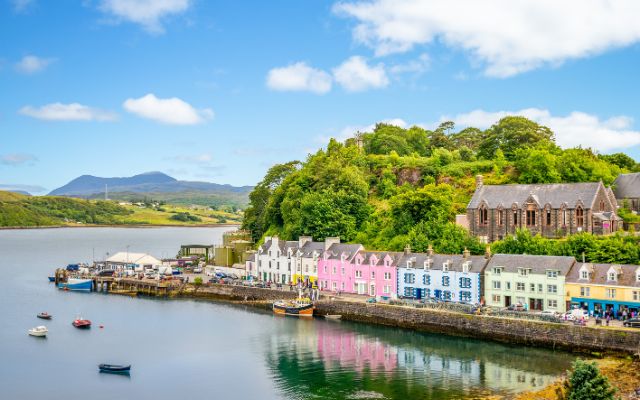
Image: Richie Chan / Adobe Stock
Portree, Skye.
|
||
|
||
|
Eight in ten Scottish care homes say recruiting staff is harder than it was just one year ago. For managers of homes in remote and rural areas of Scotland, the challenge has become acute. The issue was highlighted at the recent Highland Social Care Conference in Fort William, with poor pay and a lack of affordable housing cited as reasons why many staff vacancies go unfilled. In a bid to look for solutions, the Scottish government has agreed to convene a group to review care for the area.
In the second of two passages from conference keynote speaker, Dr Donald Macaskill, the Scottish Care CEO makes the case for a ‘Highland weighting’ for care staff working in some of Scotland’s remotest communities.
“I've long believed that we need to start thinking about treating rural and island communities and remote communities in a very different way.
I'm going to share some insights into what is happening elsewhere globally. I'm very privileged to be one of the directors of the Global Ageing Network and the European Ageing Network, and that has enabled me, with international colleagues, to see what's happening, see what's working, and see what's not working in different communities.
Many of you will be familiar with the concept of the London weighting where there are salary benefits, social housing benefits and tax benefits for individuals living within the City of London and Greater London area. It's not just London that has developed such weighting models. There are examples across the world.
These are models which enable you to have workforce flexibility. They address the issue of enhanced costs around transport, around the lack of availability of housing. And there are diverse components within a model.
What I'm suggesting, and I can give you more worked out examples, is that there would be a base element for all workers who are designated within a particular sector. Then you have tiered rates within a geographical area to take account of whether somebody is in an island community, a remote area or a rural area.
What has happened very clearly in London from the evidence over a 25 year period, is the enormous economic benefit which it brings to a community if you have a weighting scheme introduced.
"I am saying economic benefit because we far too often use language of ‘cost’ and ‘deficit’ around social care.
Social Care is the fourth largest economic contributor to the whole of the Scottish economy: more than agriculture, more than fisheries, and just below tourism. And yet, far too infrequently are our economic strategies using the language of social care being a contributor, a driver, an agent for positive change, not just in rural and remote communities, but right across the scale.
One of the ways in which you enable that to happen is through a weighting scheme, and there are different parts of the world where these things work really well.
I spent just over a week last year in Australia with colleagues who have just introduced the Aged Care Act, a breathtakingly innovative approach to social care, which has cross party political consensus, and which is radically changing the way in which older people are being supported in Australia.
One of the elements of that is the recognition that there are parts of Australia which are immensely remote and rural with the same sort of challenges that we have here in the West Highlands, and they've adapted and adopted, for instance, the Remote Nurse Incentive Scheme.
In Canada, somewhere where I've also had the opportunity to speak to people in Aged Care, as they term it, providers have a model in the North West which is tiered, which is around housing and additional tax benefits to incentivise people.
South Africa is slightly different, but they've adopted a broad weighting philosophy to incentivise practice and implementation. There are models in Portugal and North Catalonia in Spain.
We are not short of examples of an economic decision being taken by a national or local government to incentivise a weighting scheme.”
We have no shortage of people who want to come to work in the Northwest of Scotland – because why wouldn't you, if you can kayak and climb mountains and abseil – and there are lots of ways we can incentivise and attract individuals to move here."
You can read our first extract from Donald Macaskill’s speech, and his own blog Beyond the Edge: from ‘crisis’ to reimagining social care in the Highlands on the Scottish Care pages.
Read more: Care home staff numbers increase after record low; Care worker visa changes ‘inhumane’ and risks services; Highland GPs to reclaim vaccine services; Rural hospitals and the child nurse predicament;
Sign up to receive our bulletin for key health & social care updates straight to your inbox. |