|
Scottish midwives on the frontier |
Related newsBoard recruits big cohort of new midwives New NHS staff data makes case for workforce plan Nursing pressures creating high risk of harm Call for care home nurses to be given pay parity Mum scrubs-in to help deliver her baby by c-section Scots honoured in health, care and sciences Care home staff numbers increase after record low Rural alcohol and drug rehab centre opens Call to expand Huntington’s specialist care Highland GPs to reclaim vaccine services Highland to end unique health and care model Highland willing to give up its care integration model 
|
|
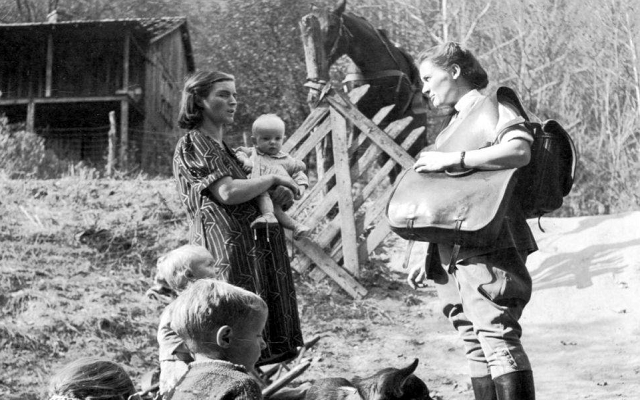
Image: Courtesy of Frontier Nursing Service
|
||
|
||
|
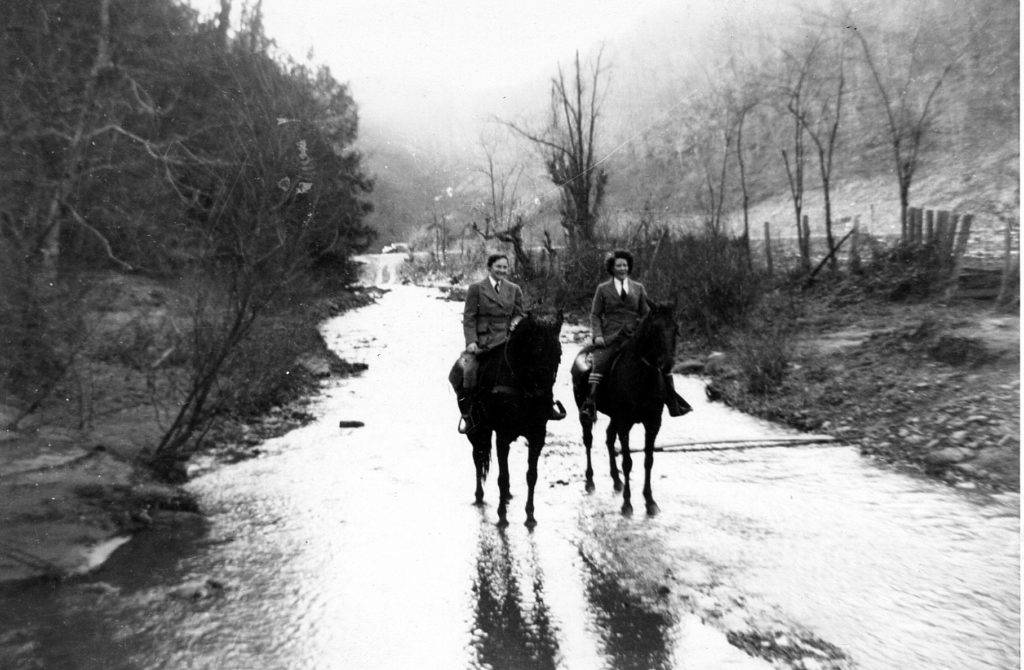
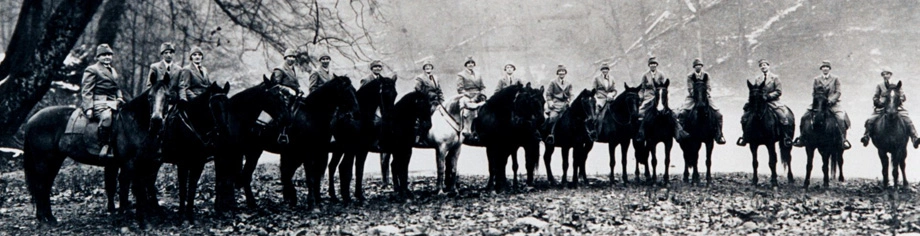
They were a brave and adventurous bunch of British women who crossed the Atlantic and transformed the lives of poor communities in the Appalachian Mountains.
These were the nurse midwives of the Frontier Nursing Service (FNS) set up by Mary Breckinridge in Kentucky based on the model she had found in Scotland.
It is now the subject of an acclaimed documentary by Chelsea Gorham for Kentucky Educational Television (KET) Angels on Horseback: Midwives in the Mountains which uses archived audio from the women themselves to tell the story.
Breckinridge came to Scotland in August 1924 to study the Highlands and Islands Medical Service (HIMS).
It had been set up in 1913 in the wake of the Dewar Committee’s report to serve the needs of crofting communities not covered by the 1911 National Insurance Act.
HIMS, with an annual grant of £42,000 of state funding, provided care for more than 300,000 people across half of Scotland's land mass. Highly trained Queen’s nurses, who had hospital experience before qualifying in midwifery and district nursing, were the bedrock of the service.
Breckinridge was warmly welcomed by Sir Leslie Mackenzie, Scotland’s chief medical officer, who sent her to Queen’s Nursing Institute’s Scottish headquarters to plan her itinerary.
On her return to Kentucky, she set about putting into practice what she had seen in Scotland. She had taken meticulous notes of her meetings with nurses and doctors - 11,000 words in various notebooks.
She was appalled at the number of American women who died in childbirth. Death rates were four times as high as those looked after by the Queen's nurses in Britain.
There were no training schools for midwives in the USA, so she advertised for British midwives as well as American colleagues who had trained in Britain:
Attention nurse graduates – with a sense of adventure! Your own horse, your own dog, and a thousand miles of Kentucky mountains. Join my nurse brigade and help save children’s lives. Write to M Breckinridge, Kentucky, USA.
The first recruit on Mackenzie’s recommendation was Miss Bertram Ireland who had acted as secretary to his 1917 inquiry on the Physical Welfare of Scottish Mothers and Children.
She was an experienced researcher and had two further essential qualities – she could ride a horse and take a nickname. The Frontier Nursing Service also pioneered the now blokeish practice of pen names for their staff. "Ireland from Scotland" became the first of many.
Annie P. Mackinnon from Skye came soon after. Inevitably, given the name "Mac" she had served with the French Flag Nursing Corps during World War One, earning the Croix de Guerre for continuing to care for the sick and wounded under enemy fire in the early summer of 1918.
Another Queen’s nurse, Elizabeth Stevenson from Clydebank, “Stevie” settled in well despite her records showing she wasn’t even a cyclist, never mind a horse rider. She really enjoyed the freedom to practise with her patients and families and later returned to nurse in Lochaline.
Trainee midwife Betty Lester heard about the advert from an American colleague at the General Lying-in Hospital in York Road, London. Her supervisors were horrified at the prospect but off she went. She appears in the KET film and earned the nickname “The General”.
For many, the work was exhilarating and liberating but it was also tough and demanding and Breckinridge was a bossy character.
However, the FNS achieved maternal and infant mortality rates way below the rest of the United States.
The Scottish links were reinforced with the first FNS hospital - at Thousandsticks Mountain in Hyden. There was only one choice to perform the opening ceremony on June 26, 1928. Sir Leslie, then 66, and his wife Helen Mackenzie were delighted to oblige. Neither could ride and new buckboard was tested by "Mac" in advance. It was as well she did. The 22-mile journey from the railroad involved teetering over precipices in a violent rainstorm and fording the swollen Kentucky River.
He waxed lyrical in his address, later published in the Lancet:
"It is a story full of adventure, sacrifice, passionate enthusiasm and splendid initiative. When, some years ago, Mrs Mary Breckinridge came to us in Scotland to see how we had faced a similar problem in medical service and nursing, we were filled with a new sense of significance of the work we had tried to do in the thinly peopled and difficult areas of Scotland.
"When, therefore, I was invited by the Frontier Nursing Service of Kentucky to give verbal form to the dedication of the hospital and nursing system now established in these mountains, I felt indeed, a glow of supreme satisfaction that our work in Scotland had found an echo in the great spaces and mountains of an American Commonwealth.
“The invitation was a call of the Highlands to the Highlands. It is a symbol of kinship in feeling and outlook. The beacon lighted here today will find an answering flame wherever the human hearts are touched with the same divine pity. Far in the future, men and women, generation after generation, will arise to bless the name of the Frontier Nursing Service."
That beacon has continued to shine. The FNS spirit lives on in the Frontier Nursing University and Queen’s nurses have now been brought back in Britain leading change in critically important services and demonstrating the same exceptional qualities that their sisters did 90 years ago.
Chelsea Gorham and Chris Holme are taking part in an RCN Libraries online event on Wednesday April 6. It is free and open to everyone. https://www.rcn.org.uk/news-and-events/events/lib-angels-on-horseback-talk-060422
Chris Holme is the founder of The History Company.
Read More by Chris: Long read: The CMO who spoke the unspeakable; Long Read: Now wash your hands
Sign up to our bulletin for key health & social care updates straight to your inbox. Tags: Nursing & Midwifery. |