|
Unpaid carers: our own health is suffering |
Related newsBuilding on 60 years’ work for carers Politicians told: “Carers cannot wait” All public bodies must focus on health, urges charity Care Reform Bill: a step, not a leap New social care minister appointed Health and charity leaders join forces for NHS reform 
|
|
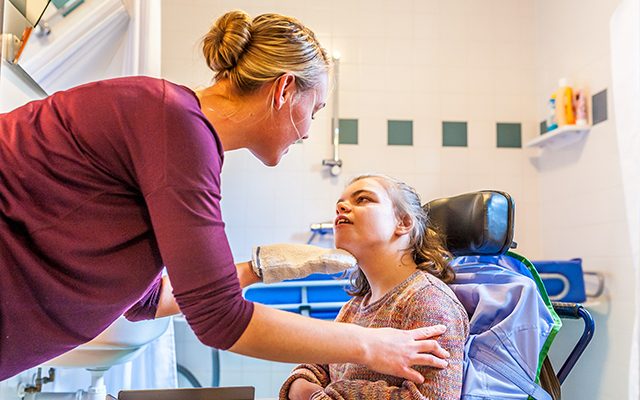
Image: © mjowra__
|
||
|
||
|
A detailed survey of over 1200 unpaid carers in Edinburgh and Midlothian is showing a marked decline in their health and wellbeing – with many also reporting that looking after a loved one has had an impact on their finances.
The independent research conducted for the charity VOCAL, Voice of Carers Across Lothian, saw four out of ten (79%) agreeing ‘being a carer has affected my mental health’, with two thirds (66%) saying it was affecting their physical health.
One respondent told the researchers:
“I have become so unwell, I myself have had to be cared for.”
Another stated:
“[I am] completely exhausted and running on empty. I never feel rested, just depleted… I suffer with horrendous migraines and the doctors have told me to reduce the stress levels in my life, but how is this possible?”
Half of respondents said their caring role had meant they’d missed or postponed healthcare appointments for themselves or delayed treatment. One person reported this had had a direct impact on their health:
“While caring for my father, I neglected going for a smear test and was diagnosed with cancer at an advanced stage. Now I am caring from my mother, I try to pay more attention to my own needs.”
An almost identical survey conducted in 2017 saw 57% of respondents agreeing with the statement “being a carer has made my health worse”.
Nearly three in ten (29%) people in the latest survey said they felt supported to continue caring.
Over half (53%) reported that caring cut them off from the rest of their family with 48% saying they didn’t feel they were getting a good balance between caring and other things in their lives.
Four in five of those who took part in the survey were female, and nearly 2/3 had been caring for more than five years. One fifth had been a carer for more than 20 years.
The online and paper-based study, undertaken by research specialists Scotinform, also examined people’s finances and ability to work, and their access to respite and time off.
Although an increasing proportion of those who took part in the survey compared with 2017 were of working age, a third (33%, up from 26% in 2017) said that they had had to stop work because of their caring role, while a further 29% said they’d reduced their hours.
One person reported:
“I could only ever work part-time after having my daughter, after the period of giving up work completely for a while after she was born. All of this severely impacted on my career prospects, my earnings and my pension.”
Another said:
“I lost my house because of my daughter’s extended hospital stays and having to give up work as a single parent of two children.”
VOCAL board member and carer, Ruth Hendery, says the local research confirms a national picture:
“The pandemic was a watershed for carers.
“Instead of increasing support to those most vulnerable, many health and social care services reduced or closed their doors – shifting an even greater burden of care onto families, relatives and friends, mostly women, and increasing the sense of isolation felt by many carers. It’s no surprise that carers are struggling to cope with more complex and increasing caring responsibilities, given that they have been propping up our health and social care system.
“Unpaid carers can no longer just be an afterthought in health and social care planning. The development of the National Care Service in Scotland must place the value of Scotland’s carers centre-stage and secure their right to regular breaks, financial support and their right as equal partners in care.”
VOCAL is calling for national and local government to shift more power, control and funding to families and carers, and to better fund carer support organisations who are, the charity says, often better placed to reach those in greatest need.
Read more: Funding call as day services remain closed; Sector reforms "must put social back in social care"; Learning disability support cuts “under the radar”.
Sign up to our bulletin for key health & social care updates straight to your inbox. Tags: Social Care; Unpaid Carers. |
