|
Pandemic an “opportunity” to rethink end-of-life care |
Related newsDementia campaign success to inform government actions IJB costs driving councils’ unsustainable funding gap Additional funds for care and hospices All public bodies must focus on health, urges charity Chief Medical Officer: ‘Critical connections’ priority Health and charity leaders join forces for NHS reform 
|
|
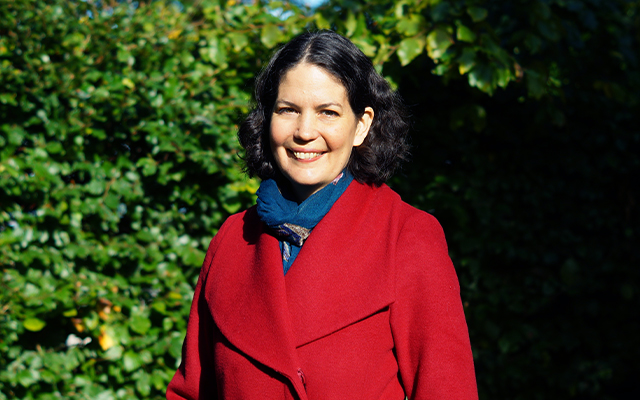
Helen Malo
|
||
|
||
|
Despite covid pushing end-of-life care further up the agenda for many Scots, Hospice UK’s Helen Malo says palliative care deserves higher priority from the Scottish government as it looks to undertake the ‘biggest public sector reform in decades’ by creating a National Care Service.
The charity’s Policy and Advocacy Manager in Scotland, Ms Malo, tells healthandcare.scot that sustainable funding remains a key challenge to hospices being able to realise their potential.
In a report published today, she says the pandemic has presented an opportunity for the “unique value” of hospices to be recognised, and properly funded.
Ms Malo explains the most important thing moving forward is that the needs of people with a terminal or life-shortening illness are met, and their voices are heard throughout the process of reform:
“Currently the social care system is very clunky and slow and people with palliative care needs, their needs can change very quickly.
“We would want a National Care Service to be much more responsive to people’s changing needs, to have more focus on proactive approaches and anticipatory care planning to make sure that carers and families are getting the support they need.”
She is eager for the commissioning process for services to “move away from that very rigid time and task commissioning” that has left many people with very complex needs without adequate support.
The Scottish government has pledged to publish a new palliative care strategy this year, which Ms Malo says needs to set out sustainable funding and staffing.
Currently, around one third of hospice funding comes from statutory sources, with the majority sourced from donations and fundraising.
While a £27m emergency government hospice funding package allocated during the pandemic was of course welcomed by the sector, Ms Malo emphasises that a more sustainable funding model is badly needed, especially as demand is only set to rise.
Hospice UK’s report estimates currently one in four Scots are missing out on these key services. Up to 10,000 more people a year in Scotland are projected to require palliative care by 2040, and as the complexity of the care they require is also set to increase, the reports states the need for sure funding is clear.
Three-quarters of hospice and palliative care staff surveyed for the report felt the current model of hospice funding was not sustainable, and that providing enough money would be key to the success of the promised new national strategy for palliative care.
The report highlights the value for public money that hospice care offers by reducing the pressure on other health and social care services, generating £6.24 in public return for every £1 of statutory funding spent.
"What hospice staff have been saying to me is that they are at the table but not seen as equal partners."
healthandcare.scot previously reported hospices were not deemed to be “frontline NHS” services during the first wave of the pandemic.
Ms Malo contends the approach of national government is just one side of things; local government and services must also invest and support hospices to ensure everybody’s needs can be met:
“We want to see more emphasis given within local plans to palliative care, and support for all partners, including hospices, to work together in the planning and design and delivery of services.
“…What hospice staff have been saying to me is that they are at the table but not seen as equal partners.
“You get so much more benefit if hospices are brought in right from the beginning.
“So in the planning and design and delivery of services, we want to see hospices treated as true equal partners, so that their contribution can be valued.”
In her report, Ms Malo states that only through hospices working together with the new national clinical lead for palliative care, integration authorities, health boards and other partners, can improvements in leadership, funding, and workforce planning, as well as improved patient care, happen.
“Generally, what we saw during the pandemic, is people working together a lot better across different services and those usual barriers being broken down.
“What we would be keen to see is to build upon that partnership working that has been established during covid and strengthen that.”
Community hubs that emerged during covid are a key example, where patients and health and social care professionals can access support 24 hours a day, as well as allowing better decision-making and liaising between care homes, district nurses, and hospices.
Hospices are often closely linked with local communities, with volunteers integral to their services. Around 8,000 people volunteer at hospices in Scotland, donating 997,000 hours of their time each year.
According to the report, this means hospices can be more responsive to local needs and mobilise the community to produce a rapid response when it is necessary.
By developing these grassroots links more, hospices hope to further address inequalities in end-of-life care.
“People in Scotland are becoming more confident in talking about death and dying and are a lot more aware of the importance of planning ahead."
Geography, ethnicity, age and levels of deprivations all play their part in producing what one staff member quoted in the report described as a ‘postcode lottery’ in end-of-life care.
Ms Malo emphasises that this move to more person-centred services will benefit everybody:
“Through their volunteer links and their links with local community organisations, hospices can really empower communities and build resilience within them”.
With the death toll from covid-19 above 10,000 in Scotland, and over 6,300 excess deaths recorded last year, death and end-of-life care is on the minds of us all, more than ever.
But, she says, one positive to take from this is that death is becoming less of a taboo subject.
Citing public polling conducted by Hospice UK in April 2021, Ms Malo is optimistic for what this could mean for palliative care post-covid:
“People in Scotland are becoming more confident in talking about death and dying and are a lot more aware of the importance of planning ahead.
“Because of covid, 31% of Scots say they are more likely to express their wishes around dying to friends and family, which is higher than the UK as a whole.
“So, in a way, we now have an opportunity to talk about these issues.”
Read more: Hospices call for new post-covid funding model; Details of National Care Service revealed; End-of-life care plea as home deaths set to rise; Report: Hospices not seen as ‘frontline’ in pandemic
Sign up to our bulletin for key health & social care updates straight to your inbox. |
