|
Insight: Mapping pathways to transform the NHS |
Related newsCOVID findings must be ‘mandate for lasting change’ From 14 to 5 – one lesson from Denmark Plea to rescue ambulance service’s stranded asset NHS Scotland chief named as battle lines emerge Sceptical response to government’s care proposals Donald Macaskill: Where is Scotland going? "Landmark" newborn test rollout begins in Glasgow Scots to benefit from new NHS heart treatment Scotland’s first senior heart pharmacist appointed Digital tool aims to tackle long dermatology waits Fast-track NHS training centre opens Award for “pioneering” Scots 3D bone scaffold research 
|
|
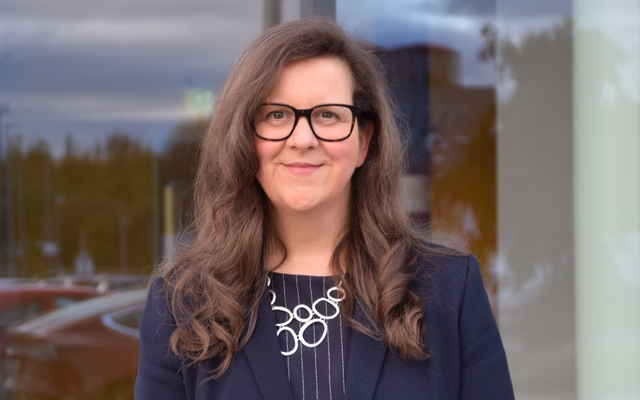
Image: © NHS Golden Jubilee
Jann Gardner, Chief Executive, NHS Golden Jubilee
|
||
|
||
|
Last year ministers announced the setting up of a new national organisation to underpin Scotland’s strategy to ‘remobilise, recover and redesign’ (3Rs) NHS Scotland and create a better health care system.
The new national Centre for Sustainable Delivery (CfSD) is hosted by the NHS Golden Jubilee and has been set the task of not just supporting the NHS in Scotland but becoming an ‘internationally recognised centre for health and care transformation’, supporting and delivering innovation with national programmes and new patient pathways, and providing ‘bespoke support’ to NHS Boards to bring in new ways to meet the challenges they face.
healthandcare.scot asked the NHS Golden Jubilee’s chief executive, Jann Gardner what difference she hopes the centre can make to the way Scotland provides health and care services:
JG: By working in collaboration with NHS Boards, health and social care partners, third sector, patients, academia and industry, CfSD aims to implement best practice through a ‘Once for Scotland’ approach to support the rapid rollout of new techniques, innovation, and safe, fast and efficient care pathways for Scotland’s patients.
The Centre will work with NHS boards to optimise the use of current programmes, tools and pathways as well as offering customised support to ensure our whole population, regardless of demographic or location, is supported to live well and access services when they need them.
HACS: In terms of how you deliver your programme, your annual plan talks about Care Programmes and National Programmes – can you describe these and how they will differ from each other?
JG: The Care and Wellbeing Programmes are a Scottish Government portfolio programme to support Scotland’s national efforts to develop an improved healthcare system. The four Care and Wellbeing Programmes represent different areas of priority, providing a mechanism to enable effective delivery of ministerial priorities, providing the forum for strategic planning aligned with policy, needs, performance-harnessing innovation in the form of pathways, technology, workforce and delivery to offer resilient and sustainable transformation of the health and care system.
CfSD leads a range of national programmes commissioned by the Scottish government and approved by the [government’s] Health and Social Care Management Board.
The Care Programmes provide the governance and sets strategic priorities which direct and influence all care programmes as well as CfSD national programmes and priorities. The Care Programmes are delivered by a range of partners, including the national CfSD.
CfSD currently leads four key national programmes which will not only support the 3Rs, but will help deliver improvement and transformation of the health and social care system. They also stand ready to respond to further priority commissions aligned with need.
The current programmes are: unscheduled care programmes; cancer performance and early diagnosis programmes; the Scottish Access Collaborative and Modernising Patient Pathways programmes; and planned care programmes.
HACS: Can you take us through the processes to initiate, consult, publish and embed a new pathway for a particular condition or type of care – and what role can patients and health or care professionals play in suggesting that a particular step in a pathway would benefit from being changed?
JG: New pathways go through a rigorous process to ensure they meet the needs of the patient population and ensure equity of access.
New pathways can be initiated through a range of routes, for instance a Care Programme priority or an area that has been identified for improvement.
A review is then carried out to fully understand the problem. As well as mapping the current state and reviewing all existing data, there will be a comprehensive stakeholder engagement exercise involving clinicians, management, voluntary sector, patients. The Centre hosts a range of specialty networks for clinicians and management across Scotland who play a key role in leading this work.
Once there is a clear understanding of the challenge, a co-production approach with stakeholders is adopted to identify potential solutions to the problem. Once ideas are identified, tests of change are designed with stakeholders and deployed. Where expected end points are met, further testing will take place until an appropriate evidence base is established.
When there is sufficient evidence, a business case will be developed to recommend scaling and adoption of new pathways.
Once published, recommendations will be provided on how to fully embed it into practice, with improvement expertise provided to health boards if required.
HACS: Yours is a national centre supporting the Scottish government’s ‘Once for Scotland’ aims – how will you balance national ambitions with local circumstances and what help can you give to boards to deliver national pathways locally? Do you envisage that boards that do not introduce changes will be penalised?
JG: CfSD has an ethos of collaboration to solve challenging problems, make positive change, and build on the significant progress that has already been made through redesign and transformation.
Boards will be supported to embed new pathways in a variety of ways depending on local need – this could be providing improvement expertise at a local level or funding clinical or administrative support to manage the transition.
A bespoke support service is also being developed to support local initiatives and address challenges specific to health boards that are not part of national programmes. It is hoped this could generate scalable options for other health boards experiencing similar challenges.
A new approach to realise benefit from introduction of CfSD pathways is through the development of the CfSD Heat Map, which has been localised to each health board to target activity, generating action plans, and identify where change can have the biggest impact for patients. These heat maps will be developed in partnership and incorporated into both the CfSD work plan and individual board Remobilisation and Annual Operating Plans.
HACS: How will you use data to inform and then assess the effectiveness of change? And what role do you hope clinician and patient reported outcomes data can play?
JG: Data is the cornerstone for delivering effective change and plays a key role throughout every patient pathway.
A range of data points are collected to understand the baseline.
These include: activity; performance and benchmarking; cost; locally and nationally gathered data; clinical outcomes and quality and safety data; patient experience, complaints and outcomes data; workforce data; and qualitative data gathered through interviews, surveys and workshops.
As programmes of work are implemented across NHS Scotland, agreed data sets are developed whether from existing data or new sources to monitor and track clinical efficacy and safety.
Fundamental to this approach is engaging with both clinical teams and patients to understand what data to measure to demonstrate the benefit of any change programme.
Similarly, a number of other approaches, such as health economic modelling, are used to forecast the long term impact of the change programme to ensure we can demonstrate the wider impact of programmes on public health.
Where appropriate, baselines are taken for scaling of approved new pathways or products to measure impact and ongoing optimisation of services.
Sign up to our bulletin for key health & social care updates straight to your inbox.
Tags: Scottish Government. |
