|
‘Devastating’ scale of home care cuts revealed |
Related newsCare home visits promote wellbeing FM candidates asked if they care about care Kerley: Don’t talk about a postcode lottery Parliament united in call for care change Plea to prioritise care in local budgets 
|
|
© Anke Thomass
|
||
|
||
|
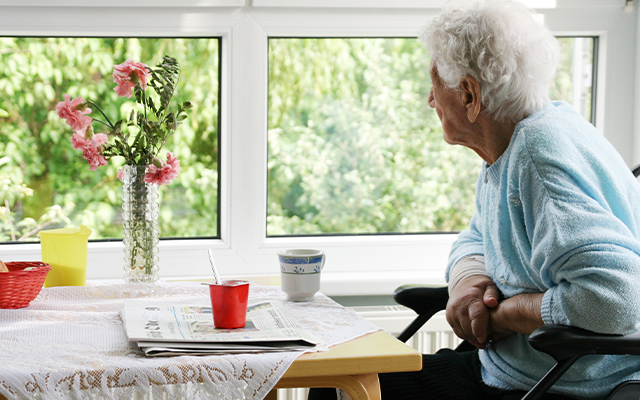
More than half of people receiving care at home say their support was reduced or stopped completely during the pandemic – for as long as six months.
An online survey carried out by Holyrood’s Health and Sport Committee found many families and unpaid carers felt they were left to ‘get on with it’ and neighbours had to step in to help.
One respondent told how their care had been completely withdrawn, exactly at the same time they asked to use self-directed support (SDS).
“I had nothing for six months and even now it isn’t sorted. I’ve had to pay for a private carer out of my own pocket and I’ve spent thousands.
“I felt I was having to ask family members to risk their own safety.”
A care worker said: ‘Many of the people I work with are older people and in the first two months of lockdown their care packages were reduced to the bare minimum, it was allocated on higher risk assessment, everyone else was told to get on with it.
“Told it would be reviewed in 12 weeks’ time but that time has now passed.”
More than 700 people responded to the survey, including family members of those receiving care at home, unpaid carers, individuals receiving care at home and care staff.
There was no marked difference between the level of reduction in hours in terms of the different care at home sectors, with similar reductions seen across local authority, non-profit and private providers.
Overall, 54% of recipients of home care saw an impact on their care – with 33% having their care stopped completely and 21% seeing it reduced.
But only 28% of those who received care from personal assistants indicated their level of support had reduced.
The report stresses the importance of having personal assistants and other carers who were able to be ‘flexible and responsive’.
One comment said: “When I got out of hospital I couldn’t get up and down the stairs. I asked my carer to take washing basket upstairs and carer said she wasn’t allowed to do that.”
The major impact of the closure of day centres and other respite activities was also highlighted, with concerns over recipients of care being left isolated and additional strain on families and unpaid carers:
“My son’s day care service closed… this left me as his mum and unpaid carer without any support care or even guidance, there was no alternative offered.
“I fully understand that we are in the midst of a pandemic but my caring role did not just stop it did in fact increase. I felt completely abandoned.”
Concerns were also raised about the need to allow flexible spending of SDS, with one respondent saying their local authority had ‘made my life a misery’ when they asked to use £300 to buy a piece of equipment.
There was also anger that SDS budgets could not be used on other care provision when usual care was not available:
“Why should I pay for 31 hours care a week (that) I am not getting for five months?”
Committee Convener Lewis Macdonald MSP said the first wave of covid-19 had a “devastating” impact on the social care sector in Scotland.
“Now that we’re in the midst of a second wave, and continuing national restrictions, it is vital that we hear the voices of home care workers and those receiving care at home across the country,” he said.
“These findings are deeply concerning suggesting over 50% of those receiving care at home saw their care reduced or stopped completely during the pandemic.
“Other concerns raised around mental health, safety, and the prospect of care shutting down again, make it clear that things must improve.”
He added that the committee also recognised the hard work of carers – both paid and unpaid – who have gone “above and beyond during this unprecedented challenge”.
Supporters – If you can help support our reporting for Scotland's health and social care community, please head to our donations page.
Bulletin – Sign up for all the latest news and events.
|
