|
Call for public views on virtual appointments |
Related newsHome adaptations – council spend will prevent NHS cost Chief Medical Officer: ‘Critical connections’ priority Call to expand Huntington’s specialist care Government boosts health innovation funding First phase of obesity meds to prioritise highest BMIs Scheme for GPs to help lost patients extended 
|
|
|
||
|
||
|
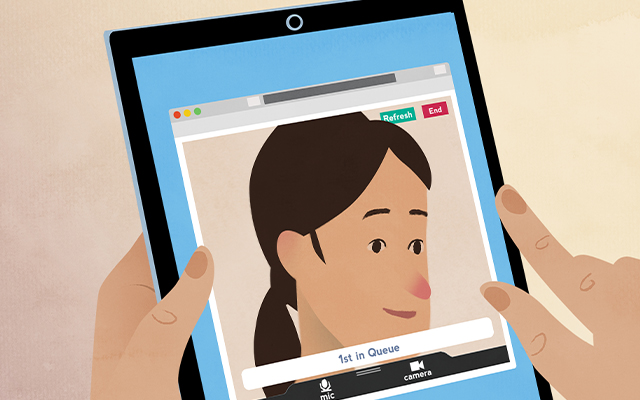
Patients and the public are being asked what they think of online video appointments with their doctor or health professional.
The number of video consultations has surged since the start of the pandemic as face-to-face contact was avoided wherever possible.
Before March, around 300 video consultations on the Near Me software took place each week but by June this had exploded to nearly 17,000.
Now the Scottish Government’s technology-enabled care team has launched an engagement exercise to find out patients’ views of online check-ups.
The Government’s overall aim is for these appointments to become the norm where it is appropriate.
Dr Gregor Smith, interim Chief Medical Officer for Scotland, said: “We know the answer will not be the same for everyone.
“Some people find a video consultation makes it easier to attend appointments, others have concerns about using digital technology.”
“The Near Me team wants to hear from everyone so they can shape the service for the future. I encourage people to get involved and give their views.”
The survey, which can be accessed online, is open until the 24th July.
Near Me has received a thumbs up from people with hearing loss for whom telephone consultations do not work.
Around 30,000 Near Me appointments with people with hearing loss have taken place, out of a total a total of roughly 150,000.
Janis McDonald, chief officer of deafscotland, said the service had been a “lifeline” for many deaf people who were already struggling with communications because of the pandemic.
“Like everyone else, people with a hearing loss need access to healthcare but that would have been extremely difficult without video conferencing,” she said.
“Near Me has provided a vital lifeline to health services and we would welcome its continued use when the current crisis ends.”
Meanwhile a study has found that people with MND rated video-conference appointments as effective as traditional ones, in part because they avoid lengthy commutes.
Clare Morrison, who co-leads the national Near Me programme, added: “Clearly, people with hearing issues are able to benefit from video consulting, as are those who have other communications barriers.
“However, as we plan ahead we want to understand what they – and the general public at large – think about Near Me and its future use, and we hope our survey will allow us to do that.”
Sign up to our bulletin sent twice a week so you don’t miss out on the latest health and social care news. |
