|
Medics call for permanent social care changes |
Related newsEmergency departments facing “unprecedented” risks Aberdeen A&E first to offer routine HIV tests “Mayday”: voices from NHS emergency departments Chief Medical Officer: ‘Critical connections’ priority Health and charity leaders join forces for NHS reform Watchdog criticises homelessness health service cuts 
|
|
© chompoo
|
||
|
||
|
Medics say a permanent funding boost for social care is needed after the covid-19 crisis to ensure patients ready to go home do not face unnecessary waits to be discharged from hospital.
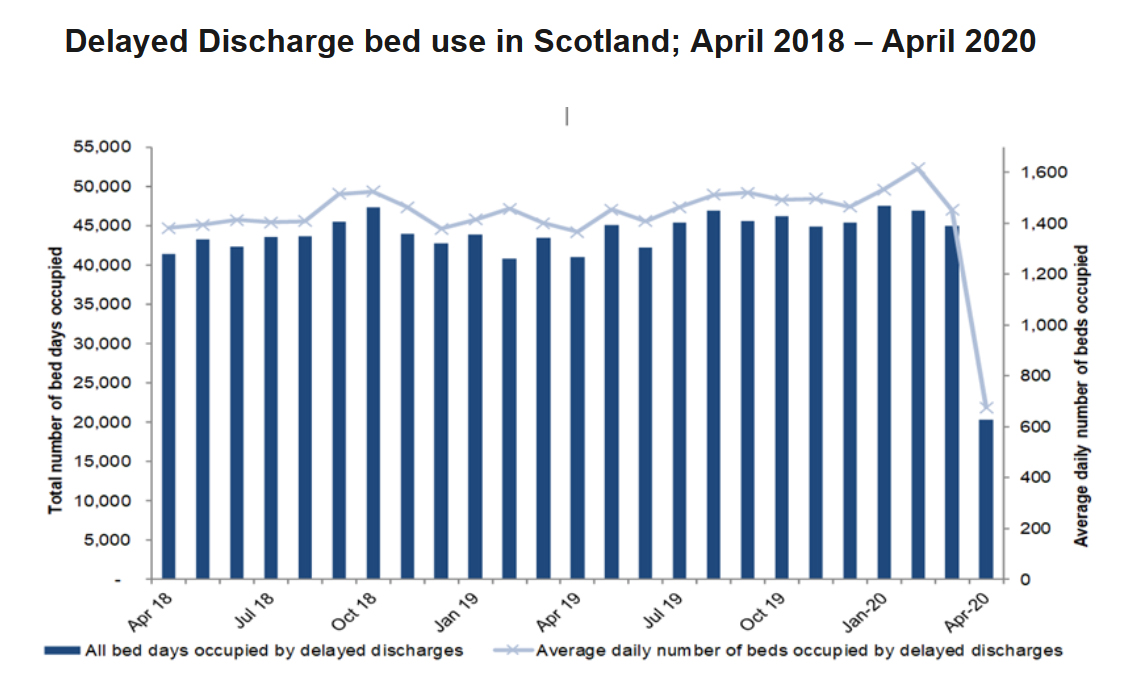
Figures plummeted from more than 1,600 people being kept in hospital when they were medically fit to leave in February to just 604 in April, the lowest level for years, as NHS boards tried to free up space for covid-19 patients.
“It appears that the things that were holding this up could be unpicked very quickly when the spectre of covid appeared,” said Dr David Chung, Scotland Vice President of the Royal College of Emergency Medicine (RCEM).
“But it does beg the question why couldn’t these delayed discharges have been safely in the community before? Why couldn’t it have been done three months before, if we were able to do it so quickly in the run-up to covid?"
Image courtesy of ISD Scotland
In 2019-20, 540,000 bed days in NHS Scotland were lost to delayed patient discharge, mainly due to delays in care arrangements and waits for care home places.
RCEM Scotland has warned that bed occupancy across the health service in Scotland is “routinely” above safe levels.
Dr Chung, who works at Crosshouse hospital in Kilmarnock, added: “It is clear that we do need more beds in hospitals…but we need to look at our ability to put patients where their care is best and a lot of the time, as we have said before, it is in the community.”
Meanwhile the British Medical Association Scotland has raised concerns that the push to get people out of hospital quickly – in some cases without having a support package in place – was made because of a shortage of beds.
In a report sent to MSPs, the organisation claims “the lack of any spare capacity at all has undoubtedly driven decisions such as those around delayed discharge, or the expenditure required on the Louisa Jordan hospital.”
The document states: “For the NHS to be able to cope with an influx of patients there needs to be spare capacity and the BMA believes that even when there is not a pandemic there needs to be greater headroom.”
A 2016 follow-up review to a previous pandemic planning exercise has revealed senior figures in the NHS feared staff were under too much pressure to adequately plan for a future flu outbreak.
Sign up to our bulletin sent twice a week so you don’t miss out on the latest health and social care news. |