|
Camphill at 80: Refugees’ caring legacy lives on |
Related newsInnovative farm transforms lives on Lewis Providers: children’s service cuts ‘devastating’ 40 years of disability with attitude Autism groups lead call to scrap Commissioner plans Column: Young people finding their voice 
|
|
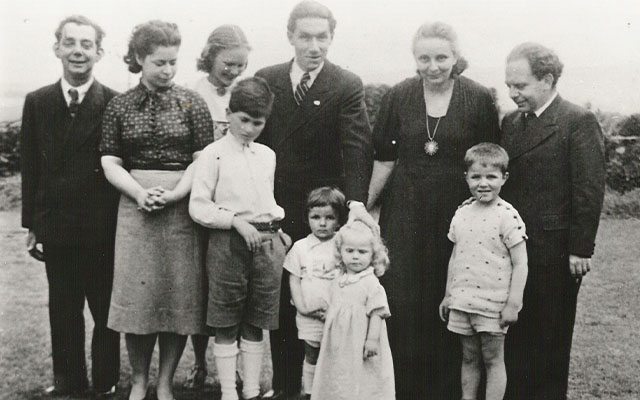
Camphill residents at Kirkton-House in 1939 including the charity’s founders
|
||
|
||
|
Eighty years ago a group of Austrian Jewish refugees fleeing Nazism set up a community in Scotland to care for and educate people with learning disabilities.
Since then Camphill has grown into a global movement reaching more than 119 communities in 27 countries around the world, including Canada, the USA, Ireland, Russia, South Africa and Vietnam, and inspiring communities in India, Israel and Japan.
When founder Dr Karl Konig and his group arrived in the north-east of Scotland in 1940, it was a time when institutionalisation and segregation was the norm for people with learning disabilities.
He had a very different vision for creating an inclusive community, influenced by the ethos of Austrian philosopher and social reformer Rudolf Steiner.
Dr Neil Henery, Director of Camphill Scotland, said: “They were in a study group in Vienna and interested in quite an academic way, and then with the invasion of Austria they left.
“They were then kind of forced to live their ideas, they had no family or jobs or social support, so they set up a community looking after children with learning disabilities.
“It was based on Steiner’s ideas about sharing what you have with others and living on an equal basis with them. It just gradually grew after that.”
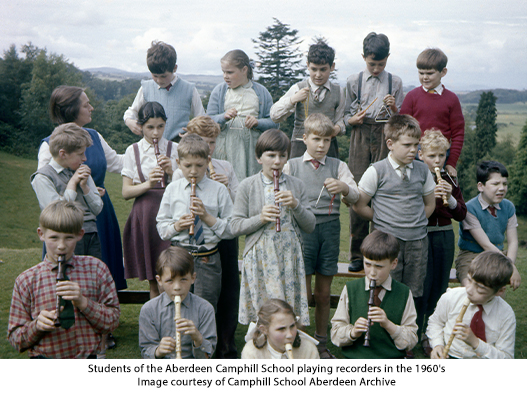
The first Camphill community was established in Milltimber, Aberdeenshire. There are now 342 people with learning disabilities living in 11 communities across Scotland.
People live in household groups of around six to eight people, creating an atmosphere of family life.
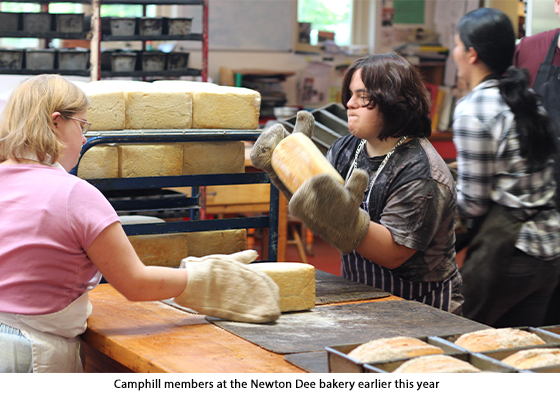
There is also an emphasis on working together, with communities running farms, cafes and bakeries, and making cheese and toys to be sold to the public.
Workshops are held so skills can be shared with the wider community, with 245 people participating in 2019.
Another major feature of the Camphill community is offering opportunities for young international volunteers, with 215 currently in Scotland.
Dr Henery said: “It is quite a unique thing to have so many young people and that gives a lot of freshness and vitality to the community with different nationalities and languages and cultures all mixing in together.”
However, there are concerns Brexit and immigration policies will impact on the recruitment of these vital volunteers.
“We do know there will be a number of obstacles in the way of European immigration that obviously just weren’t there before,” Dr Henery said.
“People may choose to go elsewhere, so we have to try and raise the profile of Camphill and make sure there’s an arrangement in place to allow people to continue to volunteer as they did before - because it's to everyone's benefit they are able to do that.”
Last year Camphill also warned that UK Government immigration policies were making it difficult for people to come to Scotland to volunteer in social care, with visa applications routinely thrown out for ‘trivial reasons’.
The charity has recently called for a free one-year extension to visas for oversea workers in the NHS - which was introduced as part of the response to the covid pandemic - to be extended to social care.
“We are finding people’s visas are running out,” Dr Henery said, “so we have been concerned about that and to try and get the same ‘deal’ for social care.”
The covid pandemic has inevitably impacted on the Camphill communities, but Dr Henery said those living there had continued to benefit from the safe and supportive environment.
“The communities try to blend having a nurturing, secluded space where people feel safe and at the same time having good connections with the wider world.
“For the people who live there, they have been able to continue to enjoy life as normal in many respects.
“It has been a bit tricky as people would normally come in to use the workshops, but they have not been able to do that because of covid.
“We are beginning to explore possibilities for people coming back to take part in the workshops as restrictions ease.”
A series of activities have been organised to celebrate Camphill’s 80th birthday, including an event and exhibition planned for the Scottish Parliament in October.
Thousands of people – with and without learning disabilities – have benefited from living and working in a Camphill community and its unique approach to inclusion.
The vision of the early founders still chimes today.
“They felt they were on the cusp of a new world, where a greater spiritual dimension would come into play – so they saw Camphill as a contribution in the bigger development of mankind as they saw it at the time,” Dr Henery said.
“As Camphill has grown into different countries, it still offers that kind of insight into a different way of living and working together and sharing and attending to the natural environment, which is very relevant at the moment.”
Sign up to our bulletin sent twice a week so you don’t miss out on the latest health and social care news. Tags: Child Health; Learning Disabilities. |