|
NHS IT ready to take ’transformative’ step |
Related newsHow data insights will help deliver NHS reform AI to help take pressure off A&E New tech to cut NHS theatre waiting lists NHS staff say data vital to improving care On the cusp: online GP alerts and new AI tools College: Invest in digital transformation for GPs 
|
|
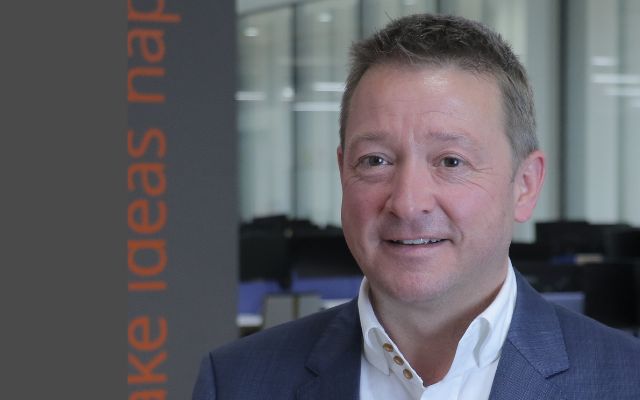
Ric Thompson, SVP Health and Care at OneAdvanced
|
||
|
||
|
For the first time, a single company is providing software support for NHS Scotland across primary, secondary and out of hours services – creating the potential to revolutionise the experience for patients and clinicians.
In the first of two articles on the opportunities for NHS Scotland from joining up its digital platforms, the Senior Vice President of service provider OneAdvanced, Ric Thompson, has been telling healthandcare.scot that the ordeal of patients having to tell their story repeatedly could soon be over.
When OneAdvanced purchased the Vision electronic patient record system used by GP practices across Scotland, they completed an NHS IT jigsaw.
Vision complemented OneAdvanced’s existing stable: GP workflow platform Docman and urgent and secondary care systems Odyssey and Adastra.
Although the company has been providing software for the NHS for some forty years, SVP for health and care, Ric Thompson says a single picture is finally coming together for both clinicians and patients:
“I think Scotland's ahead of the curve now, being able to join the platforms together.
“We are first and foremost a software business – and one of the biggest based in the UK. We have been building solutions in particular sectors for many years – walking in the footsteps of our customers as their needs evolve.
“OneAdvanced has a large clinical team of doctors, nurses and pharmacists who provide us with deep domain knowledge, particularly around the clinical aspects of our software, and ensure clinical safety for what we do.”
Mr Thompson says, with OneAdvanced providing the platforms used by 111 call handlers, out of hours teams, hospitals and now GPs, there are some “really interesting” opportunities for Scotland’s NHS:
“We now want to work with Scotland to effectively become the exemplar of what healthcare using a national information platform can and should be,” he says.
“When we recently acquired the Vision electronic patient record system, which sits in primary care, that was a significant missing piece of the capabilities of our solution set.
“As a result, Scotland has a huge opportunity. Let's work together to look at how we can build a healthcare IT solution for the future that joins up the different pathways in different parts of the NHS so that the same information about the patient, for the patient, is available to clinicians in one place.
“Patients will then only need to tell their story once, rather than at every little touch point as they go through the system, while clinicians can have a single, unified view of the patient that doesn’t involve having to click between different platforms to find the information they need.
“When we look for ways to smooth a patient’s journey by mapping the processes, we should find ways to make things more seamless, to reduce admin and repetition, and automate some tasks.”
Needles in a research haystack
It has long been recognised that Scotland’s adoption of a single Community Health Index (CHI) system, which gives every person in Scotland an NHS identifying number that is unique to them and remains with them from cradle to grave, makes Scotland an attractive place to invest in medical research.
Anonymised patient records open the door to new studies of population health, while the ability for clinicians to identify specific groups of patients could allow those people to be enrolled quickly onto new clinical trials.
“A national data set accessible through a single technology platform is super unique!” says Ric Thompson.
“NHS Scotland has a partner in OneAdvanced who can work with Scotland to provide access to that data in meaningful ways for patients that also brings investment into the NHS.”
This will be of particular value, he says, in achieving the Scottish government’s ambition of attracting more clinical trials:
“Enrolling patients on drug trials is good for patients and can be quite lucrative for the NHS and Scottish research. But the challenge is identifying those ‘needle in the haystack’ patients who will benefit most.
“We can provide the technology to help clinicians find the right patients – and to do so quickly.”
Ric Thompson is an opening keynote speaker at the forthcoming Digital Health and Care Scotland two day event on 10 and 11 February at Dynamic Earth in Edinburgh.
The second of two articles, next week, will focus on how AI can unlock productivity across NHS Scotland in ways that remain safe and secure for patients.
This article is written as part of a promotional agreement between OneAdvanced and Healthcare News Scotland.
Read more: NHS boards told to collaborate as two regions; Research enabled innovation spotlighted; Half billion pound GP investment ‘largest ever’
Sign up to receive our bulletin for key health & social care updates straight to your inbox.
|
