|
Call for ‘new way’ to assess dementia drugs |
Related newsFair funding to see Scotland lead dementia research New Alzheimer’s drug rejected for NHS Scotland Action needed to deliver dementia ambitions Harnessing a parasite to take drugs into the brain New tool for early detection of motor neurone disease Fellowship funding for MND research 
|
|

Image Credit: © Adobe Stock
|
||
|
||
|
Charity Alzheimer Scotland says the way decisions are made on potential new dementia drugs for the NHS must change “if we are to have any hope of tackling this disease”.
The organisation is calling for the creation of a Dementia Drugs Fund so cost is not a barrier to patients accessing new medicines.
This follows Scotland’s medicine gatekeeper, the Scottish Medicines Consortium (SMC), announcing it is not recommending the early-stage Alzheimer’s drug, donanemab for routine use in NHS Scotland.
The SMC said evidence put forward for how well the drug works, as well as how much it would cost to be delivered by the NHS, was not robust enough.
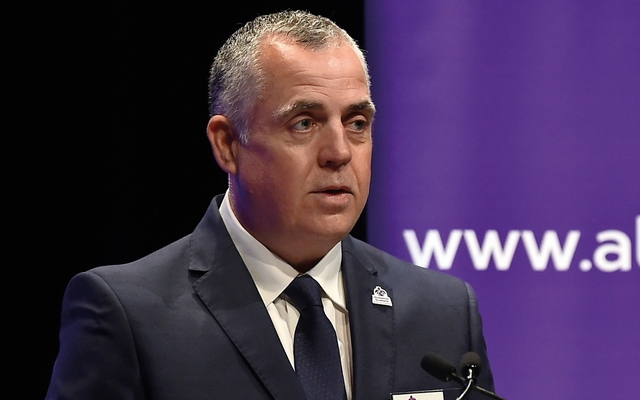
Responding to the decision, Alzheimer Scotland’s Chief Executive Henry Simmons said it is “yet another devastating blow” for people living with dementia, their families and carers.
Mr Simmons said the way SMC assesses new dementia treatments fails to capture the scale of need and how novel these early-stage dementia drugs are, and instead appears to be seeking a “silver bullet” for the disease:
“It’s our view that the system used to assess dementia drugs must change if we have any hope of tackling this disease.
“More than 75,000 people die from this disease every year – and yet we still don’t have either of the promising new treatments that have been approved in the past year available on the NHS.
“We seem to be stuck in a vicious cycle where each time a new drug is assessed, the regulator states that the evidence provided by the company on how well the medicine works, along with how much it would cost to use it, was not strong enough.
“It is time to take a different approach to the way dementia drugs are assessed for NHS use – one that takes into account the sheer size and scale of this disease and the enormous impact it has on the lives of individuals, their families and carers.”
This comes just months after another similar Alzheimer’s drug was rejected for use in NHS Scotland.
The SMC rejected both donanemab and lecanemab due to its uncertainty around what the ‘modest clinical benefit’ it sees will mean for patients and their families weighed against the cost of delivering the medicines.
The companies behind these medicines have expressed frustration at the slow pace of change in Scotland, with Eisai – which produces lecanemab for early Alzheimer’s – saying SMC’s rejections represent a “missed opportunity.”
It added that there is a need for the Scottish healthcare system to embrace early interventions to improve outcomes for patients and their carers.
Regional Chairman and CEO at Eisai EMEA Gary Hendler said:
“We’re calling on the Scottish government to urgently prioritise new Alzheimer’s interventions for those patients and families affected.”
SMC Chair Dr Scott Muir said they would “welcome” resubmission with changes to address these and other uncertainties, including a more detailed evaluation of how long patients will stay on the medicine.
However, Mr Simmons says these drugs should be treated differently to prevent those most in need missing out, citing schemes in England that help treatments be made available sooner while further data is collected on their effectiveness.
Mr Simmons said:
“There is a special case to be made here for dementia treatments to be supported by alternative forms of funding from governments to get these treatments into the NHS and into the hands of those who need it most.
“In the same way that the Innovative Medicines Fund or Cancer Drugs Fund provide access to treatments deemed too costly for the NHS, we believe it is time to set up a Dementia Drugs Fund to finally tackle the UK’s biggest killer head-on.”
Alzheimer’s Research UK Head of Policy and Public Affairs David Thomas echoes this, saying this is “another disappointment for people in Scotland”.
Mr Thomas called for pilot studies to see how the new drugs work in practice across all four UK nations:
“Governments from across the four nations, regulators, the NHS and industry must now urgently come together to create a plan to fast-track access to new treatments, so that people with Alzheimer’s aren’t left behind.”
Read more: Fair funding to see Scotland lead dementia research; Harnessing a parasite to take drugs into the brain; VR aids understanding of dementia; Redefining clinical meaningfulness; Scotland’s soccer aid spotlights Alzheimer's risk; “Get ready now” for advances in dementia care
|