|
‘Rethink’ dementia support, says government |
Related newsDementia care services need urgent reform Dementia campaign success to inform government actions Scotland’s soccer aid spotlights Alzheimer’s risk Delay to newborn screening for SMA “nonsensical” Scotland commits to change the dementia story Redefining clinical meaningfulness Scientists to help cut NHS medical device waste Edinburgh IJB faces judicial review over cuts Scotland’s new Chief Nurse appointed Urgent plea to safeguard advocacy amid local cuts New gene study offers arthritis treatment insights New Edinburgh hub set to transform global healthcare 
|
|
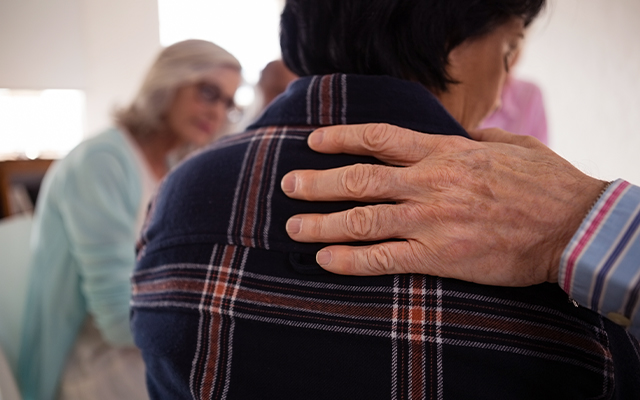
Image Credit: © wavebreak3
|
||
|
||
|
A new government-backed campaign is urging people in Scotland to shift the narrative around dementia to help people diagnosed with the condition stay socially active and connected.
The campaign challenging people to ‘Rethink Dementia’ has been launched by the Scottish government in partnership with Scotland’s local council body COSLA.
To help address stigma around the illness, people are being encouraged to continue doing everyday activities with friends or relatives diagnosed with dementia.
Cabinet Secretary for Health and Social Care Neil Gray said:
“When a friend or relative is diagnosed with dementia it’s natural not to know what to do. It can be an upsetting and daunting time, but it’s important for all of us to play a supportive role in helping our friends and family.
“One of the key elements in the Rethink Dementia campaign is asking us to think differently about a dementia diagnosis. There are many practical steps we can take to help the people closest to us to lead fulfilling lives and stay well for longer.”
COSLA’s Health and Social Care Spokesperson Counsellor Paul Kelly said the campaign is a “clear call” to think differently about dementia and those with a diagnosis to help them stay connected to their local communities.
Research has shown that making the effort to include people in social activities can help them ‘stay well for longer’ as well as alleviate mental health struggles including depression, anxiety and apathy.
Professor Elaine Hunter, a national allied health professionals consultant for Alzheimer Scotland, said:
“As an allied health professional and occupational therapist, I am privileged to meet people living with dementia, who offer me unique insights into the activities that matter the most to them.
“These activities bring purpose to their lives and show that people with dementia can still achieve so much. I’m passionate about helping them live well and sustain their connections with family, friends, and communities.
“The health benefits of spending time with family and friends are well-documented by the evidence and personal stories.
“This is really important for the wellbeing of us all and this is also true for people living with dementia. We can all make a real difference by continuing to meet a friend or loved one living with dementia and doing the activities we enjoyed together before the diagnosis.”
This campaign comes amid uncertainty over access to a newly licensed drug for the early stages of Alzheimer’s disease, after England’s drug appraisal body NICE deemed the medicine ‘not cost effective’.
Alzheimer Scotland has urged Scotland’s equivalent body, the SMC, to recognise the “enormous impact” of lecanemab and recommend it for use in NHS Scotland.
A total of 6,491 people in Scotland died from dementia in 2023 – a 3% increase from the year before.
Alzheimer Scotland has said investment in treatment and prevention is needed “now more than ever”.
Irene, 61, was diagnosed with early onset Alzheimer’s almost a decade ago and said she was surprised by the reaction of some of her friends:
“When I was first diagnosed my friends weren’t being themselves. Some friends just walked away but others stayed, and some were behaving differently.
“I had to remind them that I was still the same person that loves going to the gym, having fun, and gossiping about the things we always did. Being able to still do these things together really helps me.”
Dr Tom Russ, an NHS consultant in old age psychiatry and researcher at the University of Edinburgh, said:
“Over the past 20 years I've engaged with hundreds of people who have been diagnosed with dementia, and often they will withdraw from social activities, which can have a negative impact on their overall wellbeing.
“For anyone with friends or relatives who have been diagnosed with dementia, it’s vital to stay in touch to help them maintain their usual social activities, or even try something new together.”
Read more: Dementia care services need urgent reform; Physical inactivity increasing threat to adult health; Broken hearts can be as deadly as heart attacks; Chief medic: Innovate to tackle health & planet crises; Voices of experience key to dementia care; A question of action; Analysis: Why people are left behind; Action needed on women's brain health
|