|
Plain speaking and the NHS conversation |
Related newsScotland at the table with UN healthy air commission Pharmacy’s road to stigma-free drug dependency care NHS Scotland net zero efforts expanded ‘Whole-system shift’ needed on ADHD and autism support Scotland’s NHS and social care app timeline unveiled Doctors: ‘Shocking’ A&E figures require action 
|
|
© SevenThreeSky/Adobe Stock
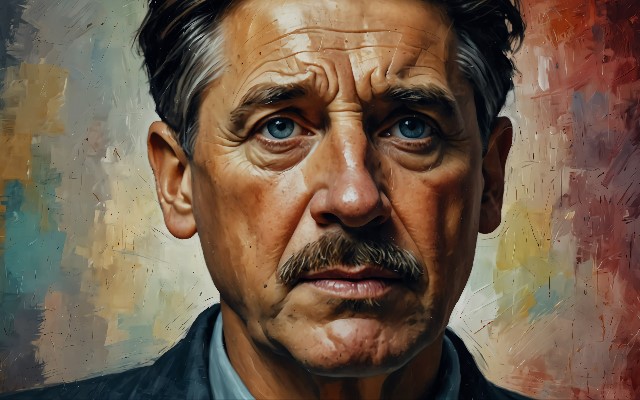
George Orwell
|
||
|
||
|
As public satisfaction in the running of an already overwhelmed, overworked and under-resourced NHS Scotland hits lowest level since 1999, healthcare historian Chris Holme shares his thoughts on the ‘national conversation’ and how the narrative around public services has been warped by political language when plain language would be so much better.
All kinds of conversations are now promised about the future of the NHS and community care.
Asking us – the folk who use services – what we think, is a great idea. The problem arises in the dreary and often meaningless language that frames the debate.
Politicians say they will “tackle” long waiting lists. But when was the last time they were at a footie match? Nearly all players get up again after being tackled.
The new buzzword is delivery, once the exclusive province of midwives and posties. It’s OK but avoids commitment to actually providing or building something.
And everybody now works in partnership with others so there’s always someone else to blame when things go awry. Or delivery gets lost in the post.
Stakeholders are still here, which older people might remember as the angry villagers seeking out Dracula at the end of a Hammer horror film. It’s also what we used to call vested interests.
It was ever thus
Lazy use of language seems to have become the norm, but it was the same in 1948 during the first days of NHS Scotland, highlighted by Eric Blair, a patient at Hairmyres hospital.
As he chain-smoked his hand-rolled cigarettes on the ward, he was bashing out the second draft of a novel.
He was better known under his pen name, George Orwell, and the novel was 1984 which gave us newspeak, room 101, groupthink and ministry of truth. Critics hailed it as a masterpiece but Orwell himself reckoned it was a good idea ruined: “I ballsed it up rather, partly owing to being so ill while I was writing it.”
Orwell had previously expressed his concerns: “Political language…. is designed to make lies sound truthful and murder respectable, and to give an appearance of solidity to pure wind.”
Those concerns were shared in the civil service, where bureaucratic officialese had long been a bugbear for Sir Ernest Gowers. Gowers’ Plain Words came out in 1948 and advocated a new style – simple and direct language, friendly in tone, and easy to understand.
So how is all of this relevant now? The fledgling NHS in Scotland recognised by Orwell had five regional hospital boards.
Over the decades this has mushroomed. Now we have 22 national and regional health boards, 32 local authorities, 32 community planning partnerships and 31 health and social care partnerships in Scotland.
Each has monthly meetings and sub committees which require written reports and liaison with a vast array of charities, academic bodies, and voluntary organisations.
No wonder the public is bamboozled.
In 1973, Sir Bruce Fraser revised Gowers’ book, keeping much of the original and adding his own sections.
Fraser had joined the Scottish Office in 1933 and later served in as permanent secretary for health in the UK Government before his final post as Comptroller and Auditor General.
Former colleagues gave him examples of awful writing like:
Nothing is less likely to appeal to a young woman than the opinions of old men on the pill.
People in the South East keep their teeth longer than people in the North.
Fraser was no fuddy-duddy pedant – he welcomed new words brought in by the computer age. But he was particularly scathing about pretentious language used by academics and new management speak churned out by business schools.
Words mattered to Orwell, Gowers, and Fraser because clarity of expression indicates clarity of thinking.
Clear writing is also much harder than merely clicking the mouse on cut and paste to rehash tired old phrases. It does, however, reinforce public confidence that officials care about their work and know what they are doing.
Language is always evolving and that’s a good thing – otherwise it dies. And all trades and professions have phrases which help communication between specialist groups.
The problem arises when buzzwords take over to create what Orwell described as groupthink.
It is made worse when public and private sector organisations develop their own vocabulary creating the illusion of activity and progress – such as describing themselves as agile while demonstrating all the agility of a dead dingbat.
You don’t have to look far to find examples: standing shoulder to shoulder (which Orwell thought was already a cliché in 1948), step change, strategic synergies, and cluttered delivery landscapes.
Public engagement is another favourite phrase but rarely defined as to what it actually means in practice, which usually involves listening to what people have to say.
Inertia thrives in this climate.
Stuffing people’s throats with meaningless phrases doesn’t cut it, particularly amid general distrust of pronouncements from politicians and public bodies.
No-one underestimates the complexities involved in running health and social care. But the starting point for sorting out problems is plain and honest speaking.
A Highland conversation
Change can happen and it can happen surprisingly quickly when politics offers an opportunity.
In 1912, Sir John Dewar’s committee spent four months touring the Highlands and Islands and listening to people on the ground, at times calling for more shorthand writers to ensure evidence was noted.
For decades, the scandal of inadequate or non-existent care across northern Scotland had been ignored. The 1911 National Insurance Act offered the chance to address this.
The Dewar Committee finished its report on Christmas Eve 1912. Within just eight months, the Highlands and Islands Medical Service was established, covering half of Scotland’s land mass.
It proved a prototype for the NHS and was copied around the world.
Read more by Chris Holme: When Scotland sent a medical tartan army; Dr Finlay and the making of the NHS; 75 years on: The birth of NHS Scotland
Sign up to our bulletin for key health & social care updates straight to your inbox. |