|
Professor calls to end cancer medicine funding lottery |
Related newsSingle approach needed for Scottish cancer services North cancer setup to remain but formulary in doubt Longest NHS waits a funding priority, says government Partnership to plough millions into NHS research New strategy to unlock genomic medicine Delay to newborn screening for SMA “nonsensical” Scientists to help cut NHS medical device waste Edinburgh IJB faces judicial review over cuts Scotland’s new Chief Nurse appointed Urgent plea to safeguard advocacy amid local cuts New gene study offers arthritis treatment insights New Edinburgh hub set to transform global healthcare 
|
|
© fotosr52
|
||
|
||
|
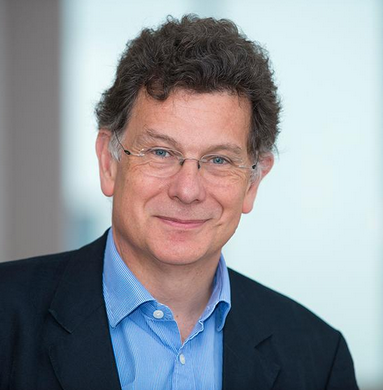
Devolving the choice of which medicines can be used locally to local health board committees is driving inequity in patient treatment, according to an Edinburgh-based oncologist.
Professor David Cameron told a Scotland policy conference on cancer services yesterday that, despite having two national drug approval processes, Scotland’s patients are forced to rely on non-democratic local bodies to grant access to new treatments.
The Edinburgh University Professor of Oncology said the current process, which sees local formulary – approved medicines list – committees across Scotland, consider advice made by the Scottish Medicine Consortium (SMC) and the National Cancer Medicines Advisory Group (NCMAG), means some patients will be unable to get nationally approved medicines they could benefit from, solely because of where they live.
While it was once rare for these local committees to turn down new cancer drugs, Professor Cameron explained that growing financial and workforce pressures are forcing boards to increasingly question their ability to implement advice on new drugs locally.
It comes as NHS Lanarkshire board members voiced unease over the adoption of expensive new treatments, the cost of which it says will need to be plugged with money meant for other services.
Around an additional £32.9m will be needed to meet rising hospital drug costs in the current financial year in Lanarkshire, according to board papers.
Just last week, NHS Tayside board papers stated that 'the SMC continue to approve new
Professor Cameron suggested to yesterday’s conference that a new approach, where funding to health boards ‘automatically flows’ after medicines are accepted for national use in NHS Scotland, could solve part of this issue:
“If you're going to add a drug into the formulary because it's going to cure more cancers, why do we have to find the resources from other services, which are also hard pressed?
“Wouldn't it be better to say, ‘the estimate is that this is going to cost Scotland £10m’, then we just divide that among the health boards?
“I just wonder whether a model like that would mean that we would spend less of our valuable clinical time going through the process of working out how we can afford to do something, if a body has already said, ‘this is good use of Scottish money’. And then we can do it once, rather than three or 14 times.”
Cancer medicines spending in Scotland
The conference heard cancer medicines account for the highest proportion of new medicines introduced within NHS Scotland each year, placing increasing pressure on services to deliver them to patients.
The Royal College of Radiologists and the Association of Cancer Physicians have raised concerns that the systemic anti-cancer treatment (SATC) workforce is struggling to keep pace with demand, with centres faced with an ‘impossible’ choice to ration certain treatments to certain patients.
Cancer physicians, radiologists and haematologists say NHS Scotland needs to now take responsibility national to resolve the capacity crisis, which they say has arisen partly due to different health boards operating, and making decisions, as separate legal entities.
Scotland’s national cancer strategy commits to all of Scotland’s patients being able to access drugs in an equitable way, and for treatment and care to be of the same quality regardless of where they live.
Professor Cameron, who is also director of cancer services at NHS Lothian, told attendees at yesterday’s conference that SMC decisions – which already consider a drug’s cost and clinical effectiveness – should be used as the ‘blueprint’ to be taken forward on a ‘Once for Scotland’ basis.
This, he said, will cut duplication and free up clinician time, while ensuring all patients can receive the treatments they need:
“To me the drivers of our cancer care – and others have said the same thing, picking on very specific areas, all of which are important – should be data, research, innovation, evidence and, perhaps most of all, equity.
“Patients don’t choose their health boards, and they don’t choose their health board decisions. They choose to live, or were born in, Scotland and should get the same access, I believe, to the same treatments delivered in the same safe and effective manner.
“I think it's worth asking this question: what model of how we choose what treatments to give is best for our patients? Perhaps we need to make sure that somebody actually asks the patients, because it's for them that we do all this.”
Read more: Financial balance pursued by NHS boards; NHS chief execs agree 15-point plan to cut costs; Health boards to soon accrue £380m in lifeline loans
Sign up to our bulletin for key health & social care updates straight to your inbox and you can follow healthandcare.scot on Google News. |