|
COVID inquiry hears disabled left behind |
Related newsInfection risk petition set to fail Scotland failing deaf and disabled Towards an inclusive New Normal COVID findings must be ‘mandate for lasting change’ Plea for renewed focus on Long COVID 
|
|
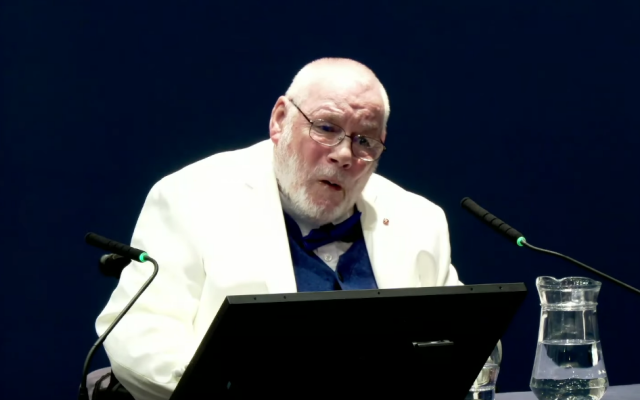
Dr Jim Elder-Woodward at the UK COVID-19 Inquiry
|
||
|
||
|
The COVID-19 Inquiry has heard that Scottish government efforts to include disabled people in pandemic planning came “too little, too late” to avoid its catastrophic, disproportionate effects.
Dr Jim Elder-Woodward told the UK inquiry chaired by Baroness Hallett which is meeting in Edinburgh that, even with his extensive knowledge and experience in accessing services, he still struggled to find the support he needed during the pandemic.
In his statement, the co-chair of Inclusion Scotland explained that the failure of the Scottish government to deliver disabled people’s rights before the pandemic meant they had less resilience to deal with lockdowns and shielding.
Despite the government being aware that the pandemic would disproportionately affect disabled people, Dr Elder-Woodward said ministers and civil servants missed the opportunity to engage effectively.
He told the Inquiry:
“We gave them ample opportunity, we gave them ample information, which they could use earlier than when they did, and if they wanted engagement to flourish we need to be involved right at the outset, not at the end of the decision-making process.”
‘Nothing about us without us’
Dr Elder-Woodward was giving evidence on the first day of module 2A public hearings, as the Inquiry looks to understand the impact of Scottish government decision-making in the initial months of the pandemic.
He said decisions about future emergency planning must involve disabled people’s organisations, like Inclusion Scotland, to a much greater extent.
He told the Inquiry that, even when the government set up a roundtable and advisory board which drove some positive change, it was virtually impossible to understand their impact during the COVID-19 pandemic
“There were one or two instances, my Lady, when we could see the outcome [of our engagement], and that was in the £100m to restart care packages”, he said. “But there was no audit of where that money went to, there was no transparency about where that money went to, because we didn't see any care packages being reopened.
“So although the government were listening to us, the local authority delivery of service was not.”
The imposition of Do Not Resuscitate (DNR) orders on disabled people also compounded the feelings among disabled people of being left behind by the government.
Dr Elder-Woodward said: “We felt people felt that they were not wanted, that society didn't want them, because they put them on DNRs.
“That could have been a utilitarian approach to coping with COVID, but we would rather the Commandos' motto, "Leave no one behind".
“If that motto is true of army people under fire, it should also be true of society in dealing with pandemics, "Leave no one behind".
Read more:Disability group feel “used” by care service co-design; UN told rights of disabled people in ‘crisis’; Ready to fail - or already failed?
Sign up to our bulletin for key health & social care updates straight to your inbox and you can follow healthandcare.scot on Google News. Tags: Covid-19; Disability. |
