|
‘Smart’ scalpels for surgical training |
Related newsCardiac innovation gets public showcase New service to bolster Scotland’s health research Social robots show potential in patient support Scottish health research collaboration extended Being bad at healthcare innovation ‘is a choice’ Microwaves offer less invasive cervical cancer therapy Edinburgh IJB faces judicial review over cuts New Edinburgh hub set to transform global healthcare Edinburgh welcomes outdoor brain health centre NHS Lothian escalated over CAMHS performance Youth mental health pilot looks to the future Veteran support cut in ‘stark’ review 
|
|
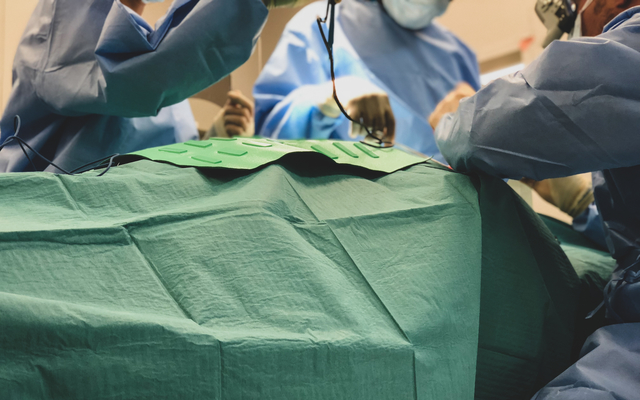
Image Credit: © Pranav
|
||
|
||
|
University of Edinburgh researchers have developed scalpels with built-in sensors to help streamline training for surgeons and ‘pave the way’ for procedures to be carried out by robotic devices.
The scalpels are connected to an electrical circuit board with a 3D-printed component, neatly fitted into the handle of the scalpel which allowed the team to collect sensitive measurements of how it was being used.
Twelve medical students and two practicing surgeons tested the Edinburgh team’s device using a synthetic tissue model which mimics human skin.
A vital skill used in surgery is the manipulation of soft tissues which exhibit both elastic and viscous properties.
Applying the sensor technology to review this skill with the tissue model during a type of incision – involving two curved cuts to the skin – which is used to remove moles and treat a type of skin cancer called melanoma.
Studying the data captured by the scalpel during trials, the team report that its technology was able to assess this key skill as effectively as traditional evaluations by experts.
The researchers found that the smart scalpel’s sensors could accurately track how much force users applied during surgical procedures and how they were controlling the device over time.
Matching the experts
Evaluations usually involve visual assessments by experienced practitioners, meaning the ‘smart’ scalpel could help simplify training of medical students.
Here, each participant’s skills were measured in two separate ways: one with the data analysis from the scalpel, and another using the standard naked-eye assessments from four surgical experts.
Two neuroscientists and two plastic surgeons were involved in the evaluations and, compared with the smart scalpel’s findings, researchers report that results ‘broadly matched’ those of the surgical experts.
Professor Ram Ramamoorthy, Personal Chair of Robotic Learning and Autonomy in the University of Edinburgh’s School of Informatics said the new system has the potential to assist surgical teams:
“We are excited to develop this new system, which uses a combination of real-life sensing technology and machine learning methods to quantitatively assess surgical skill.
“This system will enable the development of new systems for skill assessment and training, and could one day lead to the creation of automated surgical devices that can assist surgical teams.”
Sensor-loaded and low-cost
The researchers say they were able to combine the machine-learning model they designed with the surgical tool to create a ‘low-cost’ device that integrates well with current training and captures the force used.
While the level of force applied is known to be important in surgery, there have been few tools developed so far which are capable of measure this in such real-life settings.
As a result, the team says, these types of measurements have never been adopted in traditional assessments of surgical skill despite their significance.
A collaboration across informatics, clinical sciences, neuroscience, engineering biology and cerebrovascular teams, the smart scalpel ‘opens up a number of opportunities for future work’, according to the study published in Nature.
Further development could see the technology, equipped with its newly developed force-sensing system, used to assess a wide range of surgical skills, the Edinburgh team says.
Beyond this, the researchers say opportunities include future applications in creating robotic devices that can perform procedures safely and efficiently.
Read more: Microwaves offer less invasive cervical cancer therapy; Chief Scientist calls for more research volunteers; Scots women at the forefront of medical sciences; Genome research sees £46.3m boost; Major investment in Scotland's cancer research
Sign up to our bulletin for key health & social care updates straight to your inbox and you can follow healthandcare.scot on Google News. |
