|
Introducing Inclusive New Normal |
Related newsLong COVID putting Scots at risk of poverty COVID jags end for staff and chronically ill Working together to ensure No Life Half Lived Long COVID: Alone and forgotten Concern as COVID protections reduced Long COVID projects share £3m funding Scientists to help cut NHS medical device waste Edinburgh IJB faces judicial review over cuts Scotland’s new Chief Nurse appointed Urgent plea to safeguard advocacy amid local cuts New gene study offers arthritis treatment insights New Edinburgh hub set to transform global healthcare 
|
|
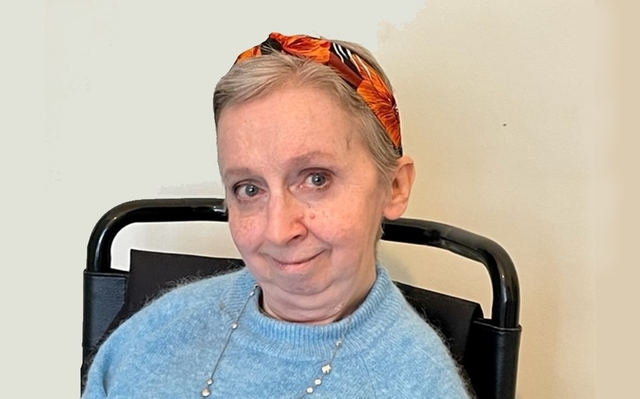
Image Credit: © Feena Mckinnell
|
||
|
||
|
Early last year, Dr Sally Witcher found herself at a very high underlying level of clinical risk, confronting the possibility that she might never be able to safely leave the house again.
As the world attempts to ‘build back better’ beyond COVID-19, Dr Witcher has launched a social enterprise to drive forward work toward an inclusive new normal.
She speaks with healthandcare.scot about the aims of her new enterprise in raising the word about learning arising from the pandemic, on innovations and different ways to live, work, deliver services, and more, to ensure equality, inclusion and human rights are centred in this new world.
Inclusive New Normal, says Dr Sally Witcher, is a social enterprise looking to embed good practice and accessible information sharing in a way that benefits everyone.
Dr Witcher – whose career spans equalities and inclusion – explains the enterprise was born from an ‘inexplicable failure’ of governments to learn valuable lessons from the pandemic and share hugely beneficial learning.
She adds that shifts in policy and practice, alongside the growing use of online communication, present a unique opportunity to better support people:
"I was aware of a lot of valuable learning, on things like clean air technology, types of mask that protect against airborne smoke-like infection spread, new clinical treatments, and how online communication methods could be used for many purposes.
“I saw the potential such things could offer towards equality, inclusion and human rights. I also saw that potential benefits extended beyond health policy and practice, with implications for employment, education, environmental standards, building regulations, community safety, and of course social care.”
However, Dr Witcher adds that the government failed to take widespread action on this potential.
Sharing valuable learnings and broadening the discussion around what an inclusive future looks like are central to the enterprise:
“Its core aims are to provide accessible information on learning and latest developments, from innovation across the world to local initiatives and good practice; to work collaboratively and creatively with a range of parties involved, to drive further innovation and improve policies, practices and products; to facilitate people to act on them, for example with training, webinars and consultancy, and to support and amplify the great work that other organisations with aligned goals are doing.”
With a background primarily in the charity sector, Dr Witcher says she was “absolutely thrilled” to secure funding from FirstPort for the new start-up:
“It was great to feel that people who know their stuff on social enterprises were able to see the potential in what I wanted to do, not just in terms of social impact, but from a business perspective too.
“Hatching this for well over a year, it’s wonderful that at least now ‘Inclusive New Normal’ could officially become a thing – although now the hard work really starts.”
Strategy vs action
In an updated COVID Strategic Framework last February, the Scottish government committed to increase efforts towards a ‘fully inclusive’ vaccination programme.
Ahead of its publication, Dr Witcher laid out her prospectus for a truly inclusive new normal, focusing on clean air, real rights and the empowerment of individuals at a higher clinical risk.
She says the positive response to this and her subsequent Twitter thread made her to feel less despondent and realise she was “onto something”.
Yet, she says, life is extremely tough for a lot of people in this ‘new normal’ and more must be done to support people:
“It’s beyond awful for people still at high clinical risk, whose numbers are growing, with repeated infections compounding clinical damage. Recurrent illness has become the norm, people are consequently dropping out of the workforce, the economy is struggling, as are health and social care services.”
“We seem to have forgotten perhaps the most important learning from the early days of the pandemic; namely that what we thought was ‘just how it is’ and how it has to be – how key societal institutions work and how we have to live our lives - in fact isn’t.
“We’ve forgotten that it doesn’t have to be this way. That can be frightening, but it also holds the possibility of something better.”
Collaborative working
Dr Witcher says amidst overwhelming “shock, chaos, trauma and grief” of upending the usual ways of life for those at high risk, connection and community has been found online.
With scientists developing new treatments at “extraordinary speed” and radical changes in the delivery of existing services, she says change seems possible.
She says we need to see the government, employers, schools, third sector, unions and people adversely impacted by COVID as partners in protection.
Dr Witcher shares that her new enterprise will listen to the voices of those previously excluded in discussions on policy, practice and product development and take the whole-systems approach she had hoped to see from the government:
“If solutions don’t work for all those with a role to play, they will not be solutions. That’s why you need to have the perspectives of all concerned – strategic down to frontline, to look at a problem from 360 degrees.
“So I hope to develop networks, and use those I already have, to work with those with the power to make change, as well as those who need change to happen, as equal partners.
“In my experience, that is how co-production can generate innovative solutions that work, while increasing understanding of others’ perspectives. I hope, in due course, to set up various exercises on key topics or challenges to forge new approaches.”
What next?
Currently, Dr Witcher says an early focus will be hybrid events which offer “huge potential” for inclusion if done well:
“People are often keen, or at least not averse, to deliver them, but it’s a new way of working and often not done well. I’ve had a preliminary meeting with a prospective partner and will be doing further investigation into needs, barriers, etc. I have other projects and potential partners up my sleeve.”
Dr Witcher says she will now go out and gather ideas around people’s needs – be it questions around the use of air filters and masks, clearer guidance across health and social care, wider implications for those at risk, or getting to the bottom of the failure to curb the spread of COVID-19:
“My hope is that others will see the potential and the importance of capturing learning – no doubt many things I’ve not thought of - and that we can work together to develop it further and make the most positive use of it possible. Our world is changing, and we need to act fast to help enable that to be for the better.”
If you are interested in supporting work towards an Inclusive New Normal or would like to know more, you can get in contact at @InclusiveNew or @SalWitcher, or Email: Witcher.Work@outlook.com.
Read more: Opinion: Unmasking the problem; Time to end COVID's Project Ignorance; Welcome to the new normal?; Desperately seeking COVID sense; An inclusive new normal
Sign up to our bulletin for key health & social care updates straight to your inbox and you can follow healthandcare.scot on Google News. |