|
The father of evidence-based medicine |
Related newsChildhood adversity health impacts felt at 50 revealed ‘Major’ update to One Health AMR register New gene study offers arthritis treatment insights Scotland in EU digital health ecosystem Broken hearts can be as deadly as heart attacks Genome research sees £46.3m boost 
|
|
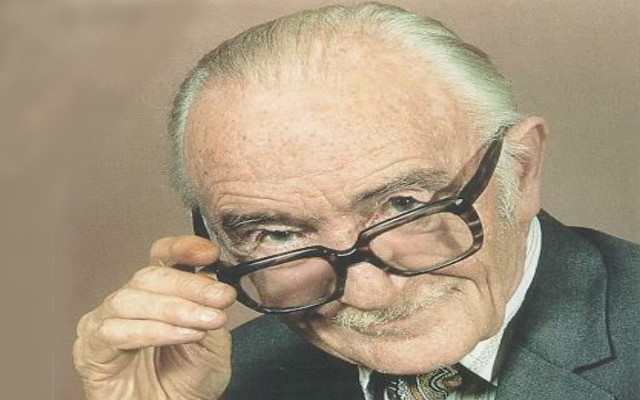
Image: The Cochrane Collaboration
Professor Archie Cochrane
|
||
|
||
|
In the latest of his insights into Scotland’s contribution to the development of modern healthcare, Chris Holme looks at the life and legacy of a Borderer whose name has become a by-word for the systematic review of evidence to inform better medical treatment.
Archie Cochrane was a doctor of the awkward squad – always asking questions.
He revolutionised medicine – firstly with detailed studies of disease in entire communities and then scrutinising evidence from clinical trials to find out what actually works for patients and what doesn’t.
This is now known as evidence-based medicine.
Archie is revered across the world through the Cochrane Collaboration, set up in his memory, which mushroomed into an international voluntary network of 80,000 researchers in 120 countries.
But surprisingly, he remains little known in his native Scotland.
Archie was born in 1909 into the wealthiest mill owning family in Galashiels.
Kirklands in Gala Terrace was a happy home. On the outbreak of war in 1914, his father Walter Cochrane, managing director of the Netherdale tweed mill, joined up, serving as a captain in the King’s Own Scottish Borderers. He was killed in April 1917 going to the aid of a comrade at the battle of Gaza in Palestine.
More tragedy followed from tuberculosis in raw, untreated milk.
Archie recalled the cows passing each morning from a filthy byre in Church Street.
It killed their family nurse Violet and his wee brother, also Walter. Archie and his sister Helen both contracted tuberculosis but survived.
A bright lad, his Galashiels boyhood instilled a strong work ethic, personal charm, and a capacity to ask questions which bordered on cussedeness. A legacy gave him a modest annual income - enough for him to plot an independent career path.
After graduating at Cambridge, he studied in Berlin and Vienna before enrolling as a medical student in London but, with the advent of the Spanish Civil War, he joined the International Brigades fighting General Franco.
As a medical orderly, Archie suffered every doctor’s nightmare – admitting a wounded Julian Bell, a close pal from their Cambridge days, knowing that he was certainly going to die.
On leave in Madrid, he encountered Ernest Hemingway “an alcoholic bore”, and later had a long discussion in a Barcelona bar with George Orwell.
During the Second World War Archie was taken prisoner in Crete and had traumatic time as medical officer looking after sick POWs.
His fluent German came in handy for the Spanish volunteers facing a tough time explaining why they were fighting with the allies. Archie told the German authorities they had all been born in Gibraltar and were therefore British.
Archie returned to Galashiels in 1945 recuperating with sister Helen and her family. His plans to study tuberculosis in the Borders fell through. Instead, he started a job with the Medical Research Council in South Wales looking at lung diseases suffered by miners.
He cut an unlikely figure in the Welsh mining communities with his posh accent and a Cambridge double first, driving a luxury car. But “the wee Jock with the big Jag” had fought fascists and Nazis, so his credentials were fine.
The Medical Research Council’s epidemiological studies spanned more than twenty years making the people of the Rhondda Fach the most medically studied group population in history.
In search of objective evidence
In the 1960s, he expanded his questioning to other areas.
There were other supporters of randomised trials, but it was Archie who crystallised the concept in a 1972 book “Effectiveness and Efficiency” which examined a range of pressing issues around health services, including the lack of reliable evidence for many medical interventions and treatments.
Too often this was based on subjective ignorance from fellow doctors – which did not endear Archie to some colleagues – rather than objective evidence from randomised controlled trials.
This could have catastrophic consequences.
Trials of the drug thalidomide had been conducted but not on pregnant animals, yet the drug was marketed to pregnant women to treat morning sickness.
The hugely influential Dr Benjamin Spock advocated babies should sleep on their tummies. It sounded sensible but was not trialled and only decades later was this discredited.
And nobody was pulling together the results of trials to offer clear advice.
The Cochrane Collaboration was born in 1993, and adopted as its logo a symbol representing the results of a systematic review of the beneficial effects of trials of corticosteroids for women expected to give birth prematurely. For decades, most doctors simply didn’t know the life-saving benefits of this treatment.
In contrast to his professional life, on trips abroad, including a return to Spain after Franco died, Archie was a disaster area, losing his luggage, having his passport stolen, or being accosted in hotel lifts.
In later life Archie found the cause of his sexual impotence was the hereditary disease, porphyria. When he died in 1988 so did the last of the male line of Cochranes.
But his memory lives on in Galashiels.
The Cochranes built two big houses in the late Victorian boom period.
Kingsknowes, completed by his great uncle Adam in 1869, is now a hotel with many of its original features.
Just down the road is Abbotshill, built by his grandfather Archibald who gave his name to a path, Archie’s Walk, which still exists today, covering his daily route to the Netherdale mill, itself now part of Heriot Watt University’s Borders campus.
These houses overlook the much grander Abbotsford, home of Walter Scott whose international impact on literature was enormous, just as Archie Cochrane’s impact was on medicine a century later. And thanks, to the Cochrane Collaboration, his legacy lives on.
Professor Xavier Bonfill, director of the Iberoamerican Cochrane Centre said of him:
“We can consider Archie Cochrane as one of the most visionary and influential physicians of the 20th century.
“His solidarity, his critical attitude and all his thoughts continue to prevail, and now, as back then, should be put into practice.”
Watch Archie in action in this documentary on the BFI website: https://player.bfi.org.uk/free/film/watch-research-in-the-rhondda-a-film-of-a-medical-survey-in-south-wales-in-1968-1969
Chris Holme is a former Reuters Foundation fellow in medical journalism.
Read more by Chris Holme: TB and the Edinburgh physician; The Glasgow mother of the C-section; Long read: The CMO who spoke the unspeakable
Sign up to our bulletin for key health & social care updates straight to your inbox and you can follow healthandcare.scot on Google News. |
