|
Four centuries of bringing life to Aberdeen |
Related newsStudy uncovers heart damage covid risk Mum scrubs-in to help deliver her baby by c-section Children’s doctor new Chief Scientific Adviser Children’s health at risk from food insecurity Rural hospitals and the child nurse predicament Aberdeen health research conference to ‘Mind the Gap’ NHS board savings push could see AI replace staff Aberdeen honours UK’s first occupational therapist Rollout of at-home kidney treatment Board chief warns extra funds won’t balance budget Rapid 4D heart scanner opens in north east Nurse director appointed as new NHS Grampian leader 
|
|
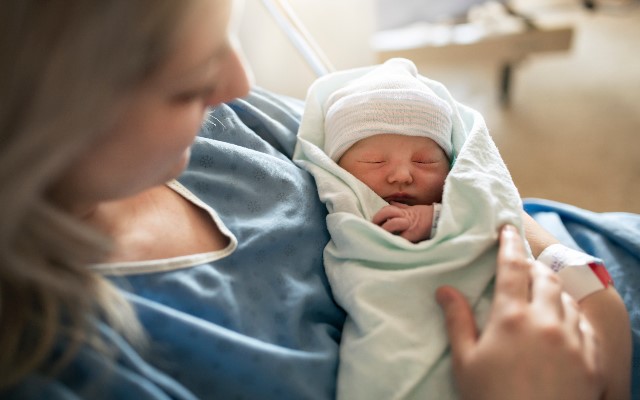
Image © pololia Adobe Stock
|
||
|
||
|
As the date draws closer for the completion of a new maternity hospital in Aberdeen, a group of clinicians and historians has published a book examining the city’s rich legacy of innovation in childbirth and the care of women and mothers. Chris Holme reports on what the authors tell us about maternity in the North East.
It must be something in the granite.
Aberdeen has made extraordinary contributions to maternity care over the centuries, many of international importance. Most have been positive; some were ignored for decades and others have hardly received any attention.
That has all changed with the publication of a new book Bringing Life to Aberdeen, a History of Maternity and Neonatal Services.
It was timed to coincide with the opening of the new Baird Family Hospital, named after Dugald and May Baird, two Glasgow-trained doctors who made their home in Aberdeen in 1937.
The Anchor Centre is due to open its doors this year and the Baird Family Hospital is now scheduled to open next year. Costing £244 million, this is the largest NHS building project in Scotland. In common with other NHS projects that have preceded it, the development at the Foresterhill Health Campus has suffered from delays and cost over-runs. It brings together a range of existing services alongside the associated Anchor building, housing haematology, oncology, radiotherapy day and out-patient services.
Four centuries of midwifery
Bringing Life to Aberdeen is a brilliant and engaging weave of historical narrative with stories from doctors, midwives, nurses, and patients.
It recalls the witch trials initiated by James VI when midwives were often targeted on flimsy evidence or confessions under torture. One was Margaret Bane from Lumphanan, who was strangled and burned in Aberdeen in 1597. Her daughter suffered the same fate ten days later.
An early pioneer was surgeon Alexander Gordon who in 1795 was the first to advocate washing of hands to prevent the spread of infection.
Gordon’s genius was to see a pattern in puerperal or childbed fever: the infection appeared only after he or the midwives had come from a previous patient infected by the disease. Unfortunately, his findings which gave the names of attending midwives and doctors, caused an outcry and he was hounded out of Aberdeen.
By contrast, Aberdeen in 1917 pioneered the world’s first confidential inquiry into maternal deaths, enabling lessons to be learned rather than pointing the finger of blame. It was an approach later adopted across the UK and internationally, the brainchild of Professor Matthew Hay who was also responsible for developing Foresterhill as the first health campus in Europe to bring medical teaching and research alongside hospital services.
The Bairds
In 1937 Aberdeen Maternity Hospital opened on the Foresterhill site. It was the base for the transformation of maternity services undertaken by Dugald Baird.
President Franklin D Roosevelt outlined four freedoms in 1941 – freedom of speech, the right to worship and freedom from want and fear. Baird added a fifth – the freedom for women from excessive fertility.
This involved family planning, better nutrition for expectant mothers, ante-natal support and ultimately, if necessary for the mother, termination of a pregnancy.
Aberdeen’s stable population, centralised service and, from 1951 a comprehensive data bank, underpinned cutting edge research into diabetes, cervical cancer and later infertility and other conditions.
Baird attracted bright young scientists and clinicians to work alongside him. They were a modest and unassuming lot.
Maggie Myles wrote the standard text for midwives – it is now in its 17th edition.
Mike Tunstall could have made a fortune from his discovery in 1961 of the anaesthetic Entonox, a mixture of oxygen and nitrous oxide which received worldwide acclaim. But he preferred to get back to his research.
May Baird became active in politics and was the first chair of the new North Eastern Regional Hospital Board created when the NHS was established in 1948.
Over the next two decades Foresterhill, with innovations like generic prescribing for its pharmacy, became a model of well-run, efficient teaching hospital. Paradoxically, this didn’t help Grampian which was at the time the least well-funded of all four teaching hospital boards in Scotland.
During the 1980s the Maternity Hospital appeared to be overwhelmed. The health board had planned for a big rise in population with the oil industry but didn’t twig that this would be primarily in young people wanting to start families.
More recently, Grampian did come up trumps by inviting the public to come up with a name for the new maternity hospital – the Bairds were the top choice.
This is in stark contrast to the ignorant cynicism demonstrated by NHS Lothian in 1988 when it defied a public outcry and blithely flogged off the Maternity Hospital which had been built in the memory of Elsie Inglis.
And the great thing about Aberdeen is that the memory of Dugald and May Baird will live on for generations to come.
Further reading: Bringing Life to Aberdeen, a History of Maternity and Neonatal Services by Lesley G Dunbar, Alison T McCall, Fiona J Rennie, and George Youngson. Luath Press, Edinburgh 2022.
Chris Holme is a former Reuters Foundation fellow in medical journalism.
Read more by Chris Holme: Health and care jubilee legacies; Long read: Diabetes and Aberdeen; The Glasgow mother of the C-section
Sign up to our bulletin for key health & social care updates straight to your inbox and you can follow healthandcare.scot on Google News. |
