|
Scotland first to ban planet-harming anaesthetic gas |
Related newsScotland at the table with UN healthy air commission NHS Scotland net zero efforts expanded Greener NHS research funding boost NHS saves £82m a year through outdoor spaces Chief Medical Officer: ‘Critical connections’ priority Chief medic: Innovate to tackle health & planet crises Holyrood hears evidence on abortion legislation Edinburgh team seek new insights into MS progression Action needed on women’s brain health Air pollution exposure linked to early death UN told rights of disabled people in ‘crisis’ Surgeons’ deep concern as 45% planning to quit 
|
|
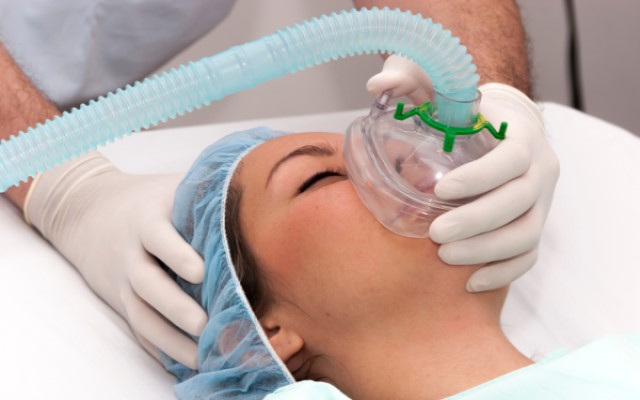
Image Credit: © Herjua
|
||
|
||
|
Ahead of the formal launch of the National Green Theatres Programme, the Scottish government and NHS Scotland have announced that a greenhouse gas used as an anaesthetic in hospitals will be completely removed this year.
NHS Scotland is set to be the first nation in the UK to fully cease use of the environmentally harmful anaesthetic gas.
Desflurane is traditionally used as an anaesthetic gas during surgery but has a high global warming potential – 2,500 times greater than carbon dioxide.
In efforts led by clinicians, hospital theatres across NHS Scotland will now replace it with a less harmful anaesthetic gas as part of the NHS’s climate emergency ambition for anaesthetic gases to be net-zero by 2027.
Cabinet Secretary for Health and Social Care, Mr Yousaf said:
“I am immensely proud that we have become the first nation in the UK to stop using environmentally harmful anaesthetics in our NHS.
“Programmes like this are key to our transition to become a net-zero health service, whilst ensuring patient safety remains at the heart of every clinical decision.”
Anaesthetic and medical gases are responsible for around 2% of all NHS emissions, with an average hour’s anaesthetic use of desflurane equivalent to driving between 200 and 400 kilometres.
Desflurane’s 20-year global warming potential is around 3,000 times that of carbon dioxide and its impact is much greater than other anaesthetic gases, like sevoflurane and isoflurane.
Removing desflurane from use across Scotland’s theatres is predicted to save emissions equivalent to powering 1,700 homes every year.
NHS Highland’s Raigmore hospital became the first in the UK to remove desflurane completely from its stocks in 2019, with the health board reporting no use of this greenhouse gas to date. However, NHS Shetland reports the highest proportion of desflurane use across Scotland, at 21.5% of its total volatiles use in 2021/22.
Clinical Lead for the National Green Theatres Programme, Kenneth Barker, said:
“Theatres are high carbon and energy intensive areas that produce high volumes of waste, so reducing the environmental impact of theatres will make a positive difference toward achieving Scotland's net zero targets.”
Speaking with healthandcare.scot last year, Alifia Chakera, Head of Nitrous Oxide Mitigation and now Head of Pharmaceutical Sustainability at the Scottish government, explained that theatres and anaesthetics is one of the “high emission pathways” in the NHS.
Ms Chakera explained that the health sector had previously been given a “reprieve” from historical work on the climate crisis and, in her view, great progress could have been made by healthcare professionals working really hard to reduce its carbon footprint earlier.
In 2022, the government updated its inhaler prescribing guidance across Scotland to reduce unnecessary gas emissions from inhalers – a move welcomed by Asthma and Lung UK, which previously reported 1 in 5 Scots use their reliever inhaler too often.
Now, withdrawing desflurane use marks the first action of Scotland’s National Green Theatres Programme, due to be formally launched in spring 2023.
As part of NHS Scotland’s Climate Emergency and Sustainability Strategy, the programme will identify areas for improvement within operating theatres to reduce their contribution to the climate crisis and become environmentally friendly.
While NHS England reports desflurane use across the NHS has already ‘dropped dramatically’ since 2018, Scotland will be the first to see the potent greenhouse gas completely removed from use.
The National Green Theatres Programme Clinical Lead, Kenneth Barker, added:
“NHS Scotland has assigned an ambitious target to be net-zero for anaesthetic gases by 2027, and removal of desflurane is just the first step towards this.
“Our patients always comes first but it’s great that we are now making clinically safe patient care decisions with sustainability in mind.”
Delivery of this initiative will be supported by clinician teams and procurement specialists across Scotland to successfully remove desflurane before the national programme is “fully underway” added Mr Baker.
Read more: Realistic medicine to help the climate; Working together for climate action and good health; A question of action; Profile: First NHS Sustainability Fellow
Sign up to our bulletin for key health & social care updates straight to your inbox and you can follow healthandcare.scot on Google News. |
