|
Fair health: Kidney disease |
Related newsRedefining clinical meaningfulness Cardiac innovation gets public showcase Delay to newborn screening for SMA “nonsensical” Investigating inequalities in kidney care Scotland to host second world brain health summit The silent victims of brain injury 
|
|
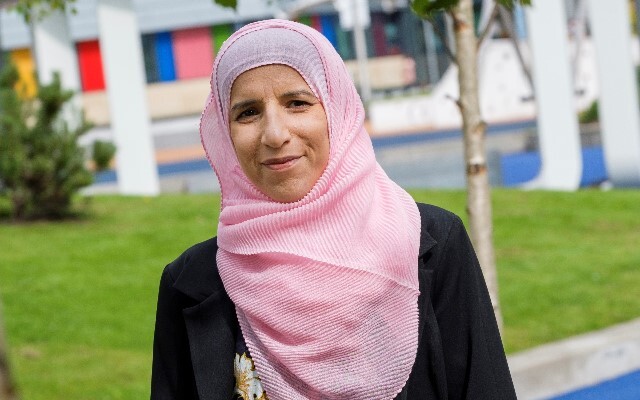
Bushra Riaz, Policy Lead in Scotland for Kidney Research UK.
|
||
|
||
|
Kidney disease is one of the most common chronic conditions facing people in Scotland – but the impact on people with South Asian heritage is greater than for others. In a blog to accompany Kidney Research UK’s poster submission to the recent Fair Health conference organised by Voluntary Health Scotland, Bushra Riaz explains the extreme importance of kidney disease, the inequalities experienced during treatment and shares the ways Kidney Research UK is working to help those most at risk understand kidney disease.
Kidney disease is a huge challenge. Around 3.5 million people in the UK are living with kidney disease and every day 22 people develop kidney failure. There are around 30,000 people on dialysis and over 6,000 people in the UK are waiting for a transplant, with 6 people dying every week waiting for a transplant.Kidney disease is associated with significant health inequalities.
Kidney Research UK is the leading kidney research charity in the UK. Our mission is to end kidney disease through research, raising awareness on prevention, detection, and self-management of chronic kidney disease.
People from South Asian (Muslim, Hindu, Sikh) and Black backgrounds are more likely to develop kidney disease and arethree to five times more likely to start dialysis than people from White backgrounds.
They are also less likely to receive an organ transplant and spend longer on the transplant waiting list.
People from ethnic minority communities are more likely to have risk factors associated with kidney disease (type-2 diabetes, hypertension, obesity, and cardio-vascular disease), they tend to wait on average much longer for a kidney transplant due to lower numbers from these communities signing the ODR (organ donor register).
To address this, Kidney Research UK recruited volunteers from the target communities– predominately the Sikh, Hindu, Muslim faith and cultural groups -who were then trained and educated to disseminate information on kidney health/disease and deceased and living organ donation.
Currently the twelve Peer Educator (PE) volunteers actively attend community events, schools, hospitals, cultural and religious establishments to educate and raise awareness on living and deceased donation and the change of the organ and tissue donation “opt-out” law and making sure their loved ones are aware of their donation decision.
The project has been running successfully for nine years and we have worked in partnership with NHS Blood and Transplant, the Scottish government, community members, and senior faith leaders to relay information for people to understand all aspects of donation from law change to faith issues for community members. This has resulted in positive impact and changes within the target communities.
We hope this project will lead to an increase in organ transplants within these communities and reduce the time people wait for their lifesaving “gift of life”.
Bushra Riaz is the Policy Lead in Scotland for Kidney Research UK.
View the Kidney Research UK poster
All the Fair Health poster blogs are on the Voluntary Health Scotland website
Read more: Scots urged to consider living kidney donation; Kidney stone treatment capacity tripled in Grampian; Renal research needed to advance care, says nurse;
Sign up to our bulletin for key health & social care updates straight to your inbox and you can follow healthandcare.scot on Google News.
|
