|
GP MSP: Patient pathways increasingly "broken" |
Related newsHolyrood hears calls for more inclusive communication Scotland to work with UK on Physician Associate reform Call for ‘urgent’ review of ADHD and autism services NHS doctors unemployment crisis despite understaffing Clinicians: who will deliver extra appointments? First Minster pledges people will see GP sooner 
|
|
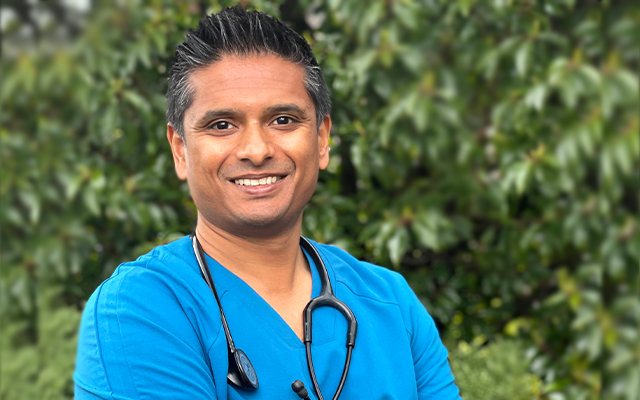
Dr Sandesh Gulhane MSP
|
||
|
||
|
Three months on from being elected to Holyrood, Dr Sandesh Gulhane brings a unique perspective to Holyrood as a practising GP.
The Conservative MSP says patient pathways are “broken” and have continued to deteriorate during the pandemic. The desire to fix them is one of the main reasons he came into politics, he tells healthandcare.scot.
Dr Gulhane says GPs – he will keep working as a GP in Glasgow while in elected office – are now facing much more complicated cases than ever before, after patients put off getting the help that they needed during lockdown.
They are also seeing more people about their mental health – an issue that has been well documented thus far through the pandemic.
In May healthandcare.scot reported that all but one mainland NHS board had young patients waiting more than 12 months for treatment by Child and Adolescent Mental Health Services.
Dr Gulhane warns, “We are beginning to see kids present with problems that they might otherwise never have had if covid had not happened.
“We cannot be sure how long lockdown and covid is going to affect children – it could still be doing so in ten years’ time. Overall, I have seen a huge deterioration in people’s mental health.”
Figures published last month show a ‘clear increase’ in the number of people detained on mental health grounds during the pandemic, the report also saying key safeguards were used in less than 50% of cases.
“Primary care has this misnomer that we closed during the pandemic – we didn’t, it’s just that we changed the way that we were working – and I have never seen demand like there is at the moment”
An advocate of mindfulness and exercise – including a lunchtime walk every day – Dr Gulhane says he hasn’t stopped a single patient’s antidepressants since lockdown started.
“Usually, I would be increasing or decreasing doses, stopping and starting people’s medication as appropriate but, in the main, I have not stopped anyone’s. And that is not normal - that’s from the pandemic. Things like diazepam – [a benzodiazepine sometimes used to treat anxiety disorders] – are not given out very often but I have seen an increase in their use as well.”
He says a significant number of his patients could be finding help elsewhere from different services – for example social security services for money worries – but a “traditional model” persists, in which the GP surgery is too often seen as a first port of call for different issues.
All this is happening at a time when, he says, the workforce is “beyond tired”:
“Primary care has this misnomer that we closed during the pandemic – we didn’t, it’s just that we changed the way that we were working – and I have never seen demand like there is at the moment,” says Dr Gulhane.
“So many people are wanting to speak to their doctor with so many different problems. [But] the pathways in Scotland are not very clear and that’s where patients aren’t satisfied, because they’re not getting the smooth transition through services that they need.
“When you are a patient and I diagnose you with something, I can refer you on to a specialist department and that could take four weeks say, followed by another eight weeks to get a scan and another wait to see a specialist. You’re basically happy because you have a pathway of A to B.
“But now we are finding patients are going from A to B to D to Z, then back to me.”
Cancer Research UK and others have raised concerns about the backlog of patients waiting longer for treatment. Figures covering January to March 2021 showed only two of Scotland’s 14 regional health boards met the 62-day treatment time standard for cancer patients.
The Scottish government has promised to increase NHS capacity to 10% above pre-pandemic levels and started introducing diagnosis ‘one stop shops’.
The Glasgow MSP says he has lots of patients who have had their social care reduced during the pandemic, meaning some have ended up in hospital sooner, or he has witnessed patients staying longer in hospital because of delays getting home care in place.
“It’s not just joined up thinking for the NHS that we need but joined up thinking for social care too – we need that as part of broader patient pathways…That’s really one of the main reasons I came into politics was to try and point out that pathways are broken.”
Much is riding on making the NHS more efficient with the help of technological developments and streamlining current processes.
Nicola Sturgeon’s September 2020 programme for government included a commitment to make video consultations the ‘default’ as part of broader plans to scale up digital care.
Earlier this year, the NHS Near Me video consulting platform was expanded to third sector organisations.
One government survey found nine in ten patients and clinicians wanted to see video consulting used for health and care appointments, where appropriate.
"The NHS is one of the slowest organisations to change, but now we have jumped forward a decade in terms of change over the course of a year – big strides that we wouldn’t otherwise have made"
Dr Gulhane says keeping a space for face-to-face is vital:
“We have phones, videos and can be sent pictures. That means if you are a working person you don’t need to waste your morning coming in to see me; we can be in touch remotely and I can give you the help you need remotely.
“If I need to bring you in, then I need to bring you in and I do apologise to my patients when that happens, but sometimes I have to. It’s about having a hybrid model with the tech that exists.
“The NHS is one of the slowest organisations to change, but now we have jumped forward a decade in terms of change over the course of a year – big strides that we wouldn’t otherwise have made. I think it’s the speed of the change that is scary for people.
“If we did this over ten years people wouldn’t have noticed…but because it happened so quickly that has led to consternation and people asking ‘why can’t I see my GP this week?.
“Well, you can. It’s just it will be in a different way.”
Read more: MSP long covid clinic plea for ‘shattered’ patients; Pam Duncan-Glancy: Where’s the care restart?; Insight: Mapping pathways to transform the NHS; Insight: Year ahead ‘critical’ for social care future
Sign up to our bulletin for key health & social care updates straight to your inbox. |
