|
In full: Plea for caution from at-risk Scots |
Related newsInsight: Scotland’s ‘invisible’ patients and carers A timeline of Scotland’s National Care Service UN told rights of disabled people in ‘crisis’ Cost-of-living ‘devastating’ for disabled people TV advert promotes human right to benefits FM candidates asked if they care about care 
|
|
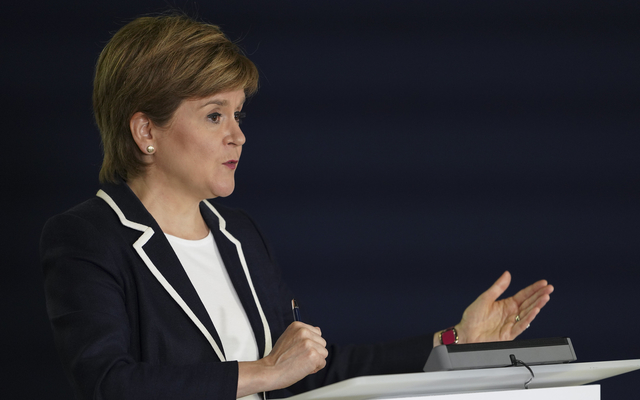
Image courtesy of Scottish Government
|
||
|
||
|
Today disabled people, unpaid carers and charities have published an open letter urging the First Minister not to follow Boris Johnson’s approach of rapidly lifting remaining covid-19 restrictions in England.
The 83 signatories say an approach of living with covid – which could see more than 100,000 new infections every day, according to the UK Health Secretary Sajid Javid – would force those at risk from the virus back into social isolation.
The UK government has attracted criticism after Boris Johnson said mask-wearing on public transport and in shops would no longer be required in law.
In Scotland, Nicola Sturgeon suggested ‘baseline measures’ like masks, social distancing and hand hygiene would remain in place.
Tressa Burke, of the Glasgow Disability Alliance, said disabled people and their families were “very concerned and frightened,” while Jan Savage, from learning disability charity Enable Scotland, said the human rights of these groups were being forgotten.
Lynn Williams, an unpaid carer and campaigner, said people in her situation were being made to feel like their lives had less value as sport fixtures restarted ahead of support services.
The letter is published in full here:
“Dear First Minister, Nicola Sturgeon MSP and Health Secretary, Humza Yousaf MSP
Living with COVID = No Life for Thousands
It has now been over fifteen months since the first covid-19 lockdown in March 2020.
At the time we were told that we needed to be there for each other – that the measures we took to try to suppress the virus were for everyone’s protection. We heard Ministers tell us that every life was worth protecting. That message was an important one, as it set the tone for Scotland’s – and the UK’s - response to this virus.
For those of us at particular risk of, or caring for others at real risk of hospitalization or death because of covid-19, this was a critical message. It said that everyone had value and was worth saving. Families felt that there was an extra layer of protection in place – the focus on covid-19 elimination provided hope.
The announcement by the UK Government that we will all need to “live with covid” and the end of all restrictions, has left us shaken. It has illustrated whose lives matter and who is dispensable. Whilst these decisions apply to England, they will have direct and indirect consequences for Scotland, particularly during the holiday period.
We are a group of disabled people, those with pre-existing health conditions, unpaid carers and equality organisation representatives and we strongly oppose the UK Government’s approach. We seek clarity from the Scottish Government on its current response, along with evidence-based action to ensure the safety and quality of life of all in the face of such a drastic rise in covid-19 cases.
In Scotland, we are very concerned about inconsistency, the apparent change in narrative and the direction of public health decisions. Over the last week, Scotland has witnessed the highest number of positive covid-19 cases during this crisis, and we are now in the unenviable position of having some of the highest covid-19 rates in Europe. But rather than stepping into action as we have done before, the policy focus seems to be solely on the vaccine programme, and the weakened (but still active) link between covid-19 and severe illness or death.
Science tells us that vaccines alone are not enough. Many thousands are at real risk, especially whilst covid-19 rates remain so consistently high. The possibility of new and stronger variants mean that vaccine escape is a very real concern.
All of this has significant ramifications for our society and economy. The inequality and invisibility already faced before covid-19 by disabled people, those with pre-existing conditions and unpaid carers (the majority of whom are women) has been exacerbated. Any planned easing of restrictions must put the lives of those most at-risk first.
Any policy decision to ‘live with covid’ implies that the risk to our lives, and to the lives of our families, is a risk worth taking. We do not agree.
There was hope for many families and communities when we were working towards suppressing cases, dealing with manageable breakouts and when Scotland appeared to be leading the way. However, we have seen dangerous variants form and take hold here – we must learn and ensure that this can never happen again. The slower our response to the recent, drastic, increases in covid-19 cases, the greater the risk of a variant which undoes the good work behind the vaccination programme.
There are thousands now whose life will be purely focussed on survival with the trauma that this brings. The Scottish Government has repeatedly stated its commitment to a human rights-based approach, but the decisions being taken, and the apparent inaction as COVID19 cases rise, undermines this commitment to those with pre-existing conditions, disabled people and those caring for them.
We are therefore writing to our Government, to our political leaders, openly to the scientific community, and others in power to ask:
We appreciate that people are desperate to return to “normal”, but normal was already not working for huge numbers of Scotland’s population.
We want to see covid-19 controlled as far as possible, so we can live a healthy and safe life long-term, rather than the inevitable peak in cases, return to lockdowns and the overwhelming of our healthcare system and other public services.
We do not want to see more people being lost to this dangerous virus.
Many of us are taking decisions to impose our own restrictions or even return to shielding with the current case numbers. This is unacceptable and is an illustration of how certain communities and groups of people in Scotland are being overlooked.
The sacrifices of far too many people must matter. The lives lost must count. Let’s work together to make things better.”
Signed:
Lynn Williams, unpaid carer and campaigner
Talat Yaqoob, unpaid carer and campaigner
Julie Johnstone, unpaid carer and campaigner
Alison McGinley, unpaid carer and campaigner
Lucy Dolan, unpaid carer and campaigner
Fiona Fisher, unpaid carer and campaigner
Sandra Webster, unpaid carer and campaigner
Shubhanna Hussain-Ahmed, unpaid carer and campaigner
Linda McCafferty unpaid carer and campaigner
Katy Styles, We Are Carers campaign and unpaid carer
Susan Archibald, Disability Rights Activist
Satwat Rehman, CEO of One Parent Families Scotland
Dr. Sally Witcher OBE, disabled person and campaigner
Elizabeth Mistry, former carer and campaigner
Saeema Hayat, support worker and intermittent unpaid carer
Carolyn Fox McKay, campaigner living with chronic illness
Linda Bamford, Unpaid care receiver, campaigner, living with lifelong disability.
Celia Sweeney - Social Scientist, activist and unpaid carer
Terri McCue, unpaid carer and campaigner
Melanie Pearson, former unpaid carer and campaigner
Christina Scott - Business owner, campaigner & previous unpaid carer
Eve Broadis - Business owner and unpaid carer to two adults with learning disability
Dr Pauline Nolan - Head of Leadership and Civic Participation at Inclusion Scotland (Disabled People’s Organisation).
Moira Tasker, CEO of Inclusion Scotland, disabled person and previous unpaid carer
Tressa Burke, CEO at Glasgow Disability Alliance and disabled person
Marianne Scobie, disabled person and Depute CEO, Glasgow Disability Alliance
Simon Hodgson, Director, Carers Scotland
Fiona Collie, Policy Manager, Carers Scotland
Sanjeev Mann, disabled person, journalist and activist
Professor Kirstein Rummery, disabled person, carer and campaigner
Giselle Robertson, unpaid carer and campaigner
Dr Sam Smith, CEO at C-Change Scotland, campaigner, (intermittent) unpaid carer.
Brian Scott, Development Manager, Glasgow Disability Alliance
Bill Scott, Senior Policy Adviser, Inclusion Scotland
Rhona Neill, Service Manager, People First (Scotland)
Mairi O’Keefe, founder and patron, Leuchie House
Joanna Barrett, unpaid carer
Shelley Gray, parent of disabled child
Fraser Campbell, Writer who lives with chronic illness
Ruth Wilkinson, Scotland Spokesperson, Women’s Equality Party
Michelle Carruthers MBE, CEO of Food Train, supporting 3000 older people living at home in Scotland
Heather Fisken, disabled person and Head of Policy and Research at Inclusion Scotland
Grant Carson, Director, Employment and Housing Services, Glasgow Centre for Inclusive Living (Disabled Person).
Dr Jim Elder-Woodward OBE (Disabled Person) Chair Scottish Independent Living Coalition. Chair Glasgow Centre for Inclusive Living, Vice Chair Inclusion Scotland, Fellow of the Centre for Welfare Reform, Board Member Capability Scotland and the Institute of Research and Innovation in Social Services
Audrey Birt, disabled person and campaigner
Morven Brooks, CEO Disability Equality Scotland
Susie Fitton, Policy Officer, Inclusion Scotland
Dr Angela O’Hagan, Former Director of Carers Scotland
Elizabeth Thomson, unpaid carer
Ellie Hutchinson, gender equality campaigner and parent
Emma Ritch, Executive Director, Engender
Alison Chalmers, unpaid carer
Ivan Cohen, Director, People First (Scotland)
Jamie Cooke, campaigner
Jen Ang, human rights lawyer and campaigner
Anna Ritchie Allan, Executive Director, Close the Gap
Michelle Steel, Director, People First (Scotland)
Etienne d’Aboville, CEO, Glasgow Centre for Inclusive Living, (and a disabled person)
Jenny Miller - CEO PAMIS
Kirsten Maclean, People-led Policy Officer, Inclusion Scotland and a disabled person.
Professor Ian Welsh OBE, Chief Executive, Health and Social Care Alliance Scotland (the ALLIANCE)
Lauren Stonebanks, disabled artist, person of colour and campaigner
Laura Finnan Cowan, North Lanarkshire Disability Forum and sibling carer
Karen Procek, unpaid carer and campaigner
Kris Procek, unpaid carer and campaigner
Laura Rutherford, unpaid carer, campaigner, PAMIS Changing Places Campaign Coordinator and member of Falkirk Area Disability Access Panel
Dr Rosalind Cavaghan, gender budgeting campaigner living with chronic health problems
Jennifer Rutherford, unpaid carer and campaigner
Professor Alasdair Rutherford, unpaid carer
Maggie McAlorum, unpaid carer.
Leo Starrs-Cunningham, Convenor Inclusion Scotland and disabled person
Alison Campbell, unpaid carer, Argyll and Bute
Claire Cairns, Director, Coalition of Carers in Scotland
Clare MacGillivray, Director, Making Rights Real, human rights activist and unpaid carer
Dr Pauline Campbell, unpaid carer
Marlen Smith unpaid carer
Heather Ford, unpaid carer
Norma Mcwilliam, unpaid carer
Lily Greenan, freelance consultant/researcher and unpaid carer
Jenny Whinnett, family carer, Shared Lives Carer, Deputy Chair Board of Governors PAMIS
Kirsty MacLeod, Unpaid Carer
Sara Cowan, Scottish Women’s Budget Group
Peter Kelly, Director, The Poverty Alliance
|
