|
Call to expand overdose kits to community pharmacies |
Related newsWatchdog: collective failure to help those in crisis National Pharmaceutical Agency remains on hold Pharmacists: don’t time limit help for drug users Call to address climate impact of medicines Pharmacy’s road to stigma-free drug dependency care Greener NHS research funding boost 
|
|
© Scottish Drugs Forum
|
||
|
||
|
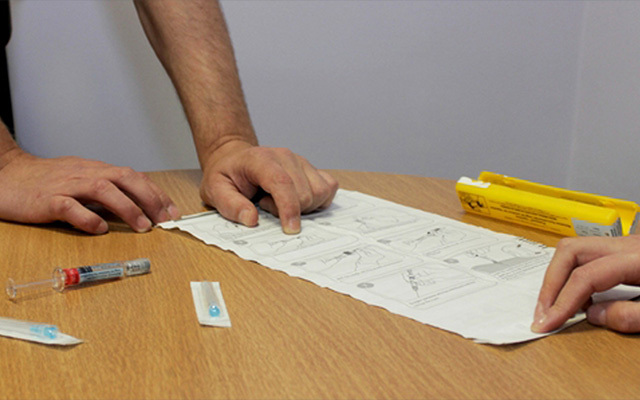
Staff at high street pharmacies across Scotland should be provided with the anti-overdose drug naloxone to hand out to people who are at-risk and to use in an emergency, the Royal Pharmaceutical Society has said.
The life-saving medicine, which can reverse the effects of opioid overdoses, has been used by community pharmacists in Glasgow more than 20 times since a new programme launched last year.
Now the Royal Pharmaceutical Society (RPS) says this should be extended across the country, as part of a raft of proposals setting out how community pharmacies can help to reduce the harm caused by illegal drugs.
Under the plans, naloxone would be kept in first aid boxes for emergency use and pharmacy teams trained in its use.
The Scottish government today announced the final part of an extra £50m earmarked for drug services had been allocated.
Of the £14m pledged, £4m is set aside for the implementation of Medicated-Assisted Treatment standards, including a right to same-day support.
Research into take home naloxone programmes found the numbers of patients carrying the treatment is still too low, with around 20% of people having the treatment on them when surveyed.
Community pharmacy teams are “ideally placed” to supply patients with the treatment and stress the importance of carrying it, RPS’s policy document states.
It goes on to say: ‘Every community pharmacy team should be able to offer naloxone to anyone they believe to be at risk of an overdose or to anyone who may witness an overdose.
‘This should be offered as part of a package of care which promotes not only the safe use of naloxone but also the importance of carrying it and of naloxone being accessible.’
RPS is calling for the introduction of supervised consumption facilities and the expansion of Heroin-Assisted Treatment, with involvement of pharmacy staff throughout.
Laura Wilson, RPS Scotland Policy and Practice Lead, said: “It’s concerning that drug related deaths and hospital admissions continue to rise in Scotland.
“Many of these deaths are preventable. Pharmacists, and pharmacy teams, already play a big role in supporting and providing treatment to people who use drugs, as well as offering harm reduction services and advice.
“The RPS wants to build on this fantastic work by enabling them to do even more to reduce harm from drugs.”
The proposals also include measures to reduce harm caused by over the counter and prescription medicine purchases, and repeat a long-standing demand for community pharmacist to have full access to patient records.
Read more: Scottish naloxone pilot saving lives; Drug consumption rooms backed by leading medics; Prison pilot drug scheme success during pandemic; Pharmacists set out 2030 vision
Sign up to our bulletin for key health & social care updates straight to your inbox. |
