|
Insight: Where is the plan for social care? |
Related newsCare home fears over rising community infections ALLIANCE chief: It’s all about the money Community pharmacy project finds ‘hidden carers’ ‘Covid showed ministers should be in charge of care’ Freeman: ‘We won’t nationalise social care’ Unpaid carers the forgotten ‘last line of defence’ 
|
|
© nito
|
||
|
||
|
In the wake of the first wave of covid-19, the government published plans to remobilise the health service, promising to get operations, diagnoses, screening programmes and appointments back on track.
But for social care – which was stripped back during the first wave while the government asked people to rely on friends and family instead – no such coordinated national restart of services seems to be on the cards.
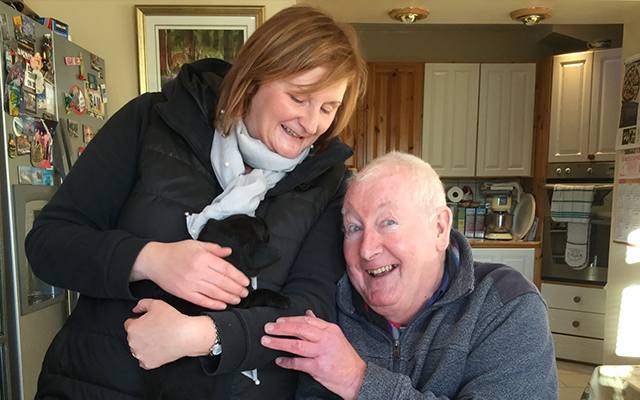
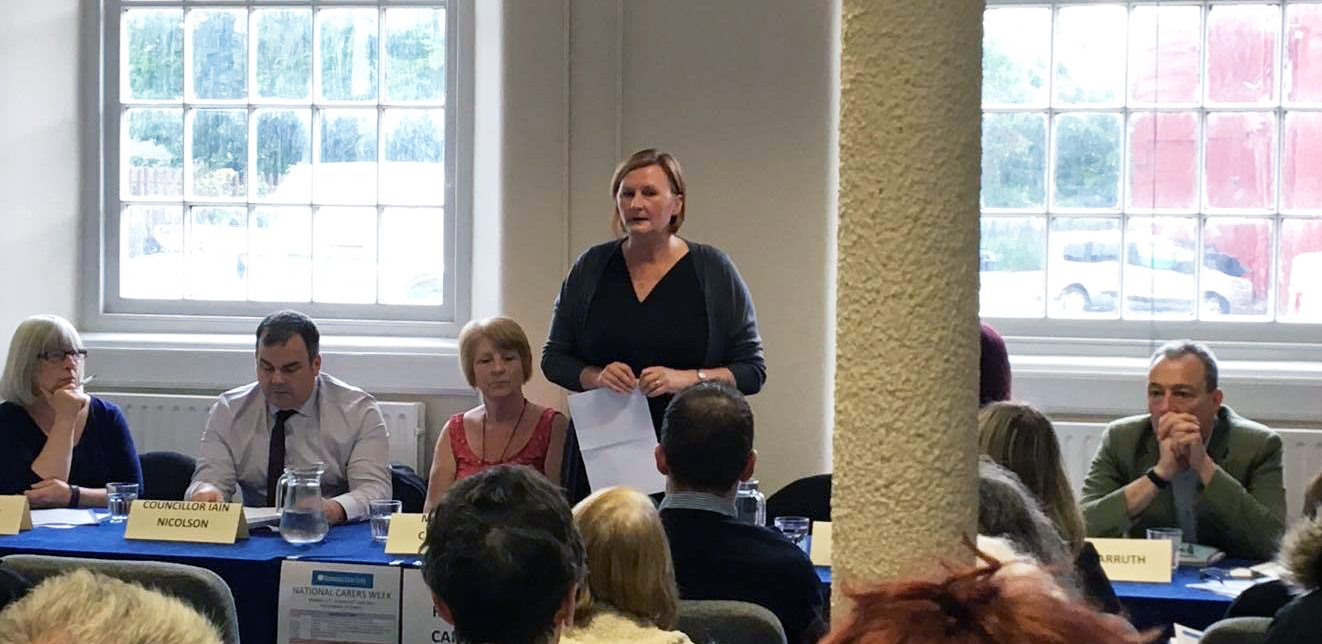
A national review of the sector is underway, but this is not enough, says Lynn Williams – an unpaid carer for her husband in Paisley who has taken to social media to campaign for a better voice for Scotland’s hundreds of thousands of unpaid carers.
“The pandemic has, as in so many areas of policy, basically ripped open and exposed the reality of many families’ lives,” Lynn tells healthandcare.scot in the second half of a two part interview.
“And the lack of any kind of national action on this – I can’t even express how disappointed I am.”
As Scotland finds itself struggling against a predictable resurgence of the virus, Lynn says that in the first wave “many families were on their own, battling deep bureaucracy – people are still being charged for services they didn’t actually get earlier in the pandemic.
“I have had a carer tell me she got a bill for care services she hasn’t actually had – you know it’s that kind of stuff that is still going on.
“Services still haven’t re-started. I have a neighbour who looks after her 101-year-old mother; she is in her seventies and has had no support since last March.
“There are people who are being left with nothing and what they are being offered isn’t good enough. I think we are still trying to fit services around people rather than working round what people need.”
“There is a hidden crisis in all of this, which is social care cuts and people being left completely abandoned, families left with nothing.”
Set to report before the end of this month, the independent social care review panel was tasked with helping the Scottish government work out how to create a national care service.
“It’s mad. I don’t think anyone understands what a national care service is," Lynn says. "It is a kneejerk response to the crisis that we saw in care homes during the pandemic.
“There is a hidden crisis in all of this, which is social care cuts and people being left completely abandoned, families left with nothing.
“I have inputted to the care review via an event I attended with a carers organisation. I remain unconvinced…it is such a short period to look at such a massive issue.
“Compare that to the Care Review for young people which was fabulous and took two years with direct involvement from those in care.
“Consistently we have had this false dichotomy between expertise and experience.
Carers’ expertise is mislabelled as lived experience.”
“This current national care review has one carer on the expert panel who is a great guy but there is not a single carer on that panel who is being charged for care, who is dependent on carers allowance, who has been at the very frontline of all of this from the beginning.
“For me that means the whole review is flawed...For me there is a trust element here for this review.
“You have a lot of people on that panel who have great salaries and secure jobs and for many carers that is not the reality.
“For them caring means insecure employment, it means underemployment, it means losing your career, it means being dependent on carers allowance, so you are missing that whole perspective.
“And again, it has been about engagement rather than co-production. The point is that the review was to have an expert panel and what that says to unpaid carers is you are not experts.
“And consistently through this pandemic we have had this false dichotomy between expertise and experience. Carers’ expertise is mislabelled as lived experience.”
The government has made moves to recognise carers and support them with things like a national carers’ wellbeing campaign and a further supplement to carers’ allowance, but its own survey found more had to be done to have any significant impact among Scotland’s carers who, since the start of the pandemic, have provided an estimated £11bn of care – nearly the same as the budget for Scotland’s frontline NHS in a normal year.
That lack of recognition has left Lynn almost ready to give up:
“The clincher for me was in November during the SNP party conference, listening to the First Minister’s speech and there was nothing in that for carers, not a single thing.
“Not an acknowledgement to say we know you have been the frontline, thank you. I don’t know what else we can do to say to people ‘we are here and we are struggling!’.
“There is a real lack of recognition that I can’t justify anymore and to be honest I am almost at the point where I have given up.
“The way [government] can help us is by involving us in shaping the future – directly involve us in that. Otherwise there is no hope, no light at the end of the tunnel.
“You need, for lack of a better word, lived-experience advisors working with government. Make it a paid job.”
“We have missed opportunities to do bring carers to the table and that will continue to be my ask throughout this whole process, and not just engagement through a consultation session.
“We have been here before and know what the issues are. You need to have carers directly involved in planning. You need to support and put resources into that process.
“You need, for lack of a better word, lived-experience advisors working with government. Make it a paid job.
“Get people from the frontline into government to shake it up and bring in new life experience so we don’t end up with guidance coming out that says ‘rely on friends and family during the pandemic’.
“If we do that then it makes some of what we have been through not worthwhile, but it gives it some meaning.”
In the NHS many have hailed huge changes that took place in a metter of weeks. The same cannot be said for social care, Lynn reflects:
“If it has made things better in the NHS, more streamlined and less bureaucratic, then brilliant, I will cheer that along.
“I haven’t seen that though in social care. In many cases I have heard of people asking for flexibility around Self-Directed Support and being told no.
“All the research is out there to show how bad things are for carers and a first step for me would be acknowledgment from the government and partnerships that there are families out there who have sacrificed a lot to keep loved ones safe and that can’t continue.
“We need a commitment to something that says let’s look at how we respond to things like this as a government with key partners like carers to make sure this never happens again.
“If we do that then it makes some of what we have been through not worthwhile, but it gives it some meaning.
“My plea is let’s not do this again, let’s not make the same mistakes.”
Read the first half of Lynn Williams interview with healthandcare.scot here: Unpaid carers the forgotten 'last line of defence'.
Sign up to our bulletin for key health & social care updates straight to your inbox. Tags: Infectious disease; Social Care; Unpaid Carers. |