|
Insight: We need to lead from the heart in social care |
Related newsFreeman: ‘We won’t nationalise social care’ Dementia care recovery plan unveiled Vaccine priority groups revealed for December Winter battle plan drawn up for social care Care at home “Achilles heel” of pandemic response Councils confident social care is resilient 
|
|
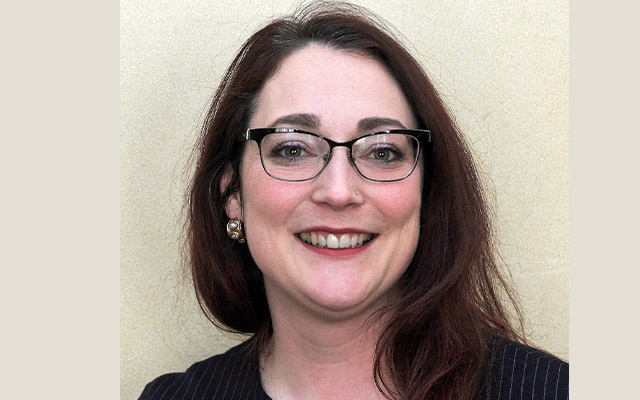
Scottish Care National Director Karen Hedge
|
||
|
||
|
Health and social care services have, over the past nine months, had to change and adapt in unprecedented ways and at extraordinary pace. The havoc that covid-19 has wreaked on the lives of the most vulnerable in society and those that care for them would be hard to overstate.
As the National Director of Scottish Care, Karen Hedge has been at the forefront of the social care sector’s response to the pandemic, fighting the corner of care workers and providers going through a pandemic where the strapline from government – imploring people to ‘protect the NHS’ – makes no mention of social care despite the apparent integration of both sectors in recent years.
Earlier in the pandemic, the CEO of Scottish Care Dr Donald Macaskill said the NHS had indeed been protected, but at the expense of social care. Asked whether this was still the case second time around, Karen Hedge told healthandcare.scot the sheer pace of change meant no one had yet had time to take a breath:
“Things are certainly progressing at an accelerated rate, particularly over the last few weeks because we have seen the introduction of the £500 payment for social care staff, we have seen testing come in and now the vaccine as well.
“I think it’s fair enough to say that things are moving at such a pace that actually I’m not sure they have had a moment to think about it this time around.
“The vaccine is a huge sigh of relief, in that it is a real step towards more normalisation.”
The pandemic has raised fundamental questions about how both health and social care are delivered in Scotland and what the lasting changes may be. The pandemic-driven independent review into adult social care set up by the Scottish government is due to report in January.
"It’s incredibly difficult for policy decisions or announcements to be made at that level when we are not clear what the policy is"
Senior government figures told the SNP conference in November that they will create a national care service, and that the review is simply about helping to shape what that national service will look like.
Is it right that the government should reach a conclusion, inevitably impacting on what is supposed to be an ‘independent’ review, before the review lead Derek Feeley and his team have had a chance to publish a first report? Ms Hedge says, thus far, no one has explained exactly what they mean by a national care service:
“The review was very much put out as an independent one to do that research and come back with recommendations on what the future of social care should be, not necessarily whether there should be a national service, but actually what the components of adult social care should be.
“It’s incredibly difficult for policy decisions to be made at that level or announcements to be made at that level when we are not clear what the policy is or what it means.
“As yet we don’t understand what a national care service means. And that really makes it difficult to be making announcements on something when its relevance is ambiguous.
“From a personal perspective, I have been doing a lot of work on data and social care and we know that, as a country, we are data rich but intelligence poor, so there are moves towards using our data better from a personal foundation – in such a way that human rights are applied.
“It would mean people have control over their own data and they can give permission for their data to be shared between agencies, so a more national approach can be taken to different parts of the system and how we work together – perhaps thinking back to integration and some of the things we had hoped that would achieve – are certainly worth considering.”
Does integration need to be given more of a chance then? “Absolutely”, Ms Hedge says.
“What the pandemic has helped us to do actually is get rid of some of the systemic barriers and challenges and actually get on with what we all came into social care to do which is to focus on the caring.
“So that shared vision has really helped us to collaborate, come together and connect and actually just get things done.
“I’ve been working with another organisation to scope out a piece of work looking at what the pandemic response has allowed us to do, and I know there are a lot of people looking in this space.
“But what makes this different is that, what we want to consider, is what is it that we can take out of the system to help things flow; to help bring things back to that human rights perspective; to help us to focus on delivering person-led care and support, rather than ‘what do we need to add in or put in?’.
“I think that is one of the places where integration has gone wrong – we have almost looked at what can we build upon, what do we need to work on together, but actually its, when we bring our services and our systems together, we need to look at what we can take out to make it work.”
“I think we have to recognise that social care has been underfunded for a significantly long time now and we have to ask, if there was greater investment into the sector…would we have had a more supported and a larger workforce which might have helped us to tackle the pandemic response better?”
Scotland’s care homes have come to the nation’s attention like never before during the pandemic – with various politicians and commentators questioning whether they should play any part in the delivery of social care in Scotland in the future.
In a previous interview with healthandcare.scot, Ms Hedge advised against responding to the pandemic by nationalising a sector that is supposed to be centred on giving people a choice over where and how they live. And now, she says, the private sector has been unduly blamed for much of what has happened in the covid-19 crisis:
“There has been much scapegoating of the private sector throughout the pandemic. What’s really worth mentioning is that the virus does not discriminate, regardless of where people are living.
“There have been equal experiences of lockdown regardless of who has been delivering that care and support. I think it’s really important to recognise that when we are thinking about pandemic response.
“I think what we have to recognise is that social care has been underfunded for a significantly long time now and we have to ask, if there was greater investment into the sector – particularly for instance to support fair work conditions and to recognise the more specialised role that our social care staff are doing – would we have a more supported and a larger workforce which might have helped us to tackle the pandemic response better?”
“The system has worked to enable those connections at critical times when they are most needed, regardless of what policy has come into place at what time, the human aspect is what we always come back to in our covid response in social care.”
Asked what lessons we need to learn from 2020 in terms of how we look after the most vulnerable in our society, Ms Hedge underlines the importance of social care as a way of keeping people independent and connected:
“What 2020 has done, is it has really highlighted the value and the role of social care in enabling us to support people to be more independent for longer, because what it has done is show what happens when that connectivity is taken away.
“The impact has been so much heart-breaking loss. We hear from the Care Home Relatives Group that some of them haven’t met with their relatives physically in the same space since March and the stress and distress that that causes is huge.
“My father-in-law was in a care home and he died during the first lockdown but we weren’t able to see him for that first period.
“Many of us working in the sector have experienced that loss and distress as well – I think that is worth knowing but it’s not a them-and-us situation. Many of us are experiencing the same feelings.
“When it came to end of life though those closest to him were able to see him – my husband and mother-in-law were able to spend that time with him. That was about how the system has worked to enable those connections at critical times when they are most needed, regardless of what policy has come into place at what time, the human aspect is what we always come back to in our covid response in social care.
“It has also shown what we can do to innovate to support people to connect in different ways. I think innovation in the sector is key.”
One area of innovation has been the use of technology in care homes – the Scottish government was developing plans to improve digital connectivity in the sector and the pandemic has certainly accelerated that process.
“I think collaboration is something we really need to be able to take forward as well because it is through collaborating that we have managed to achieve greater things”, Ms Hedge says.
“It’s also really important to think about connectivity in terms of technology and data.
“We have seen more tech being rolled out to care homes as well which has opened up different ways of being and doing with people.”
Many systemic barriers fell away during the pandemic, she says, as well as “some cultural or social perceptions” that had perpetuated the separation of health and social care pre-covid.
“There is a piece of work that Scottish Care has carried out for Social Care Futures – envisioning what social care should be in the future, and that was our response to the review of adult social care.
“We called that piece ‘What If? And Why Not?’. We worked with lots of people to develop this – the thinking behind it is absolutely co-produced, but what is surprising is that none of it is ground-breaking – it is all things that we have encountered before. So the real question here is, why not?
“Covid has really made us focus on the here and now and what is important to us as human beings which makes us ask now, why not? Why aren’t we doing those things? Let’s work together to get these things done for the future.”
In October Scottish Care called for an independent commissioner for older people to be appointed to tackle discriminatory attitudes that had “been at the heart” of much of the pandemic.
“I heard someone describe the response to the pandemic as building an aeroplane whilst you are flying it. If we want to move forward, blame culture is not going to help us with that – it will only hold us back.”
Ms Hedge holds no grudge about the times during the pandemic that social care of older people came second to the NHS; whether that was through being left too far back in the queue for things like PPE or raising concerns about blanket distributions of Do Not Attempt Resuscitation (DNR) forms.
“We have seen, in all the ways people responded to the pandemic, responses from a place of fear and that is something we can absolutely understand in a pandemic,” she explains, “but what that did was it has caused us to divide and moved us to a more medical way of thinking.
“And as much as some of that is required during a pandemic response, what we can’t forget in that medicalisation of the pandemic response, is that care homes are people’s homes.
“People who access care and support at home are in their own homes, so when we medicalise our response we risk losing sight of the human.
“I heard someone this morning describe the response to the pandemic as building an aeroplane whilst you are flying it.
“If we want to move forward and we want to collaborate, blame culture is not going to help us with that – it will only hold us back.
“Where there are those who are open to coming back to the human aspect of social care, who are leading from the heart, collaboration can happen…We are here to care about care fundamentally and that is what needs to remain.
“What the pandemic has taught us is that transparency and trust is really important. To be able to value the skill set of each and every one of us who are here tackling the pandemic and create the space where we can bring all that together to tackle these challenges.
“On DNR forms, that happened very early and actually we managed to catch it pretty quickly, and through working together we managed to close it down and bring everything back to that human rights perspective.
“People will have had knee-jerk responses and for many of them it will be coming from that place of fear – trying to protect individuals, but social care is not black and white – it’s absolutely grey.
“It is matters of the heart and human relationships, and that affects us as much professionally as it does personally.
“What I want to see in 2021 is for people to lead from the heart and not out of fear.
“We need some space in the new year to reflect on what has previously happened; to examine what the key components are that have made pandemic response a success and what do we need to take out of the system to keep those things working – keep the human aspect in health and social care.”
Sign up to our bulletin for key health & social care updates straight to your inbox. |
