|
Insight: Our care staff’s resilience is ‘humbling’ |
Related newsLack of home care deaths investigations ‘unjust’ Freeman: ‘We won’t nationalise social care’ Insight: We need a plan to ‘reconnect’ after virus Politicians told: “Carers cannot wait” National Care Service Forum 2025 Analysis: abolishing non-residential care charges 
|
|
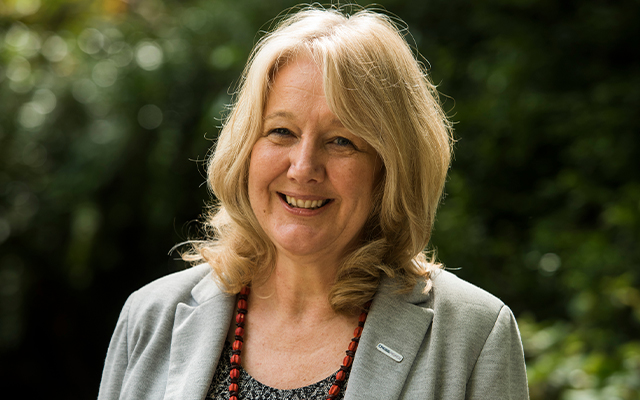
CrossReach Chief Executive Viv Dickenson
|
||
|
||
|
With over 70 services from Shetland to Kirkcudbright, CrossReach is one of Scotland’s largest and most diverse voluntary sector social care providers, employing nearly 1,700 staff backed by some 450 volunteers.
The charity offers support for people of all ages living with short and long-term conditions or within challenging family or social situations: from nurture in the early years, support for people affected by post-natal depression, schoolchildren, people caught up in the justice system, homelessness and addiction, to those living with a disability or dementia.
Founded 150 years ago as the social care arm of the Church of Scotland, it is the Scottish charitable sector’s largest provider of residential care, with 17 homes for older people – open to residents of all faiths and none – and a network of supported living accommodation for people of all ages.
The organisation’s Chief Executive, Viv Dickenson, tells healthandcare.scot that, despite the challenges of lockdown, CrossReach has continued to provide almost all its services – and having a faith-base has often helped.
“I won’t sit here and pretend that it’s been anything but challenging.
“It has been a massively difficult and testing time for everyone trying to run social care services. However, at CrossReach we have got fantastic staff and fantastic supporters and we certainly remain standing for the time being.
“Our primary focus has been keeping the staff and the people we support protected, connected and really well cared for. Lots of effort has gone into securing PPE, making sure that our technology could cope with increased demand from both staff and those who use the services.
“Given we have such a diversity of provision we have put a lot of effort into staying up-to-date with all of the relevant guidance coming out and ensuring that the staff on the ground have everything they needed to allow us to continue to care as best as we could.
“It has been particularly tough in the care homes. We have been locked down for visitors since early March. So, working with residents’ families to reassure them that their loved one is being well looked after has been hugely important.
"Suddenly your home becomes a fortress...For people living with dementia it's been so tough"
“It has also been really tricky time for the residents themselves, particularly those with dementia. For those who are used to seeing a lot of their loved ones and maybe getting out and about with them, or going on outings or taking part in activities with the care home staff – it’s been so tough.
“We’ve usually got lots of trips and events planned, people coming and going. People are living in what is, for all intents and purposes, their own home.
“Then, suddenly, your home becomes a bit of a fortress and nobody else goes in and out apart from the staff. For people living with dementia in particular, we’ve been concerned about their level of being able to stay present and remember their loved ones and the consequences for their mental health.
“So, we’ve been doing a lot of work with digital connections, phone calls and video calls, window visits; just doing as much as we can to keep the residents and the staff in touch with relatives.
“But it’s not just the care homes where we have been experiencing disruption. The supported living services have also risen to the challenge. All of these services – for those with disabilities, in recovery from addiction, with mental health support needs or at risk of homelessness – have continued caring throughout and the staff and service users have done some very inventive things together so that everybody could continue to live as full a life as possible despite the constraints.
“In November 2018 we opened our new school, the Erskine waterfront campus, as we moved away from residential schools for children. Now the children live in a house, go to the school and then go home again, which is a much more normal experience for them.
“We also take day pupils who are unable to attend mainstream school. Over this time the school, like most schools, has become a virtual learning environment as well as a food distribution centre, which was set up to support families who were struggling to cope financially.
“We’ve also seen a lot of innovation in our day centres and community support services where we’ve been trying to keep in touch with people in different ways and make sure that they didn’t become isolated or ill over this time.
“The counselling services – both generic and specialist counselling for those struggling with their mental health in pregnancy and after the birth of the child, or working through an addiction – have moved their services online.
“Likewise, the ‘Heart for Art’ dementia support service has been ensuring that people can be as connected and creative as possible by offering online art and chat sessions.
“Videos have been developed to cover lots of areas of wellbeing which would usually be delivered face to face – from oral hygiene to making face coverings, and the prison visitors’ centres have been delivering arts and crafts packs and health and wellbeing resources to families affected by imprisonment while normal visits have been suspended.
“I guess that, while the diversity of the organisation has been one of the trickiest things to manage over this time, there’s also been a massive strength in that, because we’ve become really good at sharing what we’ve learned across the organisation.
“There have been a lot of real challenges but a lot of innovation and a real sense of everyone in the organisation pulling together and caring for one another.
"...the faith element helps us to pull in the same direction, even when tensions are high"
“CrossReach is part of the Church of Scotland and, while we provide services to people of all faiths and none, we do require a proportion of staff to have a Christian faith and others to be in sympathy. And I think that has helped us to be resilient and also helped us in our goal of making this big organisation feel a bit like a big family.
“I think the faith element helps us to all pull in the same direction even when tensions are running high and, I have to say, some days here, there have been some very high tensions as you can imagine.
“It has been a huge comfort to the staff to have people out there really meaning it when they say they will pray for you. It makes a real difference.
“And lots of church and faith-based organisations have been in touch to ask what they can do to help, and that has made us feel incredibly supported.
“While the storm has been raging they’ve quietly got on with the business of caring"
“I know that on the very darkest of days, and there have been some dark ones – we have lost people to this disease – the ability to hold onto hope even when people might be working under extreme pressure and sadness, trying to do the best they can, has been remarkable. I am amazed and humbled at just how resilient the staff team have been.
“Often, in older people’s services in particular, where there has been covid infection, they have put their own personal anxieties aside and just trusted that somehow they will be kept safe.
“It is always hard when we are asked the question: ‘why does a good God make bad things happen?’. But, in the middle of this, we have tried simply to hold onto trust and hope for the future and in that have been really helped by the faith-base of our organisation.
‘’It’s now time to look to that future and really ask ourselves what have we learned about social care at this time and what needs to be different so that things can be better for those accessing services and the people supporting them.”
Sign up to our bulletin sent twice a week so you don’t miss out on the latest health and social care news. Tags: Disability; Infectious disease; Older People; Social Care. |
