|
CPR campaign boosts heart attack survival |
Related newsIntegration in action showcased at care summit Scotland at the table with UN healthy air commission Doctors: ‘Shocking’ A&E figures require action Less than full-time – behind the NHS trend Drug harms on the rise in Scotland Doctors invited to shape medical workforce reforms 
|
|
|
||
|
||
|
More Scots are surviving cardiac arrest with an increase in the number of bystanders performing CPR, new figures show.
For the first time, more than one in ten people who suffer a cardiac arrest outside of hospital are surviving and leaving hospital – around double the rate in 2015.
A record number – 64% – are receiving CPR from bystanders before paramedics arrive, compared to 41% in 2015.
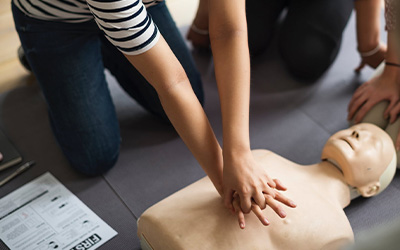
More than half a million people have been trained in resuscitation skills over the past five years as part of the Save a Life for Scotland campaign, which aims to increase knowledge of CPR.
Lisa MacInnes, campaign director of Save a Life Scotland, said it aimed to reach as many people as possible, after achieving a target of having 500,000 more people trained in CPR a year early.
“That hard work has paid off, our bystander CPR rate has increased and most importantly now one in 10 people will be going home to their families.
“This amazing achievement belongs to every person who helped spread the life-saving message of CPR across communities throughout Scotland and especially the 500,000 people in Scotland who took time to stop and learn.”
When Mike Pinkerton, 43, suffered a cardiac arrest three years ago, vet Henrietta Linnemann performed CPR on him until paramedics arrived.
He recently met the team who saved his life and said it was great to “thank them in person for doing such a great job.”
“I know they’ll often never get the chance to hear from or about the people they’ve helped.”
The figures were revealed in the Scottish Government’s Out-of-Hospital Cardiac Arrest Data Linkage Project: 2018-19.
Public health minister Joe FitzPatrick said: “The fact that a higher proportion of people who suffer a cardiac arrest are able to go home to family and friends is excellent news and the fact that more people are equipped with the skills and confidence to help others bodes well for the future.
“Swiftly starting CPR can increase the likelihood of survival after cardiac arrest by two or three times so increasing the number of bystanders who can perform CPR is vitally important.
“That is why I am delighted that the Save a Life for Scotland partnership has successfully equipped more than half a million people with CPR skills a year earlier than planned, through training and events across the country.”
|
