|
‘Stark’ health gap continues to widen |
Related newsInsight: Seeking to get the picture Scotland’s gender health understanding gap Charting Scotland’s future health and hospital demand Concern as COVID protections reduced Scotland to host second world brain health summit Redefining clinical meaningfulness 
|
|
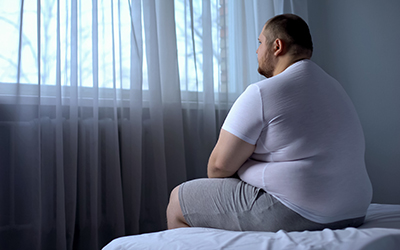
© motortion
|
||
|
||
|
‘Scandalous inequalities’ persist as women living in the most deprived areas spend an extra 24 years in poor health compared to those from Scotland’s most affluent areas.
New figures from National Records of Scotland (NRS) for 2016-18 show the health gap between the country’s richest and poorest areas is continuing to widen.
Men in the most affluent areas of the country can expect to spend 23 extra years in good health, compared to those in the most deprived areas.
For women, the difference is even more stark – at 23.9 years.
The equivalent figure for 2015-17 was 22.5 years for men and 23 years for women.
However, men in the most deprived areas are likely to live for 13.1 fewer years than those in the most affluent areas, while the gap for women is 9.8 years.
Overall, life expectancy has either stopped increasing or decreased in almost all council areas since 2012-2014.
Doctors have called for urgent action to tackle the “stark and unacceptable” health inequalities which persist across Scotland.
Dr Nikki Thompson, deputy chair of the Scottish Council at BMA Scotland, said addressing the issue would require “concerted” efforts to tackle issues such as low pay and inadequate housing.
“It is 2019 and we should not tolerate a society where those in some areas of the country will spend an extra 23 years in poor health compared to those living in Scotland’s most affluent areas,” she said.
“We need much more concerted action on public health, particularly focussed on reducing inequalities, from all levels of Government.
“Scotland has led the field with strong and welcome initiatives such as minimum unit pricing on alcohol and the smoking ban, but we cannot rest on our laurels - this is not enough to boost the health of the nation or reduce the persistent, stubborn and scandalous inequalities that persist.
“There is still a massive distance to travel before we really begin to make serious inroads towards cutting the health inequality gap.”
Professor Derek Bell, president of the Royal College of Physicians of Edinburgh, said tackling obesity and diabetes should be a priority, with measures such as controls on price promotions of unhealthy food.
He said: “We believe that there are measures which can be taken now to improve public health across Scotland, particularly in our poorest communities.
“Two of the biggest health issues that Scotland faces are obesity and diabetes. It is estimated that around two out of three adults in Scotland are clinically obese.
“We are encouraged that the Scottish Government has already taken measures to improve public health; for example, minimum unit pricing and the smoking ban in public places.
“But there is certainly more that can be done. The prevention of obesity and diabetes must be a priority for the Scottish Government where possible.”
He added: “At a local level, integration joint boards and alcohol and drug partnerships can have a key role in tackling public health in communities, and we have already seen success in some areas.”
Paul Lowe, the chief executive of NRS and Registrar General for Scotland, said: “The figures continue to show that those living in less deprived areas are expected to live longer, healthier lives than those in more deprived areas.”
|
