|
Views on ambulance service waits revealed |
Related newsScots honoured in health, care and sciences Plea as public ignore out of hours call-ahead model Plea to rescue ambulance service’s stranded asset Call to rethink rollout of walk-in GP services Edinburgh GP to chair BMA in Scotland New NHS staff data makes case for workforce plan Ambulance plea: TRUST us in youth drug emergencies ‘Resounding’ rejection of pay offer Move to 2-1 placements, staff urge Scots honoured in health, care and sciences Views sought on Scotland’s Air Ambulance Service Steep rise in high risk ambulance delays 
|
|
© Sarah Nimmo
|
||
|
||
|
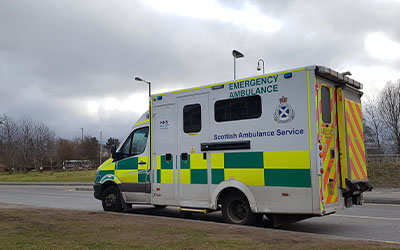
Most people are happy to wait longer for an ambulance to receive better care if they don’t have a life-threatening emergency, according to a new survey.
The latest findings from the Our Voice Citizen’s Panel, set up to gather views on health and social care issues, reveal 85% of people thought a fast or prompt response was the most important priority for the Scottish Ambulance Service.
However, 73% were also either “very or fairly” comfortable knowing they might have to wait longer in circumstances where it wasn’t an immediate emergency and they were more likely to receive a more appropriate response for their condition.
The survey, published by the Scottish Health Council, will be used to influence the Scottish Ambulance Service’s strategy for 2021-30.
In recent years, the ambulance service has moved away from being primarily a means of transporting people to hospital to providing healthcare in communities.
Since 2018, there has been a commitment that ambulance professionals will form part of primary care teams in GP practices.
For example, trials have taken place where paramedics assist under-pressure GPs by taking on some types of unscheduled house visits.
According to the survey findings, 68% of people would be happy with a consultation with an ambulance professional being offered by their GP practice.
However just under a quarter said they would feel uncomfortable, with comments including: “I would feel that the ambulance professional should be dealing with emergencies and therefore I would feel I was wasting their time.”
Another said: “GPs are for long term care. Ambulance professionals are experts at short term care.”
The majority – 89% – of panel members were happy with ambulance professionals knowing their medical history, while 81% said paramedics having access to key information about pre-existing medical conditions would be acceptable.
One comment said: “It may help them to make quick decisions that could ultimately save a life.”
However, some raised concerns such as: “I do not have the same trust in an ambulance person as I do in my GP.
“My medical history is private and personal and should only be seen by my GP or qualified nurse.”
Jim Ward, medical director of the Scottish Ambulance Service, said a new system of prioritising 999 calls introduced three years ago had helped save the lives of a “higher number of critically ill people.”
He said: “Whilst some patients who are less critically ill sometimes wait longer for an ambulance – as a consequence of us prioritising our sickest patients – the number of people surviving longer after a critical health issue, such as cardiac arrest, has increased.
“The new model also allows us to target less sick patients with a more appropriate response.
“Hearing from the results of this survey that the public understand this is very positive indeed – saving more lives and helping patients as quickly as possible is our priority, and having public understanding and support for this approach is very important.”
He added a programme to recruit an additional 1,000 paramedics by 2021 would also help minimise waits for patients who are not critically ill.
Lynsey Cleland, chief officer of the Scottish Health Council, said: “The panel gives people across Scotland the opportunity to have their say on a range of important healthcare issues and helps to ensure that providers continue to shape services to meet the needs of those using them.” |
