|
Disabled working women ‘excluded by design’ |
Related newsHolyrood hears calls for more inclusive communication Scotland’s chance to lead on disability benefit system Insight: Scotland’s ‘invisible’ patients and carers Young adults with learning disabilities dying too soon The silent victims of brain injury TV advert promotes human right to benefits 
|
|
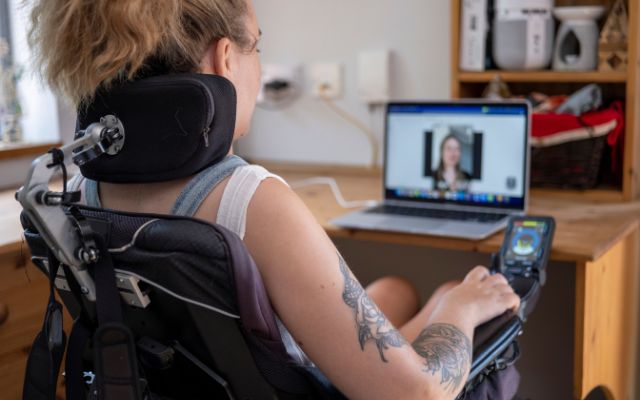
Image © Cultura Creative Adobe Stock
|
||
|
||
|
A groundbreaking study into disabled women's experience working in Scotland suggest the majority continue to feel discriminated against, undervalued, underpaid – and report that they have experienced physical or mental harm at work. The organisation behind the research says many of the changes needed are straightforward but only if policymakers and employers stop treating disabled women as invisible.
The campaigning organisation, Close the Gap, which focuses on equality for women in the workplace, says the issue goes far beyond a pay gap – which sees a disabled woman earning 77p for every £1 a non-disabled man earns – with disabled women being disadvantaged at every stage from getting a job to being supported at their workplace and progressing in their careers.
The charity has published a new report Excluded by Design capturing the experience of over 900 women in Scotland with a disability or long-term health condition.
Nearly three quarters (73%) said they had experienced physical or mental harm at work, the percentage increasing for racially minoritised women. Nearly 60% had suffered some form of violence and 46% reported that they had experienced sexual harassment.
Anna Ritchie Allan, Executive Director of Close the Gap, told healthandcare.scot disabled women are facing multiple forms of discrimination in the workplace:
“Disabled women earn less, they work harder, and they face doubt and judgement, and then they struggle to get the support they need when they are employed.
“There are variations depending on impairments or condition types, for example if they are neurodivergent women or women with mobility-related impairments. Around a quarter reported being discriminated against when they were applying for a job. Neurodivergent women and racially minoritised disabled women were more likely to feel this.”
Ms Ritchie Allan says many of the challenges for disabled women in the workplace come from the attitude of others:
“They are doubted by managers and colleagues Their skills are undermined or they are not believed, or their conditions aren't believed.
“Just over half of the women had had their performance questioned at work, either informally or formally, because of attitudes to their condition or their impairment. The vast majority of that 900 plus sample, 81%, felt the need to overcompensate and work harder in their job in order just to seem like they were as capable and as productive as others.”
One participant told the researchers:
“I have been made to feel a burden and not a team player.”
A better workplace
When they asked for reasonable adjustments, most disabled women (63.6%) reported that they had either waited months, only got partial adjustments, or never received them at all.
“I required adjustments which were initially granted but were removed as soon as I appeared to be ‘well’,” one person told the researchers, adding:
“There is a lack of compassion and understanding that a disability doesn’t just go away and if a person appears well, it is because the adjustments are working for the individual.
“I was stigmatised and looked down upon due to being disabled, treated different from others. I was also compared to others with my manager stating that I was ‘not the only one who has ailments you know’.”
Anna Ritchie Allan says the findings suggest both discrimination and ignorance amongst policymakers and employers, and an element of complacency:
“There are systematic failings by employers, by policy makers, by the Scottish government and UK government. But the solutions exist. What's missing is action.
“Sometimes small steps can make a big difference: sending interview questions in advance, training line managers, making sure reasonable adjustments are implemented and having a default ‘yes’ approach to flexible working. These things can make a real, meaningful difference.
“In terms of policy making, Fair Work has been this flagship policy for the Scottish government, but disabled women are invisible within that and, instead, they can be at the centre of that.
“The UK government could strengthen employer accountability for reasonable adjustments. It could introduce mandatory disability pay gap action plans. Currently, its focus is on a deeply harmful policy agenda, planning cuts to the Access to Work [disability employment scheme], which is a key support mechanism to enable disabled women to be employed.
"This is not a niche issue. Half of adults in Scotland now report having one long term health condition, and women are more likely to be disabled.”
The CEO of inclusion Scotland, Heather Fisken says the Excluded by Design report paints a stark picture that disabled women across Scotland will recognise:
“The Scottish government and other actors must take heed of this report and of the recommendations it makes.
“Inequality and the systems that create it should never exist and, as politicians sharpen their focus on addressing poverty and economic inactivity, now is the time to take notice and act.”
Reda the full Excluded by Design report, a summary report of its findings and a blog by Anna Ritchie Allan.
Read more: Holyrood hears calls for more inclusive communication; Scotland’s chance to lead on disability benefit system; Scotland at the table with UN healthy air commission; Long COVID putting Scots at risk of poverty
Sign up to our bulletin for key health & social care updates straight to your inbox. Tags: Chronic Conditions; Disability. |