|
Shining the spotlight on aphasia |
Related newsDementia campaign success to inform government actions Insight: Scotland’s ‘invisible’ patients and carers Holyrood ADHD and autism inquiry launched Pharmacy’s road to stigma-free drug dependency care ‘Whole-system shift’ needed on ADHD and autism support 
|
|
© dglimages
|
||
|
||
|
To mark Aphasia Awareness Month, the Chief Executive of Chest Heart & Stroke Scotland, Jane-Claire Judson, reflects on the findings of a recent report of the issues faced by those living with the condition and what more must be done to support them to live well.
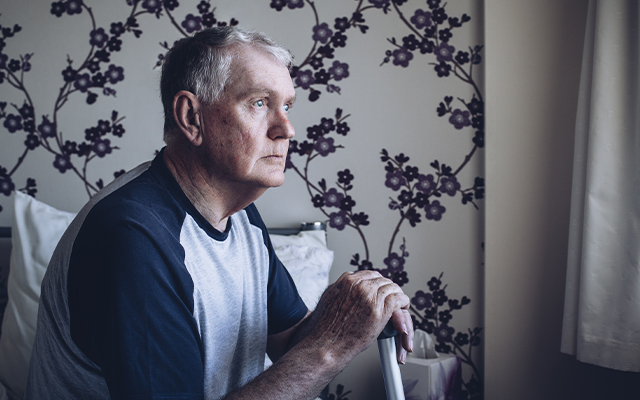
Imagine you are going about your day as normal, you start to feel weakness in your arm, and are unable to speak clearly. Your partner, or colleague, tells you that your face looks like it has dropped on one side. You are having a stroke.
Within moments, your life has changed. Imagine dealing with a new physical disability as a result. Imagine you also lose the ability to easily talk to others or to explain how you feel.
This is the reality for more than 40,000 people living in Scotland right now. They have aphasia, a language impairment that is a common effect of stroke.
People with aphasia may know what they want to say but find it difficult to find the right words when trying to speak, perhaps using the wrong words or putting them in the wrong order. It can be a struggle to understand what others are saying and, in the most severe cases, it’s a struggle to speak at all.
Humans are social, communicative, beings. Even the shyest and most introverted amongst us has a need to communicate – whether to engage in the basics of life – or to tell our families how we are feeling, and how much we love them.
A potentially life-changing condition, aphasia can be isolating and lonely because not being able to communicate freely can create barriers and make it more challenging to connect with others.
Along with dealing with the physcial aspects of having a stroke, the sudden change in your ability to communicate with the ease – to express how you feel and be a part of the conversations around you -the way you did before, can cause significant mental health impacts.
And not least because it can become a daily struggle to access vital support and services, sometimes the very services that would alleviate some of the mental health challenges aphasia can cause.
At Chest Heart & Stroke Scotland, we have been supporting people with aphasia for many years and have developed services and resources that focus on communication and have been designed alongside people who experience this challenging change in their lives.
But we know we – and our healthcare partners - need to do more, and that’s why our recent One in Five report focused on people living with aphasia – the language impairment impacting 1 in 3 people following a stroke.
The results were stark and reveal the extent of the mental health crisis facing people living with aphasia.
More than half of the 250 participants in our study (52%) said having aphasia affects their mental health or wellbeing, with nearly half (48%) saying they have experienced loneliness because of their condition.
Meanwhile, 43% of people said having aphasia impacts on their ability to work as before with a third (38%) reporting they have been treated negatively due to their condition.
We know the challenge of accessing rehab and support services has a significant impact on the mental health of people struggling with their communication skills following a stroke.
It is not acceptable that so many people – who want to and could return to work, and avoid experiencing isolation and loneliness more generally – find the support is not there to enable this to happen.
Two-thirds of people with aphasia (67%) told us they have experienced some kind of difficulty in accessing services, with half saying there was support available that they couldn’t take up, with language difficulties being a significant barrier.
More than one in 10 (14%) said their diagnosis of aphasia meant they needed specialist mental health support, but they were not able to access it.
At Chest Heart & Stroke Scotland, we are passionate about the Right to Rehab and are campaigning with others to have this included in any future human rights framework in Scotland.
Our experience shows us that, with support from Chest Heart & Stroke Scotland and the NHS, people with aphasia can live full lives.
There is so much more that can be done to support the thousands of people living with aphasia across Scotland to enable them to connect with loved ones and get back to employment, where possible, and to the activities they enjoy.
To make this a reality for more people, we need increased awareness of aphasia in the wider community along with improved access to rehabilitation services.
That’s why we are calling on the Scottish government to take action now to ensure those with
aphasia get the vital support they need, including access to quality, accessible speech and language therapy for as long as they need it, and to ongoing community support.
Our health boards must increase the availability of speech and language therapy while ensuring it is easy for people with aphasia to access services, including psychological and emotional support.
Chest Heart & Stroke Scotland are here to support people living with aphasia – to advocate for them to ensure they receive the support they need so that, in the words of our slogan, there is no life half lived.
Read more: Football pledge to improve women’s health; Right to rehab: The first step to recovery
Sign up to our bulletin for key health & social care updates straight to your inbox. |