|
When Scotland sent a medical tartan army |
Related newsGreener NHS research funding boost AI for lung cancer care to help tackle “hidden killer” NHS saves £82m a year through outdoor spaces Gene study helps islanders prevent disease Delay to newborn screening for SMA “nonsensical” Investigating inequalities in kidney care 
|
|
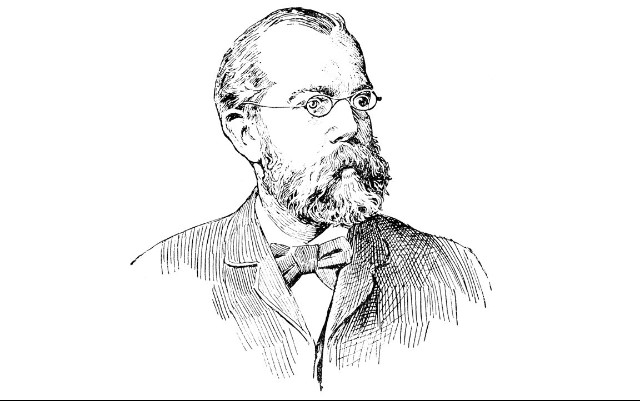
Image Sergey Kohl
Portrait of German physician and microbiologist Heinrich Robert Koch
|
||
|
||
|
The Tartan Army’s arrival for Euro 24 is only the latest peaceful Scottish flocking to Germany.
Journalist and historian Chris Holme looks back on a time when some of the leading surgeons and physicians of their time advanced their crafts in German-speaking nations, and how they enriched healthcare in Scotland when they came home.
In the 1880s, greater Germany, Austria and German-speaking Switzerland were irresistible magnets to a whole generation of young Scottish doctors.
At the time, these countries were home to the mega-stars of medical and surgical practice, and the emerging biomedical sciences like bacteriology.
All the leading specialist journals were published in German so some, like the future nutritionist John Boyd Orr, ventured out just to get a basic smattering of the language.
Others, like Arthur Conan Doyle, needed more advanced knowledge. He came to Vienna in 1891 to train as an eye surgeon but found the technical language too hard.
Doyle and his wife Louisa were back two years later for her treatment for TB at Davos in Switzerland which provided Reichenbach Falls as the location for the demise of Sherlock Holmes.
Aberdeen medical student Alexander Ogston spent a gap year in Berlin, Vienna, and Paris. Back home, he later began experiments in a garden shed behind his house in Union Street using a German Zeiss microscope and a new test developed by Berlin-based Robert Koch to examine specimens.
He discovered a new infectious bacterium which he named staphylococcus aureus. We now know it better as the MRSA, methicillin-resistant staphylococcus aureus.
Ogston faced disbelief in Britain, with the editor the British Medical Journal, Ernest Hart, reportedly remarking: “Can anything good come out of Aberdeen?”
But in Germany, Ogston was already a real star. In April 1880, he presented his findings to a surgical congress in Berlin in fluent German. The German Surgical Society was so impressed that it made him a fellow, at the tender age of thirty-six.
Two years later, Robert Philip came out to Leipzig and Vienna to study gynaecology but dropped everything when Robert Koch announced his discovery of the tuberculosis bacterium. On his return to Edinburgh, Philip devised a whole new system for treating the disease involving dispensaries and contact tracing.
Others who travelled Germany were Harold Stiles and James Purves-Stewart – both earning knighthoods in their later careers. They stayed in a village in the Harz mountains where a stein of beer was the standard accompaniment to lunch. Purves-Stewart was tee-total, so Stiles would nobly drink his stein as well.
Stiles moved south for further studies at Freiburg and Bern, where he spent several months with Theodor Kocher, the foremost surgeon of his generation and, in 1909, the first surgeon to be awarded the Nobel Prize for medicine.
By this time Stiles was so proficient in German that on his return to Edinburgh, with the help of his good friend and fellow surgeon Alexis Thomson, he translated Kocher’s textbook on operative surgery – all three hundred pages of it – into English.
Stiles also brought back with him Kocher’s radical ideas of aseptic surgery – a step forward from Lister’s use of carbolic spray on bandages – where the whole operating theatre environment, including instruments, gowns, and gloves, was made sterile. Steam sterilizers were soon introduced in Edinburgh hospitals.
Another Aberdeen student, Robin Lawrence, spent the summer of 1912 in Rostock learning the language, making pals with students, and exploring the culture. His later career as a diabetes specialist, with the support of his patients, led to the start of the first patients’ self-help group, the birth of what is now Diabetes UK.
Grand Tours
The year 1912 also marked full-scale medical movement, this time of Scots and Americans. The American Clinical Surgical Society decided to ditch is annual meeting in favour of a pilgrimage to Europe. They took their wives and children and were joined by Stiles and Thomson.
The tour party included Charles Mayo, co-founder of the Mayo Clinic, and Harvey Cushing, both friends of Stiles from his visits to the USA.
They also took their Kodaks with them. The Royal College of Surgeons of Edinburgh has a unique online photographic record of the tour which took in Hamburg, Berlin, Leipzig, Jena, Munich, Tübingen, Stuttgart, Heidelberg, Würzburg, Frankfurt, Koblenz, Bonn and Vienna.
Stiles and Thomson were also on the tour. In each city, they met celebrated surgeons and physicians like Paul Ehrlich, the 1908 Nobel medicine prize winner, and in Vienna the founders of the world’s first emergency room.
It wasn’t all work. The photographs also show ordinary life in the towns and villages, some informal jollies in restaurants and bars, and the evident joy the visitors and their hosts took from meeting each other.
The golden age of Germanophilia didn’t last. Within two years, world war pitched professional colleagues and personal friends on opposing sides.
But the lasting legacy of these links shaped British medicine for decades to come.
As for the footie…. we live in hope. Scotland emerged from the 1974 World Cup in Germany as the only unbeaten side in the entire tournament, even managing a draw with Brazil.
We’re great at irony if nothing else.
Chris Holme is a former Reuters Foundation fellow in medical journalism.
Read more by Chris Holme: Scotland’s first chief scientist; Dr Finlay and the making of the NHS; The father of evidence-based medicine
Sign up to our bulletin for key health & social care updates straight to your inbox and you can follow healthandcare.scot on Google News. |
