|
Insight: the work of the benefits case manager |
Related newsAll public bodies must focus on health, urges charity Scotland needs more Carer Positive employers A timeline of Scotland’s National Care Service Employment support needed for Scotland’s carers New benefit launched for unpaid carers First Minister urged to rethink social care pay rise Scientists to help cut NHS medical device waste Edinburgh IJB faces judicial review over cuts Scotland’s new Chief Nurse appointed Urgent plea to safeguard advocacy amid local cuts New gene study offers arthritis treatment insights New Edinburgh hub set to transform global healthcare 
|
|
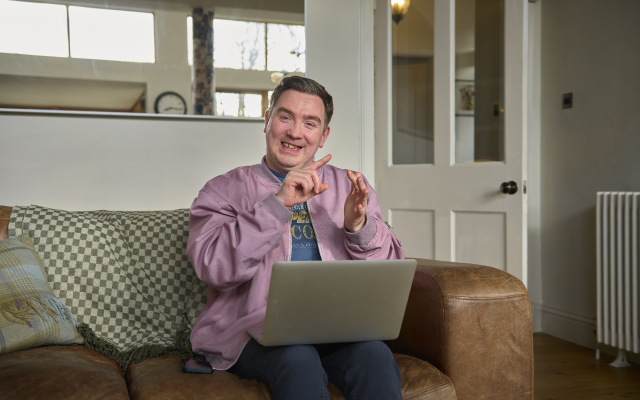
Image Credit: © Social Security Scotland
|
||
|
||
|
With more benefit entitlements devolved to Scotland, the organisation responsible for delivering them, Social Security Scotland, has written this article for healthandcare.scot to give an insight into how the process of applying for help differs from the past, and how the organisation wants the work of case managers to be underpinned by values of ‘dignity, fairness and respect’.
Established in 2018, Social Security Scotland set out to deliver a benefits system that was different to the Department for Work and Pensions (DWP), one with the principles of dignity, fairness and respect at its core.
We worked with disabled people and their families to create a better system, one rooted in our unique human rights approach.
We now provide 14 benefits, including Child Disability Payment and Adult Disability Payment.
These provide financial support for people with a disability or long-term health condition that affects their everyday life. Some of the benefits we provide are unique to Scotland and more are on the way.
Unlike the DWP, we do not use private sector assessments. Instead, the aim is to make a decision based on the application and supporting information.
Today, an application for disability benefits goes on a very different journey at Social Security Scotland than it would at the DWP.
Last year, Social Security Scotland shared the experience of a practitioner who had moved from being an NHS nurse to supporting case managers who assess applications.
Case manager Lee Dougela is responsible for assessing applications and says the aim is to always start from a place of compassion:
“We take a human approach right from the start. We’re not looking to trip people up and catch them out. We’re about compassion and treating people with respect.
“Once we receive an application our aim is to have a conversation with the person who has applied. We’ll usually contact our clients just to introduce ourselves. I think it’s the best way to reduce any fears that people have and settle their nerves.”
He says he recognises that for some people, phoning may not be appropriate and it’s important to adapt:
“Somebody might have severe learning difficulties for example.
“In these cases, it might be more appropriate to contact their wider support network. That could be a family member, people like that.”
What is supporting information?
The initial contact is where case managers like Lee often gather the information they need to fill in any gaps on the application form.
Lee explains:
“We need one piece of supporting information from a professional to process an application. If someone doesn’t send us any, the call also allows us to find out if they have anything that they can send us.
“Supporting information is important, but it’s where we have the biggest issue.
“It can be something as little as confirming your condition. Details about what it’s like to live with the condition are probably the most helpful information we can get.”
He accepts that, while GPs and other healthcare professionals are really busy, that’s not the only route:
“Something like a picture of the box medication came in, with the name on it, will do because certain medications are for certain conditions. Snap it, upload it, things like that mean we can sometimes even avoid having to go to the GP.
“And then we're just looking at something to back up the daily living and mobility needs. So, if somebody says, ‘I need my husband to help me prepare and cook food,’ a letter from the husband describing how he does that adds weight to what they're saying.
“And then we can make a decision. It means that we can do it quicker than if there are gaps or if we have to get the supporting information for them.”
Supporting information can be documents like care plans, prescription lists or a child’s additional support needs plan. Often people have these kinds of documents at home but don’t send them as they don’t realise that they can be used.
Lee adds:
“If the person who has applied doesn’t have any supporting information, I’ll ask about any professionals that they get support from who I can contact.”
Where more information is needed, applicants are matched up with one of the health and social care professionals employed by Social Security Scotland.
These staff come from a range of backgrounds including nursing, social care and physiotherapy, starting from a position of trust and looking to understand the person’s conditions, disabilities and needs.
Health and social care staff also provide advice to case managers like Lee, using their expertise to help them make decisions:
“We won’t generally discuss every case, but we will for ones where we maybe feel that we need more support or there is some information missing.
“I can think of situations where somebody has a condition that could be entitled to an award, and they’ve struggled to describe their needs. They’ve downplayed the impact on themselves with some conditions, as if they feel there’s some stigma attached.
“It’s good to be able to speak to someone with a medical background when you’re looking at an application and thinking this doesn't add up, it seems like there's more going on here.”
Day-to-day living
While case managers like Lee take an individualised approach to every applicant, there are key areas they look at on each application.
“We look at basic daily living,” says Lee. “Things like preparing food and taking nutrition. Eating and drinking and managing the medication or treatments and therapies they have at home. If they need support with washing, bathing and dressing.
“And then there's communication needs. We look at the ability to read and understand information, and their ability to engage with other people. How does their condition affect their ability to do this and manage budgeting decisions. We also look at their mobility needs. Can they plan and follow a journey? Can they walk?”
Lee adds that “it’s never one size fits all” and understanding a person’s sometimes shifting needs, like mobility for people with multiple sclerosis, plays into decisions:
“If somebody says, ‘I can walk 205 metres’ that doesn’t mean they don’t have mobility problems. I consider how reliably they can do it. For example, can they do it uphill? Does the weather affect them? It’s not, ‘You can walk from here to there so you’re not eligible for benefits.’
“It feels more considerate the way we've been trained to make decisions. We’re about compassion and treating people with respect. When I speak to colleagues who have moved over from the DWP, they can't believe the difference.
“When making a decision about an application, we take the client’s lived experience into account.
Ultimately, Lee says, case managers look to ensure “people get the money that they’re entitled to” and do what they can to make that happen.
Read more: Health & care staff urged to help people get benefits; Employment support needed for Scotland's carers; New gallery showcases stories of care; Profile: A social security practitioner; Holyrood scrutinises SDS 10 years on; New benefit launched for unpaid carers
Sign up to our bulletin for key health & social care updates straight to your inbox and you can follow healthandcare.scot on Google News. Tags: Disability; Finances; Social Care; Social security; Unpaid Carers. |


.jpg)