|
Policing for community health |
Related newsThe Scots behind evidence-based medicine Public health – don’t just focus on the goalkeeper Highland children hit by poverty and geography Scotland’s gender health understanding gap Infection risk petition set to fail Scotland at the table with UN healthy air commission Scientists to help cut NHS medical device waste Edinburgh IJB faces judicial review over cuts Scotland’s new Chief Nurse appointed Urgent plea to safeguard advocacy amid local cuts New gene study offers arthritis treatment insights New Edinburgh hub set to transform global healthcare 
|
|
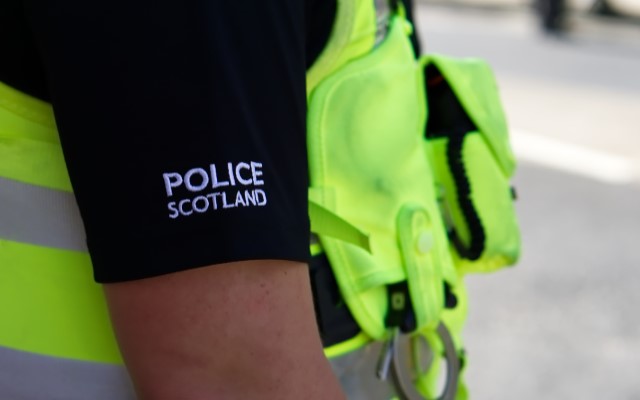
Police Scotland © JTana
|
||
|
||
|
While a focus on safety is part-and-parcel of a national police force, Police Scotland is thought to be the first and only police force in the world where community wellbeing is considered just as high a priority.
healthandcare.scot speaks with Assistant Chief Constable (ACC) Gary Ritchie, the executive lead for Partnerships, Prevention and Community Wellbeing, on how Police Scotland is working to become a key partner in public health.
“So, traditionally, policing is all about those conventional notions of law enforcement – a focus on crime, protection and criminal justice. But wellbeing is a completely different matter altogether,” says ACC Gary Ritchie.
He explains that, with the creation of Police Scotland in 2013, wellbeing has been formally baked-into the key purpose of the national police force.
“It’s always been an adjunct, just because of the proximity to community and dealing with vulnerable people, but it’s never been formally articulated or seen as your core responsibility as well.
“We are the only service in the world where traditional policing aspects and wellbeing are side-by-side in our mission.”
Key to achieving this ambition will be working closely with Public Health Scotland (PHS) as part of the formal collaboration Police Scotland has had in place since 2021.
ACC Ritchie explains that the public health body and Police Scotland share similar ambitions and both offer different but complementary strengths in driving forward action to improve local public health and wellbeing:
“Police officers are obviously not healthcare professionals, and we recognise that we don’t have the skills to tackle public health on our own. We have a formal collaboration with Public Health Scotland, so now we have two big national organisations with many shared aspirations and goals working together.”
Drug-related deaths has been a key focus of the partnership so far, with PHS supporting efforts to introduce naloxone – a life-saving drug which helps people experiencing a suspected opioid overdose – as part of standard issue police kit across Scotland.
The national rollout of the opioid reversal naval spray is, says ACC Ritchie, helping to address Scotland’s high drugs death rate but is also an important step forward in improving relationships between communities and the police.
As of last December, Police Scotland have attended at least 104 incidents where naloxone has been administered.
Work is also underway to improve the way local data on suspected drug-related deaths and suspected suicides, is shared with local agencies to ensure they are properly placed and resourced to respond to events.
The Prevention Hub
Public Health Scotland and Police Scotland now have plans to boost their collaboration by bringing on board academics from the University of Edinburgh’s Edinburgh Future Institute to further embed a prevention and public health approach to policing.
Expertise, data and staff from the three partners will be pulled together into a new Prevention Hub to be based at the Old Royal Infirmary of Edinburgh. Here, a committed team will work across the whole system to develop innovative approaches to improve health and wellbeing and reduce inequalities.
Initial work will explore children and young people – identifying areas of vulnerability where better placed policing and community resources can help deal upstream with challenges like homelessness, addiction, and mental health.
It is hoped, over time and by engaging far and wide with those involved across the system, that this approach will help address the root causes of crime and safeguard vulnerable people – all while building stronger foundations for local communities to thrive.
ACC Gary Ritchie explains collaborations like these are key to ensure Police Scotland can play a role in health promotion efforts:
“For me, part of a good public health approach is that end to end sharing – so we share the data and analysis of that data, so we can share the problem.
“These are system-wide problems. If we are going to have any hope of addressing them and improving things, you have to stand up and be part of that system-wide thinking and approach.”
Read more: Decriminalisation call to support drug deaths mission; Watchdog: collective failure to help those in crisis; PHS names new chief executive;
Sign up to our bulletin for key health & social care updates straight to your inbox
You can now follow healthandcare.scot on Google News. Tags: Public Health & Prevention. |