|
Care homes: robust but exhausted |
Related newsDementia home care tech collab invites partners Exercise key to combatting frailty epidemic Glasgow hosts global care gathering Students help shape Perth complex needs housing Scotland commits to change the dementia story Music’s potential to help with dementia 
|
|
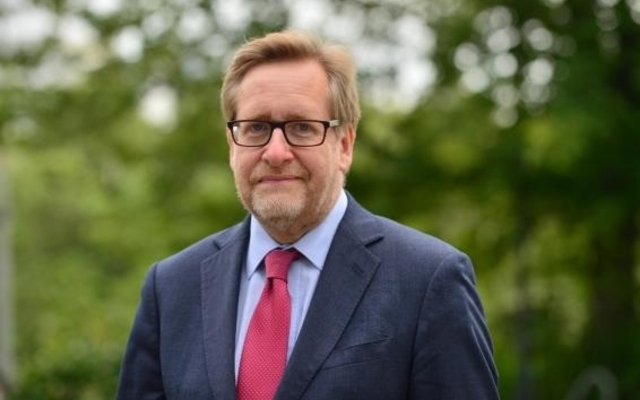
Dr Donald Macaskill, CEO of Scottish Care
|
||
|
||
|
As the independent care sector in Scotland prepares for its national care home conference in Glasgow this Friday, the Chief Executive of industry body Scottish Care, Dr Donald Macaskill, has been explaining to healthandcare.scot why the theme of the event is ‘more than four walls’ – and giving his thoughts on the current state of Scotland's independent care home sector.
“There’s a perception that you see in the contemporary narrative, especially for those in the care home sector but also across wider social care, that care homes are essentially the building.
The ‘more than four walls’ message is that the life of a care home, what it seeks to be and what it seeks to do, is more than about just bricks and mortar.
The pandemic has helped people to think about things such as infection prevention and control, and the importance of keeping people safe in a place that gives due regard to the importance of autonomy, of control, of choice. Seeing the care home as being a home primarily, and not a ward of a hospital. Seeing the importance of relationships being dynamic, with the community and also with those outwith the care home.
While that is the focus of the day, we want to go beyond that and attempt to reimagine what the care home sector wants to be into the future, and how we sell a truth to the wider community that is beyond the stereotype of a care home in the popular mind – that it's just the building.
There are misconceptions.
Care homes are often portrayed as places where people go to die, places which are very much about spending an inactive time until the end of your life.
For me that's wrong, and we need to show it's wrong.
We need to reimagine how we support and enable older individuals in our communities to live and be well. And, at our conference, that's about us asking: what does aged care in a shared collective environment look like now – and in the future?
One of the things is, for instance, our concept of age. I will be arguing along with many others, that there is a very out of date and static understanding of age. We fail to see care homes as places where people actually discover new things, learn new activities, and form new relationships for the first time. And care homes are all of those things.
Care homes are dynamic places. The space is of course important, but what lies behind the theme of our conference is an attempt to share the energy which occurs in care homes. They are places where people are spending the latter days of their lives, and those don't need to be days of passivity and days of being done to. These are days where you can retain control and voice and contribution up until the last moments of life.
We have to challenge some stereotypical views of our society about age, that it's only the young that are the future, and look positively at how care homes, through art, through creativity, through music, through drama, through simply relating people one to another, are places of vibrancy.
As we meet for our conference, I think the mood is extremely tired and exhausted. We have faced in the last years, and are facing now, a multiplicity of challenges. These would have been really hard to deal with even if we had not had a pandemic. But the fact these challenges have come on top of a pandemic makes it all the more fragile.
I am seeing a sector which is extremely fragile. That's true of whether you're a small charitable provider, whether you are a family-run private business, or a larger organisation. And we constitute all of those as our members.
I think there's a real financial vulnerability around the sector. That's because the cost of living crisis is impacting staffing and prices of basic commodities, such as food. There is a challenge around energy costs.
And there are massive workforce challenges. We have bled talented individuals and have not been able to recruit and retain people to the extent to which we'd have wanted, for all sorts of reasons, not least of which is our inability to recruit internationally.
However, at the end of the day, despite all these challenges and a covid pandemic – which diminished but didn't disappear in the summer and at the moment we've got 90 care homes still with active outbreaks – even despite the fact that the summer rest never appeared, I also see a sector which is robust.
It is robust in its sense that our primary focus is to maintain not just the status quo of quality, but to improve the delivery of care and support to some of our most important citizens.
While the sector is weakened because of the workforce crisis, finance, energy, and all other associated pressures, the sector is strong because of the women and men who are in it."
Read more: Recognising home care workers; Fear it is "too little too late" for social care; Insight: Care homes embracing technology
Sign up to our bulletin for key health & social care updates straight to your inbox and you can follow healthandcare.scot on Google News.
|
