|
Details revealed of national vaccines service |
Related newsLong COVID putting Scots at risk of poverty COVID jags end for staff and chronically ill Working together to ensure No Life Half Lived Long COVID: Alone and forgotten Concern as COVID protections reduced Long COVID projects share £3m funding 
|
|
|
||
|
||
|
The Director of Vaccine Policy at the Scottish government has outlined plans for a national vaccination and inoculation service, which he says will deliver “world class, person-centred services for people in Scotland”.
Stephen Gallagher says the Scottish government is looking to unify disparate aspects of Scotland’s vaccination efforts to place them wholly in the hands of Public Health Scotland by August 2023.
Key drivers of the plan are the Scottish government’s desire to root vaccinations as a “fundamental public health tool” and make campaigns more outcomes-focused.
However, workforce and financial planning would be a ‘messy space’ in the new system, Mr Gallagher admitted.
“We’ve tried to set out a vision of what we want to achieve by bringing the national elements of vaccination together,” the Director of Vaccine Policy told an NHS Scotland Conference plenary session last week.
“So that [encompasses] leadership of vaccine transformation, the leadership of the existing vaccination programmes which is currently coordinated through the Scottish Immunisation Partnership and the Flu Vaccination and Covid-19 Vaccination Programme Board.
“Vaccination as a programme had to be grabbed by the government and driven through by a government/delivery-led approach. That was right for the time because Public Health Scotland had just been formed at the beginning of a pandemic, but it’s not the direction of travel and the way we really want to coordinate things going forward.
“What we’re really saying in this statement here is that we want to be outcomes-focused for people and, secondly, we want it to be public health-led.”
First public mention of the plans appeared in minutes of an NHS Scotland leaders’ meeting late last year, where Mr Gallagher told NHS Chairs that a portfolio board had been created to oversee the establishment of the new service.
“We’re not talking about a fundamental shift in responsibilities between what happens nationally and what happens locally: health and social care partnerships will continue to run their vaccination programmes.
“So, what we are doing in creating this new service is hopefully not upsetting how you do things locally, because we will learn to work with you, but changing some of those responsibilities at the national level and emphasising that public health focus.”
Audit Scotland found the first stage of Scotland’s covid-19 vaccination programme to have been an overall success, with good collaboration and joint working.
However, their report published in September last year also highlighted an overreliance on temporary staffing. It said the Scottish government recognised that a longer-term solution would be needed for a sustainable future rollout.
Mr Gallagher says the aim of establishing “a dedicated, flexible and sustainable whole-system vaccination workforce” will prove to be a serious practical challenge due to the seasonal nature of vaccine programmes.
“A large uptick in autumn and winter, which largely is our traditional seasonal flu, and now covid getting into that pattern, causes us some issues.
“How do we use the vaccination workforce as flexibly as possible over the course of a whole year?
“Does that open up opportunities for different types of roles, which are broader than vaccination, and working on multidisciplinary teams in community treatment centres? Or are these roles about vaccination but we can have more flexible working patterns over the year?
“And just working through the grit and the grain in all of that and trying to work out what works for staff and what works for the service I know are challenges that all local boards are working through.”
The vaccination transformation programme, which saw responsibility for routine vaccination move from GPs to local NHS boards, completed last month.
At the plenary event last week, the Public Health Programme Director at NHS Tayside, Lynne Hamilton, described the transfer process since 2019 as “prising” responsibility from GPs.
She also highlighted the “invaluable” role played by healthcare support workers in the vaccination effort, who made up 70% of staffing compared to 30% being made up of professional staff.
In response to concerns over health care support workers being stripped of their ability to give vaccines, Karen Duffy, who leads the covid vaccination delivery programme across NHS Scotland, said she is “hopeful” that the national protocol introduced by the Chief Pharmaceutical Officer at the beginning of the pandemic, would remain in place.
Ms Duffy said that Scotland would “like to lead the way” in maintaining support workers as a key part of vaccination programmes of the future.
Mr Gallagher said NHS boards will soon take part in a sharing and learning event where this initiative would be further explored.
Read more: Exclusive: Scotland to get national vaccines service; National vaccine system a “challenge” for rural areas; GPs question transfer of vaccinations to health boards
Join hundreds of people who get regular bulletins of Scottish health and social care news direct to their inbox by signing up here. |

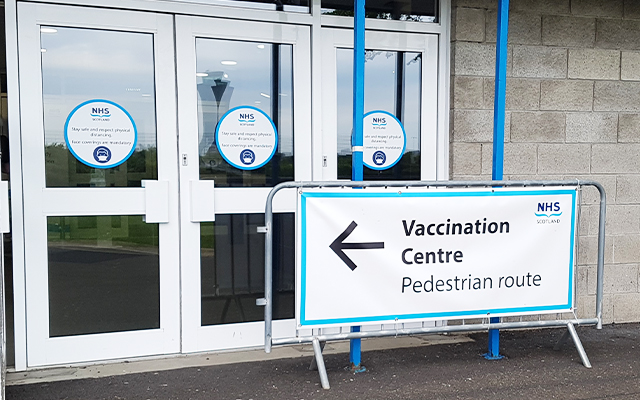 The Director of Vaccine Policy assured attendees at the NHS national meeting – many of whom were directly involved in delivering the covid-19 vaccination programme – that the impact on locally-led vaccine programmes would be minimal, that it would still be led by “local decisions with national guiding principles”.